
Wingstem
Verbesina alternifolia
Description
How to tell it apart
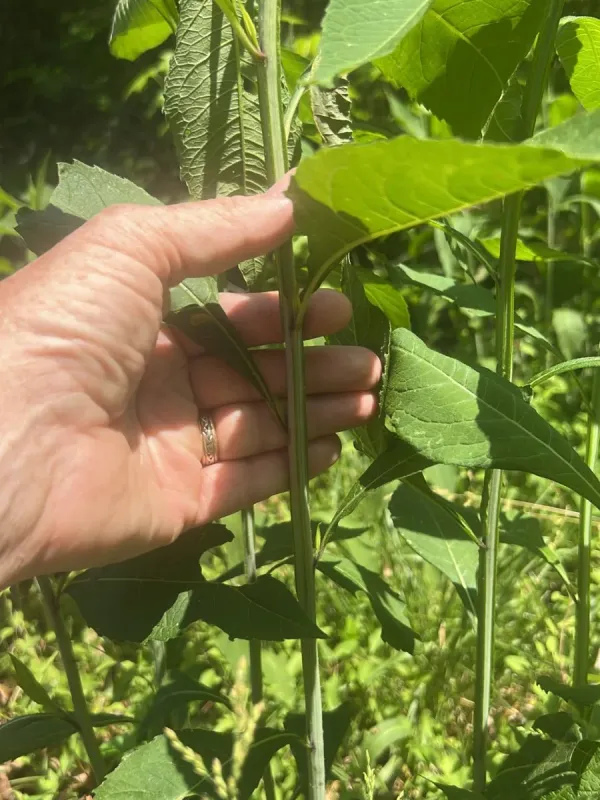
Wingstem (Verbesina alternifolia) is a perennial herbaceous plant belonging to the Asteraceae family. It is easily identified by its distinctively winged stems, which can grow up to two meters in height.
The leaves are arranged alternately along the stem, possessing a lanceolate shape with serrated edges. The texture of the leaves is rough, and the plant often displays a robust, upright growth habit.
The yellow flowers are arranged in loose, terminal corymbs, blooming from late summer through autumn. These flowers are highly attractive to various pollinators, including bees and butterflies.
Below the soil surface, the plant develops an extensive rhizomatous root system. This complex network allows the weed to spread aggressively and survive mechanical disturbances that would kill annual species.
The seeds have small, wing-like appendages that facilitate wind dispersal, allowing the plant to rapidly colonize new areas, especially open disturbed sites or field margins.
Where it grows
Native to North America, Wingstem thrives in moist soil conditions, frequently occurring in river bottoms, moist meadows, and woodland edges. It has become an agricultural nuisance in areas with high soil moisture.
This weed is often found colonizing field borders, drainage ditches, and fence rows. From these reservoirs, it gradually encroaches into managed fields, particularly in low-lying, fertile spots.
Wingstem demonstrates a high level of ecological adaptability, allowing it to grow in both full sun and partial shade, making it a persistent inhabitant of various edge environments near crop production zones.
It prefers deep, nutrient-rich soils. In many cases, it dominates areas where natural moisture is maintained for longer periods, providing a competitive advantage over many traditional crop varieties.
Due to its invasive nature, it often forms dense, monotypic stands, excluding other vegetation and creating significant management challenges for farmers in affected regions.
Harm it causes
The primary damage caused by Wingstem is through resource competition. As a tall, vigorous grower, it shades out emerging crops, depriving them of the sunlight necessary for early development.
Its deep root system competes aggressively for soil moisture. In drier growing seasons, the presence of Wingstem can significantly reduce the yield potential of crops like soybeans or corn.
Research suggests potential allelopathic properties, where the plant releases compounds into the soil that inhibit the germination or root growth of neighboring plants, further suppressing crop vigor.
Dense populations interfere with mechanical harvesting equipment, leading to increased wear and tear on machinery and reducing the overall efficiency of the harvesting operation on infested land.
Additionally, the weed can act as an alternate host for several insect pests and plant diseases, thereby increasing the risk of infestations within the main crop area throughout the season.
How to control
Cultural management includes deep tillage, which serves to break up the rhizome system and suppress the plant's ability to regenerate. Regular cultivation between rows helps keep populations in check.
Timely mowing before the plant enters the flowering stage is critical to prevent seed production. This prevents the addition of new seeds to the soil bank, gradually depleting the weed population over time.
Crop rotation with competitive, high-density crops can provide natural shading, which limits the light availability needed by Wingstem to establish itself effectively in the field.
Chemical control involving systemic herbicides is often necessary for large infestations. The most effective window for application is during the active growth phase before the plant matures.
- Application of glyphosate-based herbicides to spot-treat infested patches.
- Selective herbicide use in corn or soybean fields to control encroaching seedlings.
- Manual grubbing for small, newly established clusters to remove the entire root system.
Taxonomy
- Latin name
- Verbesina alternifolia
- Family
- Сложноцветные (астровые)
- EPPO code
- VEEAT