
Rough silphium
Silphium radula
Description
How to tell it apart
Rough silphium (Silphium radula) is a perennial herbaceous plant belonging to the Asteraceae family. It is characterized by a strong, deep taproot system, which serves as a reservoir for nutrients and enables the plant to regenerate successfully even after mechanical damage.
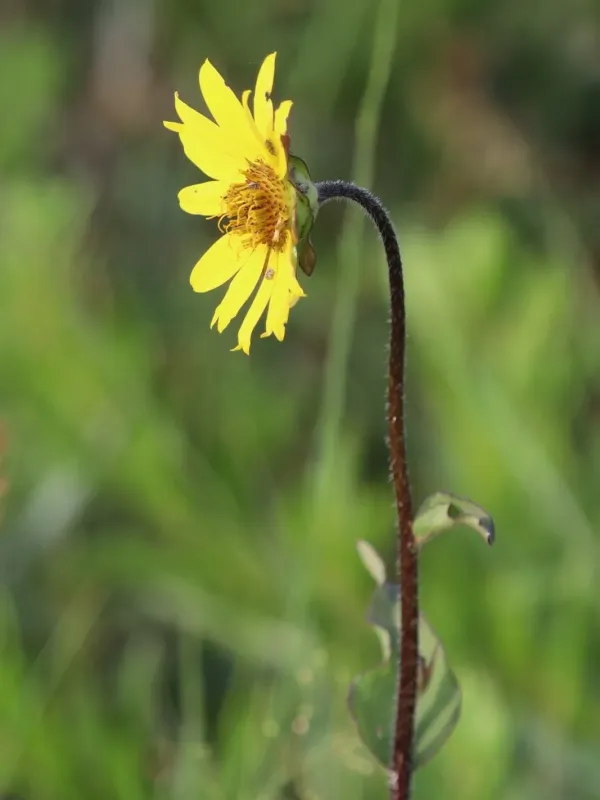
The stems of the plant are erect, rough to the touch, and covered with characteristic stiff hairs. These morphological features help to distinguish it from other plant species present in the field during the early stages of vegetation.
Its inflorescences consist of typical daisy-like yellow flower heads. The plant produces a significant number of seeds, which are equipped with structures that facilitate wind dispersal, allowing it to rapidly colonize new agricultural land or abandoned plots.
The species exhibits high biological adaptability and resilience to extreme environmental conditions. It starts growing early in the spring, allowing it to establish itself in the field before many traditional crops emerge, thus gaining a competitive advantage.
Rough silphium's root architecture is highly efficient in exploring deep soil layers. This ensures the plant access to water and nutrients even in arid conditions or during prolonged drought, making it a persistent and difficult weed to eliminate completely.
Where it grows
Rough silphium is naturally found in prairies and open landscapes, but it has increasingly become a problem in agricultural settings. It often thrives along field margins, fence lines, and in areas where soil management is less intensive.
It prefers fertile, well-drained soils but shows significant plasticity in its habitat requirements. When present on the borders of a field, it acts as a constant seed source, allowing the weed to migrate into the core crop areas over time.
This weed frequently infests row crops like corn and sunflowers, especially where post-emergence cultivation is insufficient. It is also a common weed in perennial pasture settings, where it can outcompete desirable forage grasses.
The spread of rough silphium is often facilitated by agricultural machinery moving between fields. Seeds can easily stick to equipment, and fragments of root systems may be dragged from infested patches to clean areas during tillage operations.
In fields with minimal tillage, rough silphium is particularly difficult to control because the root systems remain undisturbed. Over time, it forms dense colonies that can dominate the vegetation cover of a field, significantly altering local biodiversity.
Harm it causes
The primary damage caused by rough silphium is competition for essential resources, including water, nitrogen, and phosphorus. Its deep root system allows it to compete effectively with deep-rooted crops, directly reducing their potential yield.
The species exhibits allelopathic properties, releasing chemical compounds into the surrounding soil that inhibit the growth and germination of neighboring plants. This interference makes it harder for crop species to establish a healthy canopy.
Rough silphium complicates harvesting operations significantly. Its tough, fibrous stems can damage harvesting equipment, while the presence of its seeds in the crop harvest leads to contamination, increasing the costs associated with cleaning and drying the grain.
As a dense grower, it shades out emerging crops during their most critical growth stages. This reduction in light availability limits photosynthesis, leading to weakened crop plants that are more susceptible to secondary infections and pest attacks.
The plant can also serve as an alternate host for various pests and diseases that affect cultivated crops. This increases the phytosanitary burden on the farm, often requiring more intensive chemical interventions to manage the combined weed and pest pressure.
How to control
Deep moldboard plowing is one of the most effective mechanical methods to control rough silphium. By cutting the roots at depth and exposing them to the surface, the plant's food reserves are exhausted, eventually leading to its demise.
Integrated weed management should emphasize the control of field margins to prevent the initial encroachment of the weed. Regular mowing before flowering is essential to limit seed production and stop the spread of the weed to the interior of the field.
Chemical control usually involves the use of systemic herbicides applied during the plant's active growth stage. Glyphosate-based products are often used in fallow fields or pre-planting to ensure the chemical is translocated to the root system.
Management in standing crops is more challenging and often requires early intervention when the weed is in the rosette stage. Selective herbicides can be used, though timing and the specific crop type must be carefully considered to avoid damage.
- Deep plowing to exhaust root energy reserves.
- Regular mowing of field margins to prevent seed set.
- Use of systemic herbicides in fallow periods for maximum efficacy.
- Cleaning of agricultural machinery to prevent cross-field spread.
Taxonomy
- Latin name
- Silphium radula
- Family
- Сложноцветные (астровые)
- EPPO code
- SIPRA