
Cup plant
Silphium perfoliatum
Description
How to tell it apart
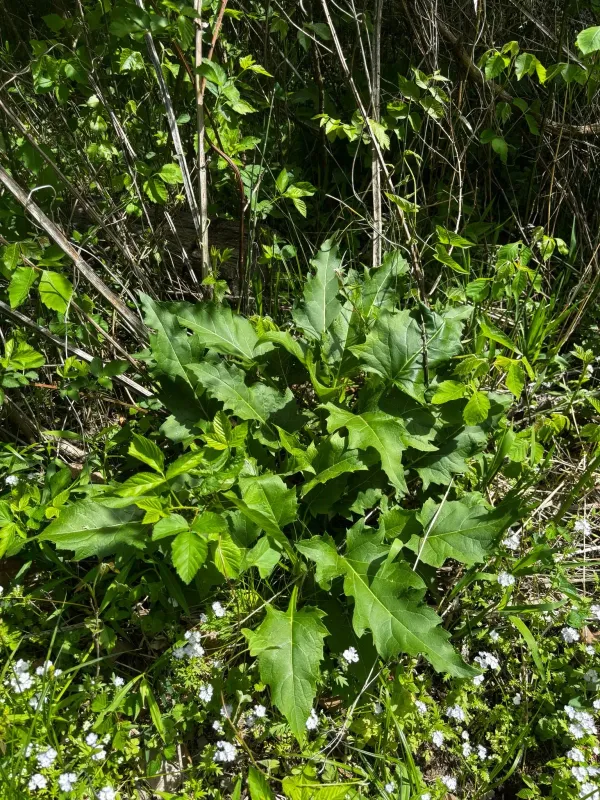
The cup plant (Silphium perfoliatum) is a member of the Asteraceae family. It is a robust perennial herb that can grow up to 2.5 meters in height, featuring a distinct four-angled stem.
The name "cup plant" originates from its opposite leaves that are joined at the base around the stem, creating a cup-like structure capable of holding rainwater.
The plant produces bright yellow flower heads that resemble small sunflowers, appearing at the top of the stems and lateral branches during late summer.
It possesses a strong, creeping rhizomatous root system that allows the plant to survive harsh winter conditions and regenerate rapidly during the growing season.
The fruits are winged achenes, which are easily dispersed by wind and water, allowing the plant to colonize new areas efficiently over short distances.
Where it grows
In its natural habitat, the cup plant is found in moist meadows, riverbanks, and woodland edges, preferring deep, nutrient-rich, and moist soil conditions.
As a weed, it frequently invades roadside ditches, drainage canals, and neglected pastures, spreading quickly into cultivated areas where moisture is readily available.
The species shows high adaptability to various soil types, but it thrives most aggressively in nitrogen-rich environments, quickly forming dense, uniform stands.
In many regions, cup plant infestations originate from former intentional cultivation trials where the plant was introduced for forage, later escaping into the wild.
It is now considered a problematic weed in many agricultural settings, as it readily establishes itself in areas with minimal human disturbance over long periods.
Harm it causes
The primary damage caused by the cup plant is its competitive superiority over crops, as it shades out smaller plants and robs them of essential sunlight.
Its massive root system exerts significant pressure on surrounding soil, depleting water and nutrient resources that are vital for the development of grain crops.
The thick, woody stems of mature plants can damage harvesting machinery, clogging headers and increasing wear on blades and other mechanical components.
The plant acts as a host for various insects and plant pathogens, which can then spread to sensitive crops, increasing the risk of disease outbreaks in fields.
Because of its rapid vegetative spread, it can quickly reduce the productive area of a field, turning fertile land into a difficult-to-manage environment.
How to control
Mechanical control involves persistent cultivation, specifically targeting the root system by slicing through rhizomes during the early rosette stage of growth.
Regular mowing of the foliage before flower development is essential to prevent seed dispersal and to slowly exhaust the plant's underground energy reserves.
Chemical control programs often rely on systemic herbicides that translocate to the roots, which is the most effective way to ensure the plant does not regenerate.
For chemical management, timing is critical; applications should be made when the plant is actively growing but before it reaches the budding stage.
- Deep plowing to bury the rhizomes.
- Integrated crop management with competitive cover crops.
- Systemic herbicide treatment in hotspot areas.
- Ongoing monitoring of field margins to prevent spread.
Taxonomy
- Latin name
- Silphium perfoliatum
- Family
- Сложноцветные (астровые)
- EPPO code
- SIPPE