
Madagascar ragwort
Senecio madagascariensis
Description
How to tell it apart
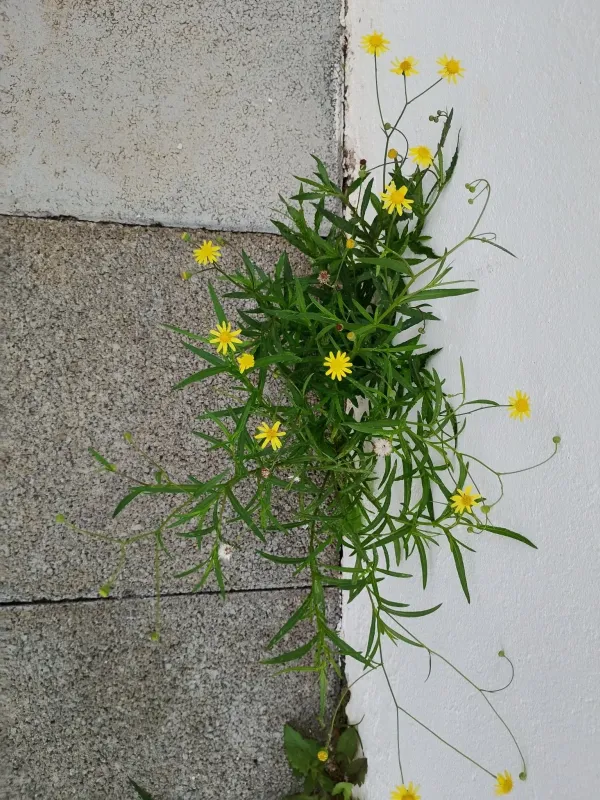
Madagascar ragwort (Senecio madagascariensis) is an invasive perennial herb belonging to the Asteraceae family. It typically grows as an erect, branched plant reaching heights of up to 50 cm.
The leaves are alternate, linear-lanceolate, and often feature serrated margins. Its most distinct feature is the yellow, daisy-like flower heads, which usually consist of 10 to 15 ray florets.
The plant spreads via wind-dispersed seeds equipped with a pappus, allowing for rapid colonization of new areas. Germination typically peaks during cooler, moist seasons.
It possesses a deep, branched taproot that enables the plant to survive in degraded soils and maintain growth during periods of moderate water stress.
Because it can look similar to native groundsel species, accurate botanical identification is essential for implementing effective weed management programs.
Where it grows
Madagascar ragwort is a highly adaptive weed that thrives in disturbed environments, roadsides, and agricultural pastures where soil cover is minimal.
It acts as a primary invader in forage crops, rapidly filling gaps in pastures caused by drought or overgrazing. It effectively outcompetes native vegetation for sunlight and nutrients.
The weed is frequently introduced into new fields via farm machinery, contaminated hay, or through transport of soil containing the seeds.
It is particularly problematic in subtropical regions, where its life cycle allows it to produce multiple generations if moisture levels remain favorable.
Once established, the plant often forms dense monotypic patches, preventing the regrowth of desirable pasture species and reducing land carrying capacity.
Harm it causes
The primary concern regarding this species is its toxicity to livestock. It contains pyrrolizidine alkaloids, which are potent toxins that cause severe and irreversible liver damage.
The toxins remain stable even after the plant is dried, meaning that contaminated hay or silage poses a lethal risk to horses, cattle, and sheep.
Infestations reduce the nutritional value of grazing lands and force farmers to abandon infested fields, leading to significant economic losses in the livestock sector.
Beyond animal health risks, it competes aggressively with pasture grasses, leading to lower forage biomass production and decreased efficiency of agricultural operations.
Its status as a widespread invasive weed necessitates strict quarantine measures in many countries to prevent its movement into non-infested regions.
How to control
Integrated weed management is key: maintaining a dense pasture cover is the most effective cultural method to suppress seedling emergence through competition.
Preventative measures include managing stocking rates to avoid overgrazing, as bare ground provides the ideal germination site for wind-blown seeds.
Manual removal is effective only for small, isolated patches and must be completed before the flowering stage to prevent further seed dispersal.
Chemical control involving selective herbicides is recommended for larger infestations, targeting plants during the rosette stage for maximum efficiency.
Biological control initiatives are being explored, including the release of host-specific insects, to reduce the population density of the weed in broad-acre environments.
Taxonomy
- Latin name
- Senecio madagascariensis
- Family
- Сложноцветные (астровые)
- EPPO code
- SENMD