
Senecio linearifolius
Senecio linearifolius
Description
How to tell it apart
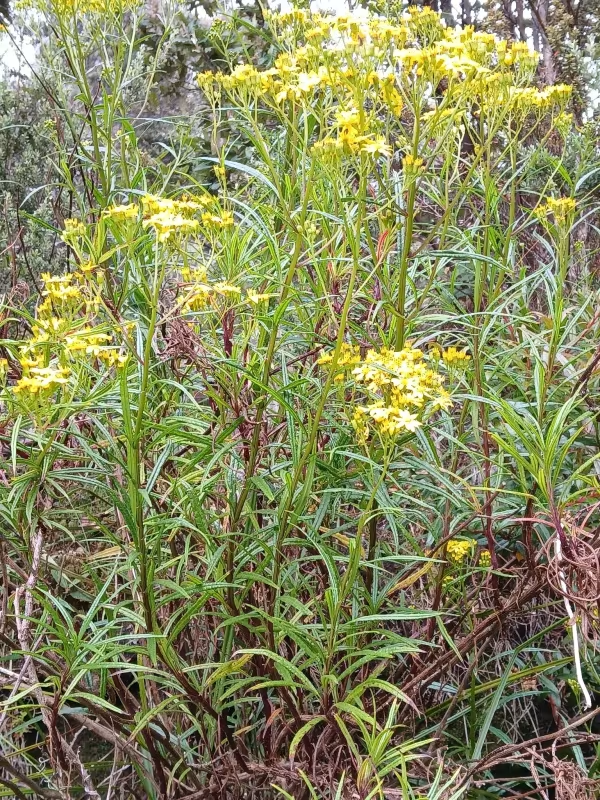
Senecio linearifolius is a perennial herbaceous plant belonging to the Asteraceae family. It is characterized by erect stems and narrow, linear-shaped leaves arranged in an alternate pattern, which defines the species name.
The inflorescences consist of typical daisy-like flower heads gathered in a loose corymb. The ray florets at the margins and the disk florets in the center are yellow, creating a vibrant visual display.
Biologically, the plant possesses a strong root system, which allows it to overwinter and resume growth vigorously in the early spring. This adaptation makes it a resilient competitor in various environments.
The seeds are equipped with a pappus, a tuft of fine hairs that facilitates long-distance dispersal via wind. This mechanism significantly aids the weed in colonizing new agricultural plots and fallow lands.
Distinguishing Senecio linearifolius from other related Senecio species often relies on specific leaf morphology and the timing of its flowering period, which usually peaks during the mid-to-late summer months.
Where it grows
This weed prefers open spaces, including abandoned fields, roadsides, and the edges of cultivated areas. It thrives on disturbed soils where competition from established crop species is relatively low.
In agricultural settings, it is commonly found in pastures, meadows, and row crops. The plant adapts well to various soil types, provided there is sufficient moisture and exposure to sunlight for optimal development.
Senecio linearifolius often displaces native forage grasses, forming dense stands that reduce the overall quality and productivity of pasture lands if left unmanaged by agricultural producers.
Poor crop rotation practices and inadequate fallow management create ideal conditions for this weed to establish persistent populations. Once established, it can easily spread to adjacent high-value fields.
The plant's ability to propagate vegetatively via root fragments during soil cultivation further complicates efforts to eradicate it, often leading to rapid re-colonization of tilled areas.
Harm it causes
The primary damage caused by this plant is its fierce competition with crops for limited resources such as water, essential nutrients, and sunlight, which can significantly reduce final harvest yields.
The plant contains pyrrolizidine alkaloids, which are toxic to livestock. Consumption of contaminated hay or forage can lead to severe liver damage and chronic poisoning in horses and cattle.
Weed infestation complicates mechanical harvesting processes and increases post-harvest costs associated with cleaning, drying, and purifying grain batches to meet quality standards.
Senecio linearifolius can act as an alternate host for various crop pathogens and insect pests, increasing the overall phytosanitary burden on the farm and requiring additional chemical treatments.
Its high seed production capacity leads to a massive seed bank in the soil, ensuring that the weed remains a persistent threat that requires consistent monitoring and management for several consecutive seasons.
How to control
Agronomic control strategies involve deep autumn plowing to sever and exhaust the root system. Regular mechanical cultivation between rows in row crops is essential to suppress weed development.
Crop rotation is a fundamental management tool; alternating between different crop types disrupts the weed's life cycle and prevents it from becoming fully established in the field environment.
Chemical control involves the application of systemic herbicides. Depending on the crop and local regulations, phenoxy acid-based or sulfonylurea-based herbicides are effective when applied at the appropriate growth stage.
- Mowing or cutting the weeds before they reach the flowering stage to prevent seed dispersal across the field.
- Using clean, certified seeds to prevent the introduction of weeds onto previously uninfested areas.
- Applying herbicides during the rosette phase for maximum uptake and translocation to the root system.
On pastures, spot-treatment of herbicide is recommended to target infestations directly without causing extensive damage to the remaining desirable forage species.
Taxonomy
- Latin name
- Senecio linearifolius
- Family
- Сложноцветные (астровые)
- EPPO code
- SENLI