
Senecio isatideus
Senecio isatideus
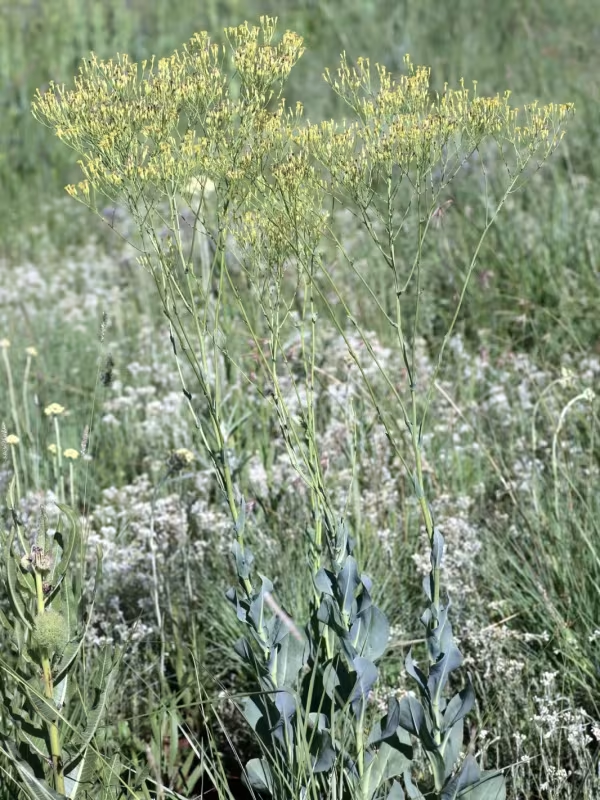
Description
How to tell it apart
Senecio isatideus belongs to the Asteraceae family and is a perennial herb. It typically develops a strong, deep-reaching root system, making it resilient to environmental stress.
The leaves are characterized by a lanceolate or oval shape, often featuring a distinct, woolly greyish tomentum on the underside, which is a key identifying feature.
The inflorescences consist of bright yellow flower heads arranged in dense, corymb-like clusters at the top of the erect stems.
This species is capable of significant vegetative regeneration from root fragments, which complicates control efforts based solely on tillage.
The seeds are equipped with a feathery pappus, allowing for efficient long-distance wind dispersal, which contributes to its rapid spread across agricultural landscapes.
Where it grows
Native to Southern Africa, this plant has adapted to various disturbed habitats, including pastures, roadsides, and wasteland areas.
It frequently invades permanent grasslands, field margins, and fallow lands. It is particularly common in areas where the soil has been disturbed by overgrazing or erosion.
It prefers sunny, open environments but shows a remarkable ability to survive in diverse soil types, ranging from sandy to heavier loam soils.
In farming regions, it often spreads from non-cultivated areas like irrigation ditches and fence lines into adjacent fields of crops.
Its ability to colonize depleted or poor-quality soils makes it a significant threat to pastures that are not managed correctly.
Harm it causes
The primary concern regarding Senecio isatideus is its toxicity; it contains pyrrolizidine alkaloids that cause chronic liver damage in livestock, especially horses and cattle.
It acts as a aggressive competitor for nutrients, water, and sunlight, directly reducing the yields of primary agricultural crops when allowed to establish.
On grazing lands, the weed outcompetes desirable forage species, leading to a loss of nutritional value in the pasture and reduced animal productivity.
Its high seed output means it can quickly dominate open spaces, creating dense thickets that hinder farm operations and interfere with the harvesting process.
Contamination of harvested fodder with this weed is a major safety concern for livestock producers, as the toxins remain potent even in dried hay.
How to control
Agricultural control measures include timely mowing before the flowering stage, which helps prevent seed production and exhausts the plant's carbohydrate reserves.
Deep plowing can be effective in reducing established stands, but must be repeated consistently to manage resprouting from broken root sections.
Chemical control involving systemic herbicides applied during the rosette stage of the weed is highly effective in reducing population density.
Maintaining a healthy, dense cover of competitive pasture species is one of the most effective long-term strategies for preventing weed invasion.
- Regular monitoring of field perimeters and fence lines.
- Manual removal of young plants before they produce seeds.
- Implementing rotational grazing to protect soil cover.
Taxonomy
- Latin name
- Senecio isatideus
- Family
- Сложноцветные (астровые)
- EPPO code
- SENIT