
Narrow-leaved ragwort
Senecio inaequidens
Description
How to tell it apart
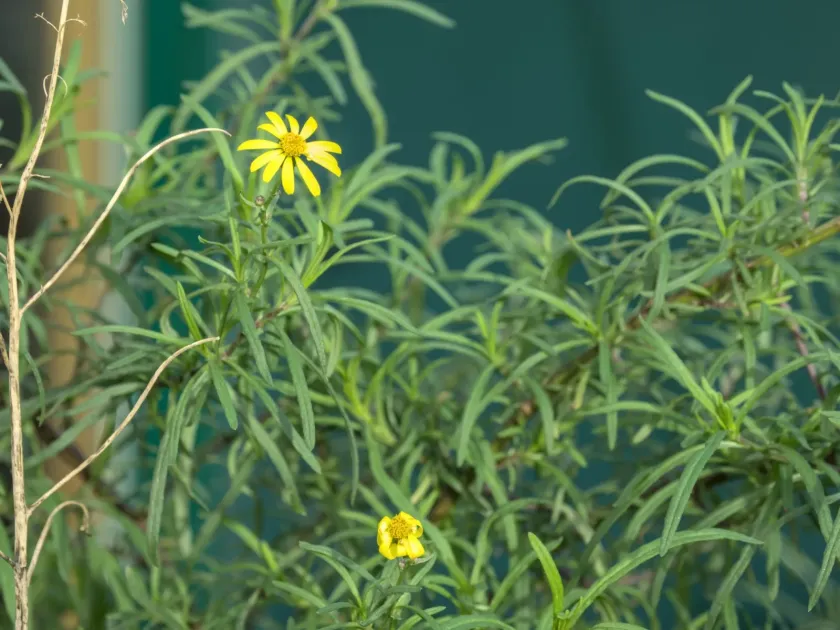
Senecio inaequidens, commonly known as narrow-leaved ragwort, is a perennial herbaceous plant belonging to the Asteraceae family, characterized by a deep taproot and branched stems.
The leaves are narrow, lanceolate to linear, and serrated, giving the plant a distinctive appearance. Stems can grow up to 1 meter in height and are highly branched.
It produces numerous small yellow flower heads arranged in loose clusters, making the plant very visible when it is in the flowering phase during summer.
The seeds are equipped with a white pappus, allowing for efficient long-distance wind dispersal, which is the primary reason for its rapid spread across regions.
This species is highly persistent and adaptive, capable of establishing itself in various soil types and environmental conditions with minimal requirements.
Where it grows
Originally from South Africa, this plant has become a highly invasive species throughout Europe, where it colonizes roadsides, railways, and farmlands.
It is frequently found in pastures, meadows, and disturbed agricultural lands where natural competition is reduced or soil has been recently disrupted.
The weed favors open, sun-exposed areas and can quickly invade fields with perennial crops or pastures if left unmanaged for several seasons.
It thrives on neglected fields and poorly managed margins, using these sites as a foothold to expand into neighboring productive crop zones.
The plant exhibits high drought tolerance, which allows it to survive in harsh conditions and outcompete crops that may be struggling with water stress.
Harm it causes
The primary concern regarding narrow-leaved ragwort is its toxicity; it contains pyrrolizidine alkaloids that are harmful to livestock, particularly horses and cattle.
As a vigorous weed, it competes intensely with crops for water, light, and nutrients, which directly impacts the yield potential of the agricultural land.
If harvested with hay or silage, the plant remains toxic to livestock, presenting a significant risk to animal health throughout the year.
The prolific seed production leads to soil seed bank enrichment, making the area prone to re-infestation for many years if not treated correctly.
In pastures, it reduces the availability of nutritious fodder, as it crowds out palatable grass species and reduces the total grazing capacity of the field.
How to control
Effective management requires an integrated approach that combines mechanical cultivation with appropriate chemical treatments to eradicate the infestation.
Regular deep tillage or plowing is an essential mechanical method to disrupt the root systems and kill young plants before they mature.
- Mowing before the flowering stage is critical to prevent seed set and further dispersal across the farmland.
- Systemic herbicide applications are effective, particularly when targeting the plants during the rosette stage of development.
- Improving pasture management by overseeding to maintain a dense cover, which limits the available space for weed colonization.
- Strict monitoring of field boundaries and manual removal of scattered individuals to prevent early invasion.
- Use of selective herbicides in cereal crops to manage the weed population without harming the main cultivated crop.
Chemical control is most successful when applied during the active growth phase, ensuring the herbicide is translocated into the root system to prevent regrowth.
Taxonomy
- Latin name
- Senecio inaequidens
- Family
- Сложноцветные (астровые)
- EPPO code
- SENIQ