
Senecio glomeratus
Senecio glomeratus
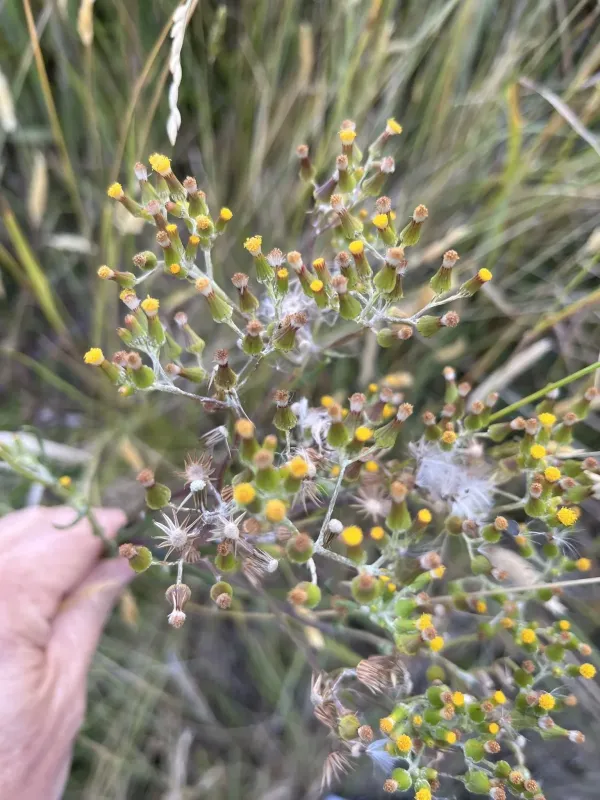
Description
How to tell it apart
Senecio glomeratus is an annual or biennial herb belonging to the Asteraceae family. It is characterized by a single, upright stem that can grow quite tall depending on soil fertility.
The leaves are lanceolate, with serrated margins, and the underside is often covered with a white, woolly tomentum, which is a key diagnostic feature for this species.
Flowers are arranged in dense, cluster-like heads at the top of the stem, creating a distinct compact inflorescence that helps distinguish it from other Senecio relatives.
The plant produces numerous seeds equipped with pappus, allowing for efficient wind dispersal over large distances, which significantly aids in its rapid colonization of new habitats.
The root system is typically a deep taproot that allows the plant to efficiently extract moisture and nutrients, providing a strong competitive advantage in agricultural fields.
Where it grows
Originally native to Australia, this plant has become an invasive species in various parts of the world, thriving in disturbed soils, roadsides, and abandoned agricultural lands.
In farming environments, it frequently infests row crop fields and pastures, particularly those that have been recently cleared or where natural vegetation has been removed.
It prefers sunny environments and well-drained soils, but it shows remarkable plasticity, often appearing in a wide range of soil types across different climatic zones.
The species is commonly found along forest edges, in harvested areas, and in zones where wildfires have occurred, as it is a prolific colonizer of bare earth.
It can easily establish itself in cultivated land if fallow periods are not managed correctly, eventually forming dense patches that suppress local flora and crop growth.
Harm it causes
The primary agricultural impact is severe competition with crops for space, light, and soil resources, which can lead to significant yield reductions in affected field areas.
This species contains pyrrolizidine alkaloids, which are toxic to livestock. Grazing on pastures infested with this weed can lead to liver failure and chronic health issues in cattle and sheep.
Its presence in hay crops is particularly dangerous, as the toxic components remain active in dried plant material, posing a serious threat to animal health during winter feeding.
The weed acts as a host for various agricultural pests and pathogens, increasing the overall disease pressure on neighboring crops and leading to increased chemical input requirements.
High seed production capacity leads to rapid contamination of the soil seed bank, ensuring that the infestation persists for several years even after initial eradication attempts.
How to control
Effective management of Senecio glomeratus requires a multi-faceted approach that combines cultural practices, mechanical destruction, and targeted chemical treatments.
Mechanical control focuses on deep tillage and frequent inter-row cultivation during the early stages of plant development to disrupt root growth and prevent seed set.
- Timely mowing of field margins to prevent the maturation of flowers and wind-borne seed dispersal.
- Implementation of cover crops to outcompete the weed in fallow fields.
- Strategic crop rotation to disrupt the life cycle of the invasive species.
Chemical control involves the use of selective herbicides, which are most effective when applied at the rosette stage before the plant develops its woody stem.
It is essential to implement an integrated management plan that includes treating the surroundings of the fields to prevent re-infestation from peripheral areas where the weed is established.
Taxonomy
- Latin name
- Senecio glomeratus
- Family
- Сложноцветные (астровые)
- EPPO code
- SENGO