
Cutleaf coneflower
Rudbeckia laciniata
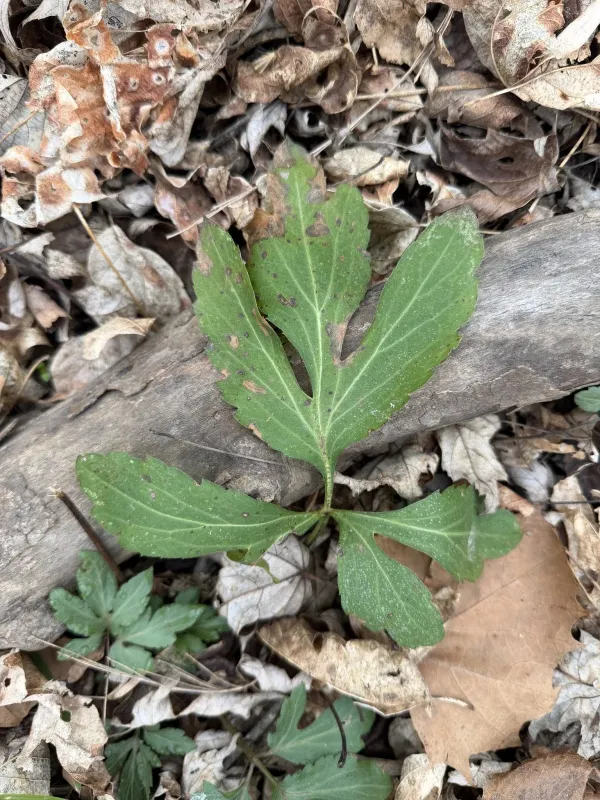
Description
How to tell it apart
Cutleaf coneflower (Rudbeckia laciniata) is a perennial herbaceous plant belonging to the Asteraceae family. It is characterized by a vigorous, creeping rhizome system that enables rapid spread.
The stems of the plant are erect, branching, and can reach heights between 50 and 200 centimeters. The lower leaves are deeply pinnately lobed, while the upper leaves become progressively smaller and simpler.
The inflorescences are distinct yellow flower heads with a prominent, greenish-yellow cone-shaped disc. The ray florets are typically yellow and hang slightly downwards as the flower matures.
Propagation occurs primarily through seeds and vegetative rhizome fragments. This dual survival strategy makes the species highly adaptable and capable of forming dense, mono-dominant colonies.
Its robust morphology and height make it easily recognizable in fields and meadows, often outcompeting lower-growing vegetation through sheer physical dominance.
Where it grows
Rudbeckia laciniata naturally thrives in moist environments. It is frequently found along riverbanks, in damp meadows, and in low-lying woodlands with nutrient-rich, moist soils.
In an agricultural context, it colonizes disturbed areas, abandoned fields, and pasture edges. Its preference for moisture makes it particularly problematic in low-lying crop fields and drainage ditches.
The plant acts as an invasive species in many regions, spreading into cultivated land from roadside ditches and riparian zones, where it is often sheltered from routine management.
It can tolerate a range of soil types, provided there is sufficient moisture. This adaptability allows it to persist on neglected farms and encroach on productive agricultural acreage.
Seed dispersal by wind allows for colonization of new sites across wide areas, making it difficult to contain once it has established a localized population in an agricultural system.
Harm it causes
The primary agricultural harm caused by the cutleaf coneflower is intense competition for light and soil nutrients. Its rapid vertical growth shades out shorter crops, suppressing their yield.
The massive rhizome system depletes soil moisture and nitrogen, which significantly stunts the development of surrounding crops, especially during drier growing seasons.
Heavy infestations of Rudbeckia laciniata can physically interfere with harvesting equipment. The woody, fibrous nature of the mature stems can lead to clogged machines and increased wear.
The plant acts as a host for various diseases and pests, which can migrate to neighboring crops. This can result in increased reliance on fungicides and insecticides in the area.
In pastures, it is considered a nuisance because it displaces palatable forage grasses. Its dominance significantly lowers the nutritional value and productivity of the grazing land.
How to control
Effective control requires a combination of physical and chemical methods. Deep cultivation that flips the soil is essential to disrupt the rhizome network and kill the root systems.
Regular mowing is critical to prevent seed production. By cutting the plants before they flower, the energy reserves in the rhizomes are slowly depleted over several growing seasons.
For chemical management, systemic herbicides containing glyphosate are effective on non-crop lands. Proper timing during the active growing phase is necessary for the herbicide to reach the rhizomes.
In crop fields, selective herbicides targeting broadleaf weeds can be used, though success often depends on multiple applications or integrated management programs due to the plant's resilience.
Monitoring field margins and drainage areas is a proactive step. Preventing initial establishment in these reservoirs is often more cost-effective than attempting to eradicate large-scale infestations later.
Taxonomy
- Latin name
- Rudbeckia laciniata
- Family
- Сложноцветные (астровые)
- EPPO code
- RUDLA