
Rhaponticum scariosum
Rhaponticum scariosum
Description
How to tell it apart
Rhaponticum scariosum is a perennial herbaceous plant belonging to the Asteraceae family. It is characterized by its robust structure and a deep, extensive root system.
The stems are typically erect and leafy, with leaves often being pinnately lobed or dissected, possessing fine hairs on the underside that help the plant retain moisture.
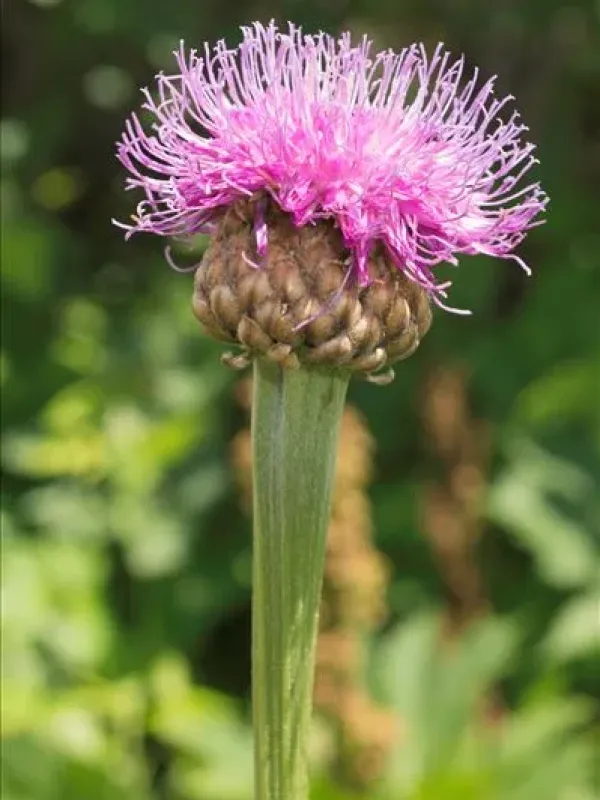
The flower heads are large, featuring purple or violet florets enclosed by an involucre of papery, scarious bracts that lack sharp, spiny scales.
As a resilient perennial, it grows to a significant height, often dominating the local flora in unmanaged areas and aggressively invading agricultural landscapes.
The plant reproduces both through airborne seeds and vegetative propagation from its underground root system, making it difficult to eradicate completely.
Where it grows
While naturally found in mountain meadows and rocky slopes, this plant has adapted to behave as a persistent weed in pastures, hayfields, and cultivated agricultural land.
It frequently colonizes fields that border natural vegetation zones, where seed dispersal by wind creates constant pressure on the crops.
The plant thrives on various soil types, ranging from nutrient-poor to heavy clays, demonstrating a high degree of adaptability to diverse environmental conditions.
In disturbed ecosystems or fields with infrequent soil tillage, it quickly forms dense, localized patches that can expand over several growing seasons.
Effective colonization depends on the lack of competitive pressure from crops and the absence of targeted control measures during the spring growth phase.
Harm it causes
The primary damage caused by this weed is the fierce competition with crops for essential soil nutrients, water, and solar radiation, leading to significant yield losses.
Through its extensive root network, the plant extracts moisture efficiently, creating a water deficit for crops during critical growth stages and drought periods.
The dense vegetative growth shades out lower-growing crops, interfering with their photosynthesis and general development throughout the season.
Presence of this weed in fields complicates harvesting operations, often leading to mechanical issues and increased labor costs for farm management.
Its allelopathic effects can further inhibit the growth of surrounding desired plant species by releasing chemicals that disrupt their physiological processes.
How to control
Agrotechnical control methods such as deep plowing with moldboard inversion are essential to disrupt the root system and weaken the plant's viability.
Regular mowing or mechanical cultivation before the flowering stage is critical to prevent seed formation and deplete the energy reserves stored in the roots.
Chemical control involving systemic herbicides, particularly those effective against broadleaf perennials, is recommended for managing large infestations.
Applying herbicides during the rapid vegetative growth phase ensures optimal translocation to the root system, which is vital for long-term suppression.
An integrated approach, including strict crop rotation and the use of competitive catch crops, helps maintain control and prevents the re-establishment of the weed.
Taxonomy
- Latin name
- Rhaponticum scariosum
- Family
- Сложноцветные (астровые)
- EPPO code
- RCMRH