
Pyrrocoma racemosa
Pyrrocoma racemosa
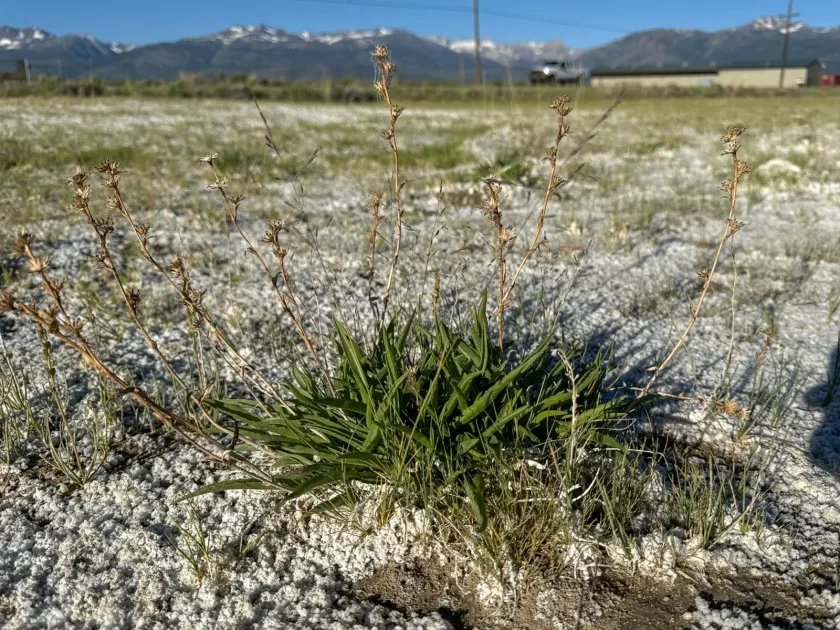
Description
How to tell it apart
Pyrrocoma racemosa, commonly known as clustered goldenweed, is a perennial herbaceous plant belonging to the Asteraceae family. It is recognized for its robust, erect stems that can grow up to 60-80 cm in height.
The plant features leathery, alternate leaves that are often lanceolate or oblong in shape. This leathery texture is an adaptation that helps the plant thrive in various moisture conditions and provides resistance to environmental stressors.
The inflorescence consists of yellow flower heads arranged in a racemose or panicle-like structure. These flowers bloom typically in mid-to-late summer, producing seeds equipped with a pappus, which aids in dispersal via wind.
As a deep-rooted perennial, it possesses an extensive root system capable of overwintering. This biological trait makes it difficult to eradicate, as the plant can easily resprout from underground rhizomes even after the above-ground parts are removed.
The species is classified as a persistent perennial weed that propagates both sexually through seeds and vegetatively through root fragmentation. Its rapid growth during the spring allows it to outcompete native or crop vegetation early in the season.
Where it grows
Pyrrocoma racemosa is native to parts of North America, where it primarily inhabits moist meadows, grasslands, and pastures. It often colonizes areas with higher soil moisture, such as the edges of wetlands or irrigation ditches.
In agricultural settings, it becomes a nuisance when it invades crop fields, particularly perennial forage crops or cereals. It thrives in soils that may be compacted or poorly drained, providing it an advantage over some less hardy crops.
The weed frequently establishes itself on abandoned lands or field margins, acting as a reservoir from which it spreads into cultivated areas. Its presence on field borders is a common precursor to wider infestation within the crop canopy.
The plant shows high plasticity regarding soil types, performing well in both clay-heavy and loamy soils. This adaptability allows it to persist even when fields are subjected to varying moisture levels throughout the growing season.
Dispersal is further facilitated by human activities, including the movement of farm machinery and the use of poorly cleaned seeds. Once established, the root system anchors the plant firmly, making natural removal or erosion unlikely to occur.
Harm it causes
The primary harm caused by Pyrrocoma racemosa is competitive exclusion. By consuming large amounts of nutrients and water, it stunts the growth of adjacent crops, leading to significant reductions in total biomass and overall harvestable yield.
Shading is another critical factor; the dense growth habit of this weed limits the amount of solar radiation reaching crop seedlings, thereby weakening the crop's development and reducing its photosynthetic efficiency.
Its deep root system allows it to reach water reserves that are otherwise inaccessible to shallower-rooted crops. During periods of drought, this competition for limited water resources often results in crop failure or diminished quality.
The weed also serves as an alternate host for various pests and fungal pathogens, increasing the risk of disease outbreaks within the field. This necessitates increased expenditure on pesticides to protect the main crop from these secondary threats.
Harvesting becomes problematic due to the presence of the weed, which can clog machinery and increase the moisture content of the harvested product. Furthermore, the inclusion of weed seeds in the final harvest reduces marketability and grain purity.
How to control
Effective management requires an integrated approach that combines mechanical cultivation with chemical interventions. Frequent and deep plowing is essential to disrupt the root systems and prevent the regeneration of the plant.
Crop rotation remains one of the most effective agronomic strategies. By planting dense, fast-growing cover crops or competing varieties, farmers can naturally suppress the establishment and spread of Pyrrocoma racemosa.
Chemical control usually involves the application of systemic herbicides. For best results, treatments should be timed to coincide with the plant's active growth phase, typically before it begins to allocate resources to flowering and seed production.
- Utilize selective broadleaf herbicides to minimize crop damage.
- Implement mechanical hoeing in row crops to disrupt new shoots.
- Maintain clean field borders to prevent seed rain and vegetative encroachment.
Ongoing monitoring is necessary, as a single application is rarely sufficient to eradicate a well-established colony. Repeated herbicide applications or mechanical interventions over several seasons are required to exhaust the energy stored in the root systems.
Taxonomy
- Latin name
- Pyrrocoma racemosa
- Family
- Сложноцветные (астровые)
- EPPO code
- YYRRA