
Lanceleaf goldenweed
Pyrrocoma lanceolata
Description
How to tell it apart
Lanceleaf goldenweed (Pyrrocoma lanceolata) is a perennial herbaceous plant belonging to the Asteraceae family. It is characterized by its robust taproot system that supports survival in diverse environments.
The stems are generally erect and can grow to various heights depending on the nutrient availability and soil moisture conditions of the site.
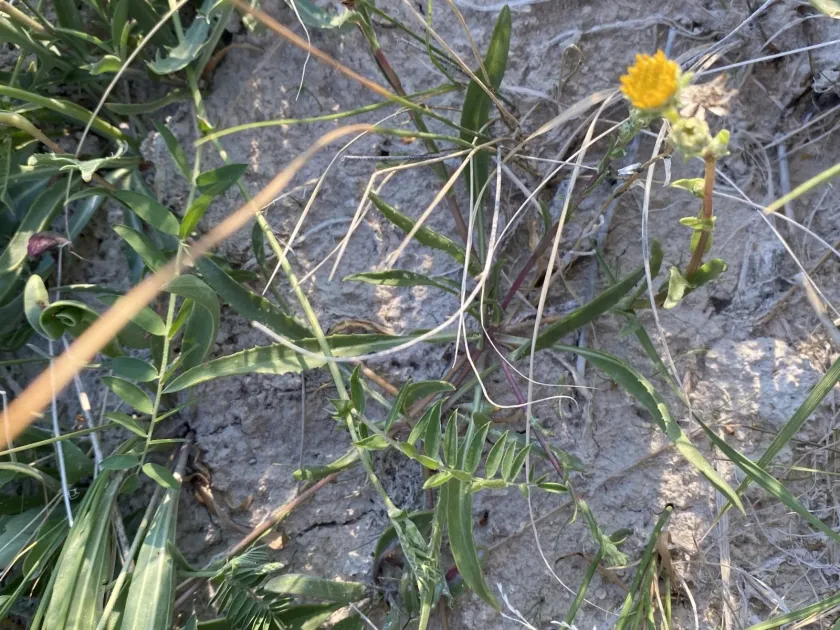
The leaves, as the common name suggests, are lanceolate or narrow-elliptic in shape. This feature helps distinguish it from other Asteraceae species commonly found in the same habitats.
Yellow flower heads appear during the blooming season, usually solitary or arranged in loose clusters, providing a distinct visual marker for field identification.
The plant demonstrates high adaptive capabilities, allowing it to establish itself in both disturbed soils and semi-natural grassland environments effectively.
Where it grows
This weed is native to parts of North America, typically thriving in moist meadows, floodplains, and areas with saline or alkaline soil properties.
In agricultural settings, it is often found invading pastures, rangelands, and forage fields where the native plant community has been weakened or disturbed.
It prefers areas with high water content, such as the margins of irrigation ditches or natural depressions where soil moisture levels are consistently high.
Lanceleaf goldenweed shows a high tolerance for salt-affected soils, which allows it to outcompete standard crop species that may struggle in such conditions.
It favors sunny, open sites with limited cover, which explains its prevalence in managed pastures that are not grazed in a rotational or strategic manner.
Harm it causes
The primary damage caused by Lanceleaf goldenweed is its intense competition with desired forage species for moisture, sunlight, and soil nutrients.
It significantly reduces the quantity of high-quality biomass available for livestock, as it is often unpalatable and possesses lower nutritional value compared to grasses.
By consuming excessive water from the soil, it can create localized drought conditions for more sensitive neighboring crop plants or desirable legumes.
The prolific seed production of the plant leads to the rapid infestation of adjacent fields, creating long-term management challenges for landowners.
The presence of dense stands of this plant complicates mechanical field operations, increasing fuel and maintenance costs for agricultural machinery.
How to control
Cultural control methods such as strategic mowing can prevent seed set, which is crucial for stopping the further spread of the infestation.
Deep cultivation or plowing is effective in breaking up the root systems, which significantly weakens the plants and reduces their ability to recover over multiple seasons.
Chemical control usually involves the application of systemic herbicides, such as 2,4-D or other broadleaf-selective products, applied during the active growth phase.
Improving pasture health through proper fertilization and overseeding with competitive grass species can naturally suppress the expansion of goldenweed populations.
- Timing herbicide application before the plant enters the budding stage.
- Ensuring proper soil drainage to limit the weed's competitive advantage.
- Monitoring infested areas for several years to address regrowth from the seed bank.
- Integrating mechanical and chemical methods for persistent, large-scale infestations.
Taxonomy
- Latin name
- Pyrrocoma lanceolata
- Family
- Сложноцветные (астровые)
- EPPO code
- YRRLA