
Pseudognaphalium oligandrum
Pseudognaphalium oligandrum
Description
How to tell it apart
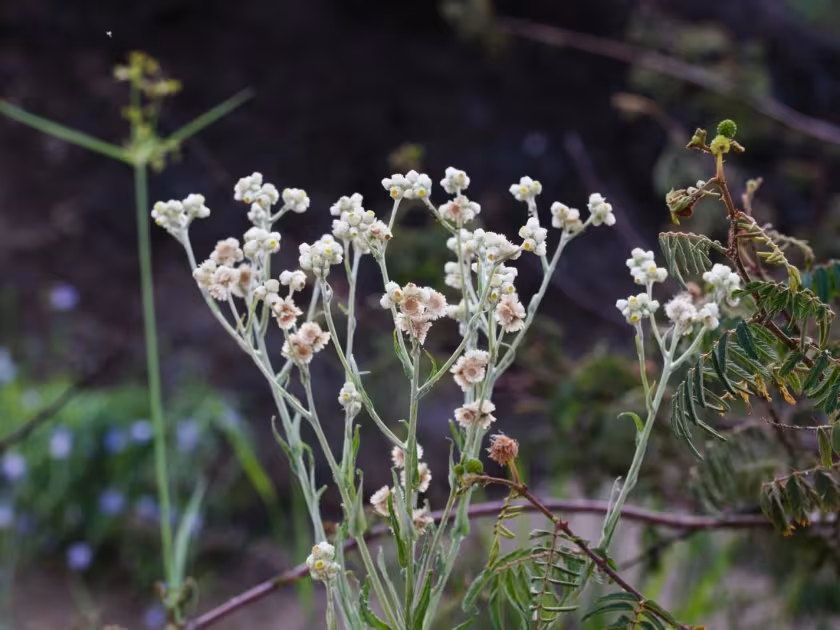
Pseudognaphalium oligandrum is an annual herbaceous plant belonging to the Asteraceae family. It is characterized by dense, glandular, woolly hairs that give the entire plant a grayish appearance.
The stems are erect, branched towards the top, and covered in narrow, lance-shaped leaves. This vestiture helps the plant retain moisture, making it resilient in harsh, dry environments.
The inflorescences consist of small, dense flower heads arranged in corymb-like clusters. The involucral bracts are dry and papery, often possessing a yellowish or brownish hue, which serves as a key diagnostic feature.
The root system is typically a slender taproot, designed for efficient nutrient uptake in poor soils. Like other members of the genus, it spreads primarily through wind-dispersed seeds.
The seeds are equipped with a pappus, a tuft of fine hairs that acts as a parachute, allowing the seeds to travel long distances, facilitating rapid colonization of vacant agricultural areas.
Where it grows
This weed prefers open, sunny habitats with sandy or well-drained loamy soils. It is frequently found in fallow lands, pastures, and disturbed soil along roadsides and field edges.
In agricultural settings, it commonly infests row crops, particularly during the early stages of establishment. It thrives in conditions where soil disturbance is frequent, such as after tillage operations.
The plant is highly heliophilic and avoids shaded environments. Consequently, it is less common in dense crop canopies but becomes highly problematic in fields with low plant density.
Anthropogenic influence is a major factor in its spread. The movement of agricultural machinery between infested and clean fields is the primary vector for seed dispersal.
It displays high phenotypic plasticity, allowing it to adapt to various moisture regimes. It is often one of the first species to colonize neglected farmland or abandoned plots.
Harm it causes
The primary damage is caused by resource competition. Pseudognaphalium oligandrum competes directly with main crops for sunlight, soil moisture, and essential mineral nutrients, reducing crop yield.
High seed production rates lead to a persistent soil seed bank. If left unchecked, the population can increase exponentially, requiring long-term intervention to reduce the soil weed pressure.
The plant can act as an alternative host for various crop pests and pathogens, serving as a reservoir that allows infestations to persist even during crop rotation cycles.
In pastures, it decreases the nutritional value of the forage. Its glandular, woolly texture makes it unpalatable for livestock, potentially leading to selective grazing that favors the weed.
It creates significant challenges during harvest. The succulent green mass of the weed can clog harvesting equipment and increase the moisture content of the harvested grain.
How to control
Integrated weed management is crucial. Deep plowing (moldboard plowing) is effective at burying seeds deep into the soil profile, preventing germination and emergence.
Mechanical control, such as pre-emergence harrowing or early-season cultivation, is highly effective at destroying young seedlings before they develop a deep root system.
Chemical control focuses on post-emergence herbicides. Products containing systemic active ingredients like 2,4-D, dicamba, or sulfonylureas are generally effective against this species.
Crop rotation should include dense-canopy crops to shade out the weed. Establishing a competitive crop stand is one of the most sustainable long-term strategies for suppression.
- Regular mowing of field margins to prevent seed set.
- Using high-quality, weed-free certified seeds for planting.
- Monitoring and spot-treating localized patches early in the season.
Taxonomy
- Latin name
- Pseudognaphalium oligandrum
- Family
- Сложноцветные (астровые)
- EPPO code
- GNAOL