
Portulaca quadrifida
Portulaca quadrifida
Description
How to tell it apart
Portulaca quadrifida is a succulent annual weed belonging to the Portulacaceae family. It is characterized by its prostrate, creeping stems that easily root at the nodes when in contact with moist soil.
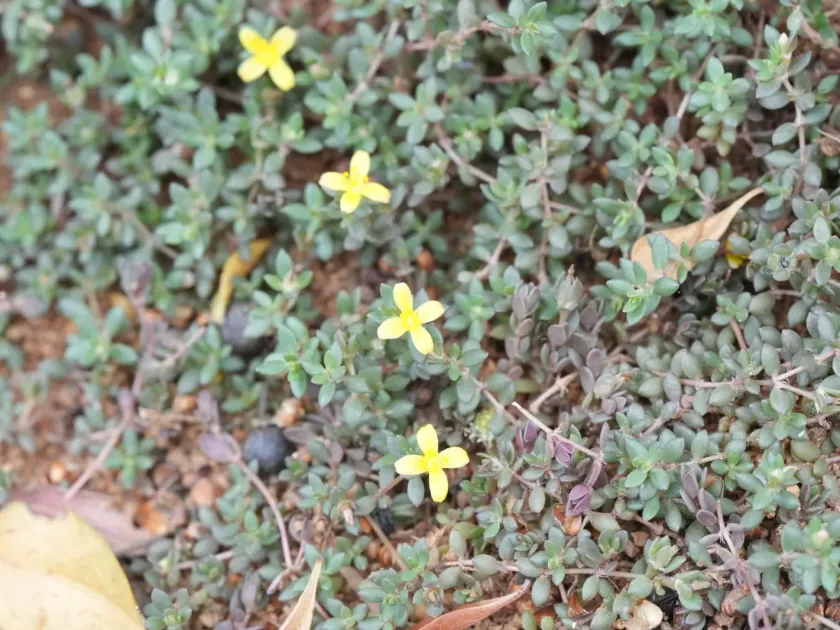
The leaves are fleshy, ovate, and opposite, which is a key identification feature. The nodes are often surrounded by small, hairy tufts that help distinguish this species from other relatives.
The flowers are small and yellow, typically blooming in bright sunlight. They are terminal, situated at the tips of the branches, and open for only a few hours during the day.
This weed is highly adaptable, exhibiting rapid vegetative growth during the warm season. Its succulence allows it to survive in harsh, arid conditions where other plants might fail.
The fruit is a small capsule containing numerous tiny, black seeds. These seeds are long-lived in the soil, allowing the plant to persist for many years even after initial eradication.
Where it grows
This plant is widely distributed in tropical and subtropical regions. It thrives in well-drained, loose soils and is particularly invasive in irrigated agricultural lands.
It is a common problem in vegetable crops such as tomatoes, peppers, onions, and cucumbers. Its fast-spreading nature makes it a formidable competitor for space and resources.
Portulaca quadrifida is frequently found on farms using drip irrigation, as the localized moisture allows it to establish rapidly between crop rows.
It also colonizes disturbed areas, such as roadsides, construction sites, and neglected garden beds, where it can easily spread its seeds to neighboring fields via wind or human activity.
The weed is known for its ability to grow in various soil types, although it shows a strong preference for high-nitrogen soils frequently found in highly productive farm fields.
Harm it causes
The weed competes aggressively with crops for water, light, and soil nutrients. This competition significantly reduces the vigor and yield potential of the main crop.
By forming a dense mat of vegetation, it creates a canopy that shades out young crop seedlings and interferes with the soil's ability to warm up and ventilate properly.
It serves as an alternative host for various pests and plant pathogens, which can migrate to crops, increasing the need for pesticide applications and reducing produce quality.
During the harvest period, the presence of the weed increases operational costs, as it interferes with mechanical equipment and creates waste that must be sorted from the crop.
The rapid colonization of irrigation systems by the weed can cause blockages in water distribution infrastructure, leading to inefficient water usage and increased maintenance labor.
How to control
Mechanical control through regular hoeing and inter-row cultivation is highly effective. It is crucial to uproot the plants entirely, as remaining stems can quickly re-root in damp soil.
Applying mulch—whether organic or synthetic—is an excellent preventative measure that denies the weed the sunlight required for germination and seedling development.
Chemical control can be achieved through the application of selective herbicides targeted at broad-leaved weeds. However, these should be applied when the weed is in its early growth stage.
Integrated Weed Management (IWM) programs that combine crop rotation, precise irrigation, and strategic tillage are the most sustainable ways to control Portulaca quadrifida.
- Remove weed patches before they produce flowers to prevent seed bank replenishment.
- Sanitize farm equipment to prevent the transport of stems or seeds to clean fields.
- Use cover crops that grow rapidly to suppress the establishment of weed seedlings.
Taxonomy
- Latin name
- Portulaca quadrifida
- Family
- Портулаковые
- EPPO code
- PORQU