
Mouse-ear hawkweed
Pilosella officinarum
Description
How to tell it apart
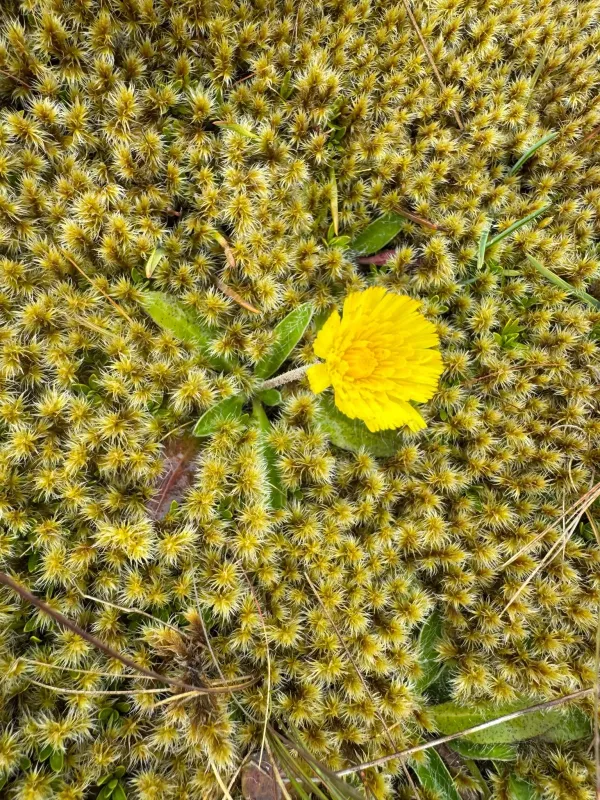
Mouse-ear hawkweed (Pilosella officinarum) is a perennial herbaceous plant belonging to the Asteraceae family. It is characterized by a basal rosette of leaves covered in dense, soft hairs, giving it a silver-grey appearance.
The flowering stems grow up to 10–30 cm tall, bearing a single bright yellow flower head. While it resembles a dandelion, it is distinctively smaller and much more densely covered in hair across all its aerial parts.
The plant spreads aggressively through long stolons (creeping runners) that root at the nodes. This vegetative reproduction allows the weed to form dense mats, quickly dominating the ground layer of fields.
Its root system is relatively shallow but extremely dense and fibrous. This allows it to efficiently absorb water and nutrients from the upper soil horizon, outcompeting many neighboring crop seedlings.
Seeds are equipped with a feathery pappus, enabling them to travel long distances via wind. This mechanism ensures that even after control measures, re-infestation from neighboring areas is a common challenge.
Where it grows
Mouse-ear hawkweed thrives in nutrient-poor, dry, and acidic soils. It is frequently found on sandy substrates, overgrazed pastures, meadows, and along field margins or roadsides.
In agricultural settings, it poses the greatest threat to permanent grasslands and clover or alfalfa fields where regular soil turning is not performed. It exploits open spaces in the canopy to establish colonies.
It is rarely a major problem in heavily tilled arable fields, but it persists on field edges and uncultivated corners, serving as a permanent reservoir for further invasion into crops.
The plant demonstrates remarkable drought tolerance, which gives it an ecological advantage on south-facing slopes and arid areas where traditional crop species might struggle.
Its presence is often a bio-indicator for soil acidity and low nitrogen levels, signaling to agronomists that the field may require specific soil amendments to improve overall crop competitiveness.
Harm it causes
The primary economic impact is the reduction of forage quality and yield in pastures. Dense hawkweed mats effectively "choke out" desirable grass species, leading to degraded pasture quality.
The plant exhibits allelopathic effects, releasing chemical compounds into the soil that inhibit the germination and development of other plants in its immediate vicinity.
Livestock typically avoid grazing on hawkweed due to its hairy texture. This leads to uneven grazing, where palatable grasses are over-consumed while the weed continues to spread unchecked.
By forming a thick carpet, it creates physical barriers that prevent seeds of desirable crops from reaching the soil, resulting in patchy and uneven stand establishment in permanent meadows.
Furthermore, these mats create a micro-environment that holds moisture at the soil surface, which can increase the risk of fungal infections and root rot for sensitive perennial crops.
How to control
Mechanical control is effective; regular disking and deep plowing help break the stolon network and exhaust the plant's food reserves before it can produce seeds.
Liming is a crucial agronomic strategy. By raising soil pH, the environment becomes less hospitable for hawkweed, allowing competitive forage grasses to establish dominance.
For chemical control, systemic herbicides, particularly those targeting broad-leaved weeds, are utilized. Spot treatments with glyphosate are recommended for managing isolated patches in non-crop areas.
Maintaining a high-vigor, dense grass stand is the best preventative measure. Proper fertilization and controlled grazing help ensure the pasture remains competitive against invasion.
Mowing before the flowering stage is vital to prevent seed dispersal. Repeated mowing over several seasons can significantly weaken the vegetative reproduction capability of the hawkweed population.
Taxonomy
- Latin name
- Pilosella officinarum
- Family
- Сложноцветные (астровые)
- EPPO code
- HIEPI