
Mouse-ear hawkweed
Pilosella lactucella
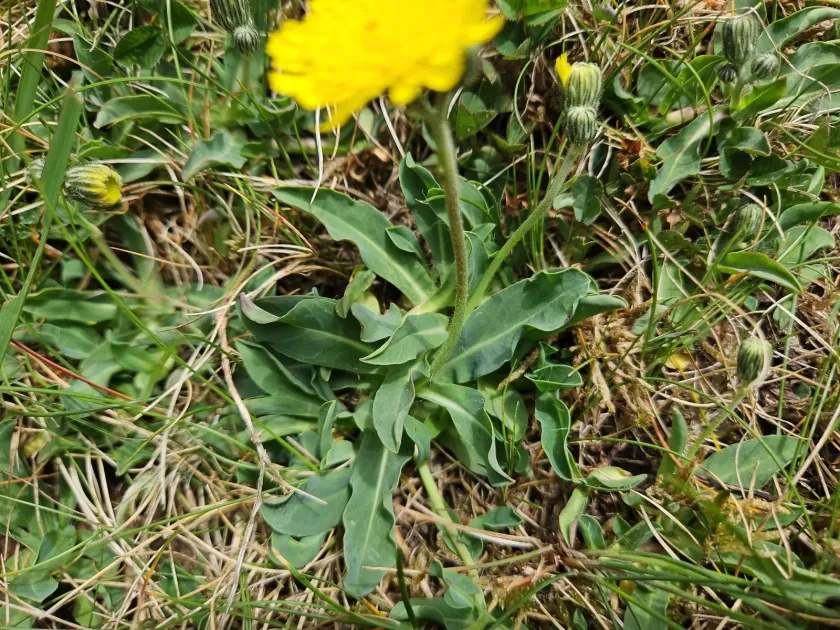
Description
How to tell it apart
Mouse-ear hawkweed (latin Pilosella lactucella) is a perennial herbaceous plant belonging to the Asteraceae family. It is characterized by a basal rosette of leaves.
The leaves are entire, lanceolate, and covered with fine hairs, giving them a soft texture. The flowering stems grow between 10 and 25 cm high.
The plant produces bright yellow flower heads. A key identification feature is the presence of long, creeping stolons that facilitate aggressive vegetative spread.
These stolons root at the nodes, allowing the plant to form dense mats that can cover significant areas of soil within a short period.
Flowering typically occurs from May to July, followed by the production of numerous achenes equipped with a pappus, facilitating wind dispersal.
Where it grows
This species thrives in moist, acidic, and nutrient-poor soils. It is commonly found in pastures, meadows, and disturbed habitats throughout its range.
In agricultural settings, it becomes a problematic weed in permanent grasslands where the sward density has decreased due to overgrazing or nutrient deficiency.
The plant is highly resilient and adapts to various moisture levels, although it avoids waterlogged sites. It prefers open, well-lit environments.
It often colonizes areas where the soil surface has been broken, such as paths, field edges, or areas subject to trampling by livestock.
On well-managed, fertile agricultural land, it rarely poses a significant threat, as it cannot compete with more vigorous crop species under optimal conditions.
Harm it causes
The primary economic impact of Mouse-ear hawkweed is the reduction of forage quality and productivity in permanent pastures and meadows.
Because it is generally unpalatable to livestock, its presence leads to a decrease in the overall feed value of the grass sward and reduces animal carrying capacity.
The dense vegetative mats formed by the plant physically exclude desirable grass and legume species, preventing their natural regeneration and growth.
It competes aggressively for soil moisture and nutrients, which is particularly detrimental during dry periods or in soils with limited fertility.
In hay production areas, high infestation levels can complicate harvesting processes and lead to a significant decrease in the final yield of high-quality fodder.
How to control
Effective management of this weed requires a combination of cultural, mechanical, and chemical control methods to minimize its footprint.
Improving soil fertility through liming and proper nitrogen fertilization encourages the growth of competitive grasses, which can naturally suppress the weed.
Controlled grazing management, ensuring that pastures are not overgrazed, helps maintain a vigorous sward that prevents the establishment of new plants.
- Deep mechanical cultivation and ploughing are effective for destroying the stolons and basal rosettes in preparation for reseeding.
- The application of selective herbicides containing 2,4-D or other broad-spectrum ingredients can control infestations in grass-based crops.
Consistent, long-term monitoring and repeat applications are necessary to address the seed bank and prevent the regrowth of fragments left in the soil.
Taxonomy
- Latin name
- Pilosella lactucella
- Family
- Сложноцветные (астровые)
- EPPO code
- QJLLA