
Bugloss mouse-ear hawkweed
Pilosella echioides
Description
How to tell it apart
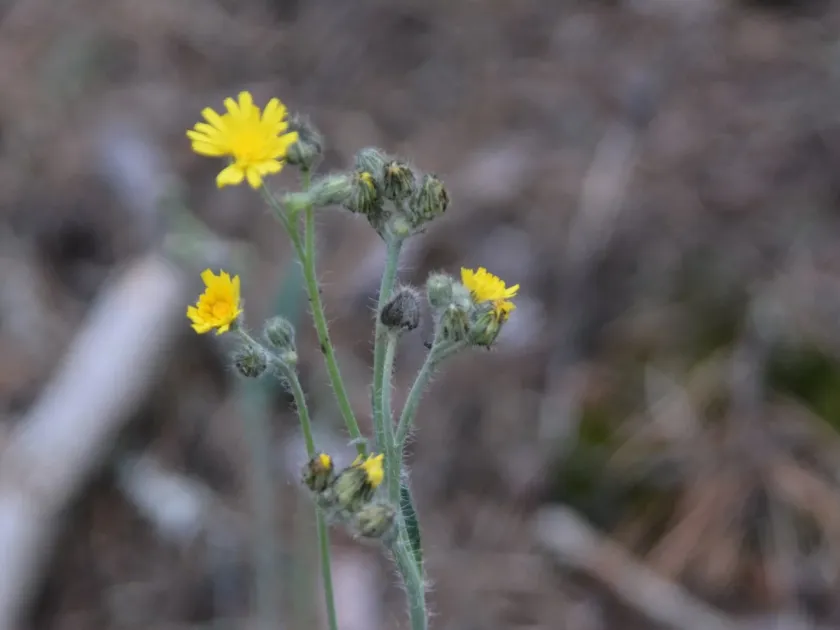
Bugloss mouse-ear hawkweed (Pilosella echioides) is a perennial herbaceous plant belonging to the Asteraceae family. It is recognized by its distinct hairy leaves and stems.
The plant typically features a basal rosette of leaves. The foliage is often grayish-green due to the presence of dense, stiff, and bristly hairs, which give it a characteristic appearance.
Its inflorescences are yellow flower heads, clustered at the top of the stem in a corymbose or paniculate arrangement. It blooms during the summer months.
The root system includes subterranean runners or rhizomes, enabling the plant to spread vegetatively across agricultural landscapes, making it a difficult weed to eradicate.
Seed heads produce achenes equipped with pappus, allowing seeds to be easily dispersed by the wind to colonize new agricultural and non-agricultural areas.
Where it grows
This weed is native to Eastern Europe, the Black Sea region, and the Caucasus. It thrives in open, sunny, and relatively dry habitats where competition from taller plants is limited.
In farming, it is frequently found in pastures, along field borders, and on roadsides, but it readily colonizes cultivated fields with disturbed soil surfaces.
The species prefers well-drained, light soils. Its ability to tolerate dry conditions gives it a significant advantage over many crops in arid or semi-arid climatic zones.
Agricultural fields left as fallow or those managed with infrequent tillage are particularly susceptible to heavy infestation by this perennial species.
It can survive in a variety of soil types, often becoming a dominant weed in perennial grass stands and light-soil cereal production systems.
Harm it causes
The primary damage caused by bugloss mouse-ear hawkweed is the intense competition for soil moisture and nutrients, which significantly reduces the growth rates of cash crops.
By forming dense patches through vegetative spread, the weed physically occupies space and suppresses the germination and development of cultivated plant species.
Infestation complicates agricultural operations and decreases the quality of harvested forage or grain, as the weed fragments may be difficult to separate during processing.
In pastures, it reduces the overall palatability and nutritional quality of the grazing area, forcing land managers to invest in weed control or pasture renovation.
The plant's resilience allows it to quickly recover after light soil cultivation, often resulting in increased density if mechanical control is performed improperly.
How to control
Effective control starts with deep moldboard plowing, which helps to bury the rhizomes and disrupts the plant's ability to regenerate its biomass.
Strategic crop rotation, including the use of competitive cover crops, is a highly recommended practice to shade out the weed and limit its spread during the growing season.
In fallow systems, repeated mechanical cultivation is necessary to exhaust the root system's stored reserves, effectively weakening the plant over time.
Chemical control is most successful when systemic herbicides are applied during the active rosette growth phase before the plant initiates its reproductive cycle.
For chemical intervention, selection should be guided by local regulations, targeting products that demonstrate high efficacy against perennial Asteraceae species.
Taxonomy
- Latin name
- Pilosella echioides
- Family
- Сложноцветные (астровые)
- EPPO code
- QJLEC