
Hieracium cymosum
Pilosella cymosa
Description
How to tell it apart
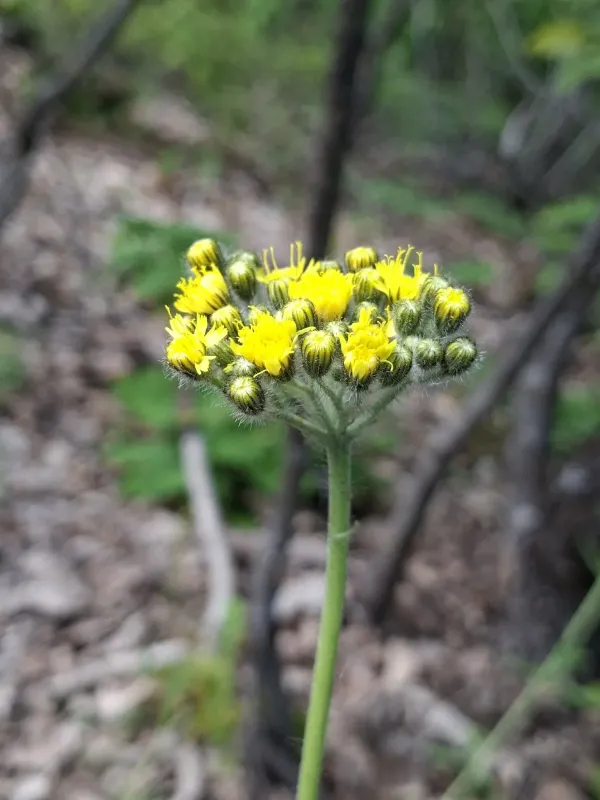
Hieracium cymosum (syn. Pilosella cymosa), commonly known as the tall hawkweed, is a perennial herbaceous plant belonging to the Asteraceae family. It features a basal rosette of leaves and an erect flowering stem that reaches 20 to 60 centimeters in height.
The plant is densely covered in fine hairs and sometimes glandular hairs, giving it a grayish-green appearance. The leaves are typically lanceolate or oblong, clustered at the base, and maintain integrity throughout the growth season.
The inflorescence consists of a dense cyme of bright yellow flower heads. Blooming occurs primarily from late spring through mid-summer, facilitating heavy seed production that can easily spread across fields.
The root system is composed of vigorous rhizomes, which are key to the plant's survival and expansion. These structures allow the weed to form thick, persistent mats that outcompete native or crop vegetation.
As a perennial rhizomatous weed, it demonstrates significant ecological plasticity. It excels in resource acquisition, which allows it to thrive in diverse environments and survive most conventional tillage practices.
Where it grows
This weed prefers open, sunny, and disturbed habitats. It is frequently observed in dry grasslands, pastures, forest edges, and along transport embankments where ground cover is sparse.
In agricultural settings, Hieracium cymosum often invades perennial grass crops, hayfields, and pastures. It is particularly problematic in areas with poor soil drainage or depleted nutrient levels.
The weed often colonizes fallow lands, acting as a reservoir for further migration into active grain or forage fields. Its ability to grow in sandy or rocky substrates makes it a resilient inhabitant of diverse landscapes.
It thrives in areas with low competition from higher-growing plants. Once established, it gradually expands its perimeter, effectively replacing useful flora in pasture environments.
It is widespread in temperate climates and is often found on the margins of fields, from which it can penetrate deeper into the crop canopy through both vegetative rhizome growth and wind-dispersed seeds.
Harm it causes
The primary damage caused by Hieracium cymosum is its ability to compete intensely for moisture and soil nutrients during the early stages of crop development.
In pastureland, it lowers the nutritional value of forage. Livestock generally avoid consuming it due to its bitter taste and the presence of dense hairs, which further degrades grazing quality.
The plant creates dense rosettes that shade the soil surface, limiting the establishment and growth of desirable seedlings. This results in sparse crop stands and reduced overall productivity.
Wind-blown seeds facilitate rapid colonization of neighboring areas, making it difficult to contain without widespread management. It can quickly recover from mechanical damage due to its extensive rhizome network.
High infestation levels lead to significant yield losses in hayfields, as the weed can dominate the lower canopy and exclude more productive grass species over multiple seasons.
How to control
Mechanical control focuses on deep plowing to expose and desiccate rhizomes. Frequent cultivation is necessary to exhaust the root system's carbohydrate reserves and prevent re-establishment.
Crop rotation serves as a critical agricultural strategy. Including row crops that allow for inter-row cultivation helps break the life cycle of the weed and reduces its presence in the field.
Mowing before the flowering stage is essential to prevent seed dispersal. This practice, combined with proper grazing management in pastures, helps keep the weed population under control.
Chemical control involving systemic herbicides like 2,4-D or dicamba is often required to achieve long-term management. These chemicals effectively target the plant's vascular system to ensure rhizome death.
- Implement deep autumn tillage to damage rhizomes.
- Use selective systemic herbicides during the rosette stage.
- Mow infested areas before seeds are produced.
- Maintain a high crop canopy density to suppress weed regrowth.
Taxonomy
- Latin name
- Pilosella cymosa
- Family
- Сложноцветные (астровые)
- EPPO code
- QJLCY