
Parthenium hysterophorus
Parthenium hysterophorus
Description
How to tell it apart
Parthenium hysterophorus is a member of the Asteraceae family. It is an annual herbaceous plant featuring a sturdy taproot and a highly branched stem that can grow up to 2 meters in height.
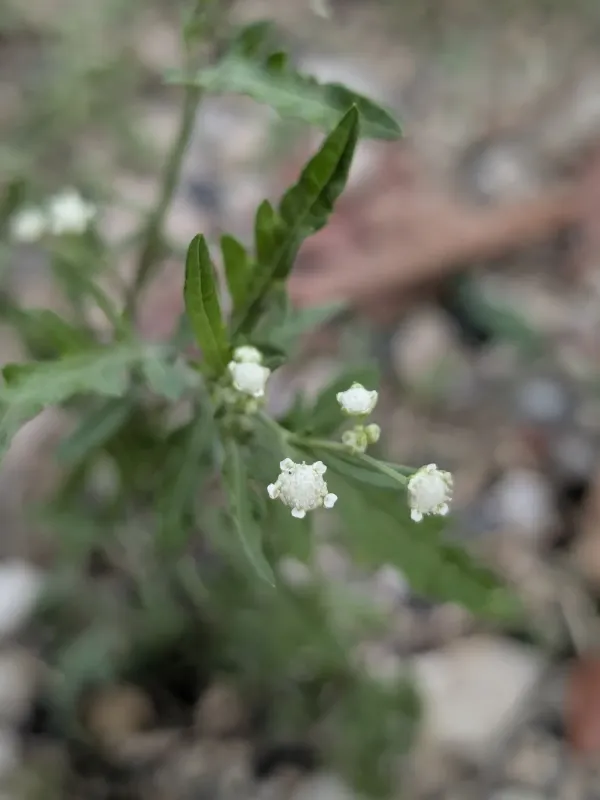
The leaves are deeply lobed and light green in color, covered with fine, soft hairs that give the plant a grayish appearance under certain lighting conditions.
The inflorescences consist of numerous tiny white flower heads arranged in loose clusters, which often lead to it being mistaken for types of mugwort or other weeds.
The plant is prolific, producing thousands of seeds that are easily dispersed by wind, water, and human activity, facilitating its rapid spread across diverse environments.
Its life cycle is exceptionally short, with the plant capable of reaching maturity and setting seeds in just four to six weeks, allowing for multiple generations per season.
Where it grows
This weed is a highly aggressive invader found in abandoned fields, along roadsides, on grazing pastures, in parks, and in urban areas, where it quickly outcompetes native vegetation.
It poses a significant threat to agricultural row crops, including corn, sunflower, soybean, and sorghum, where it competes aggressively for water, sunlight, and nutrients.
Parthenium thrives in disturbed soils and sun-exposed areas, though it exhibits high environmental plasticity, enabling it to survive in various soil types and climates.
While native to tropical regions, it has spread globally, becoming a major invasive species in many countries across Africa, Asia, and Australia, threatening local ecosystems.
In pastures, it often forms dense, monotypic stands, effectively choking out beneficial forage grasses and making the land unsuitable for livestock grazing.
Harm it causes
Parthenium hysterophorus is known for its allelopathic properties; it releases chemical substances through its roots and leaves that inhibit the growth and germination of surrounding crops.
The weed poses a severe risk to livestock; ingestion can cause health issues in cattle and sheep and is known to taint the flavor of milk and meat, leading to economic losses.
It is a major human health hazard, as the plant contains potent allergens; contact with the skin can cause severe dermatitis, while pollen inhalation often triggers asthma and rhinitis.
Crop yield losses due to Parthenium infestation can be devastating, often reaching 30 to 90 percent in untreated fields depending on the density of the weed population.
The presence of Parthenium seeds in harvested grain reduces quality, requires costly cleaning processes, and may lead to the rejection of shipments during agricultural trade.
How to control
Effective management begins with stringent quarantine and biosecurity measures to prevent the entry and spread of seeds via contaminated machinery, fodder, or agricultural products.
Manual control measures, such as hand-pulling or mowing, must be performed before the plant reaches the flowering stage to prevent the shedding of viable seeds into the soil.
Chemical control using systemic herbicides is effective when applied during the seedling stage, though a long-term strategy involving rotation of active ingredients is necessary.
- Crop rotation with competitive, ground-covering crops to suppress germination.
- Soil management techniques, including deep plowing to bury the seeds.
- Implementation of biological control agents, such as specific beetles or moths.
Integrated weed management (IWM) programs are essential, combining agronomic practices with chemical and, where feasible, biological controls to exhaust the seed bank in the soil.
Taxonomy
- Latin name
- Parthenium hysterophorus
- Family
- Сложноцветные (астровые)
- EPPO code
- PTNHY