
Matricaria nigellifolia
Matricaria nigellifolia
Description
How to tell it apart
Matricaria nigellifolia is a persistent plant species belonging to the Asteraceae family, often found as a troublesome weed in agricultural settings.
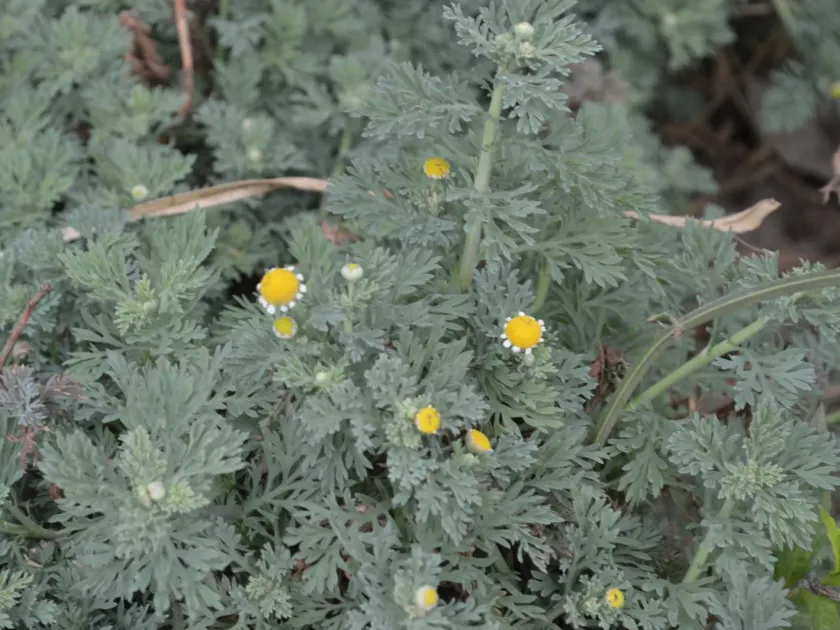
The plant is distinguished by its unique leaf structure, which resembles nigella (love-in-a-mist), providing a primary identification feature for field scouting.
It typically exhibits a perennial growth habit with a complex root system that allows it to survive adverse environmental conditions and mechanical disturbances.
The inflorescences are classic daisies with yellow disc florets and white ray florets, appearing in groups that signify a high potential for seed production.
Botanically, it is classified as a competitive weed that can quickly dominate field edges and moist areas, posing a threat to local crop uniformity.
Where it grows
This weed species predominantly thrives in humid or poorly drained environments, frequently occupying wetlands, riverbanks, and marshy field corners.
In agricultural systems, Matricaria nigellifolia is common in low-lying crop fields where moisture levels remain consistently high throughout the season.
It often spreads from uncultivated areas, such as ditches, fencerows, and drainage zones, invading productive agricultural lands over time.
The plant adapts well to nutrient-rich soils, where it can grow vigorously and compete aggressively for sunlight and soil space with crops.
Its ability to withstand varying soil structures makes it a difficult species to manage in diverse cropping systems including cereals and row crops.
Harm it causes
The primary agricultural impact of this weed is nutrient and water depletion, which directly reduces the yield potential of the primary crop.
Due to its dense canopy formation, it significantly shades crop seedlings, causing stunting and uneven maturation across the affected field areas.
During the harvest season, the presence of these plants leads to operational challenges, including clogged machinery and high moisture levels in harvested grains.
The species acts as a reservoir for various plant pathogens and insect pests, which can facilitate secondary infections in vulnerable crop species.
Economic losses are compounded by the high costs associated with weed control treatments and the necessary post-harvest processing of contaminated yields.
How to control
Effective management requires an integrated approach that combines preventive cultural practices with targeted chemical interventions.
Deep tillage and careful land preparation are essential to disrupt the perennial root systems and prevent the establishment of deep-seated populations.
Maintaining clean field borders and managing drainage zones can significantly reduce the pressure of weed seeds entering the cultivated area.
- Application of systemic herbicides during the early vegetative stage of the weed.
- Implementing strict crop rotation to disrupt the life cycle of the species.
- Consistent monitoring and physical removal in areas with low infestation density.
Chemical control should be executed using selective herbicides approved for the specific crop, ensuring that timing matches the growth stage of the weed for maximum efficiency.
Taxonomy
- Latin name
- Matricaria nigellifolia
- Family
- Сложноцветные (астровые)
- EPPO code
- MATNI