
Alpine knotweed
Koenigia fennica
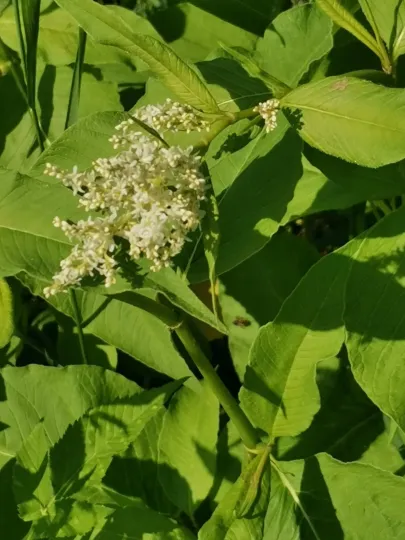
Description
How to tell it apart
Alpine knotweed (Koenigia fennica, formerly Polygonum fennicum) is a herbaceous perennial plant belonging to the Polygonaceae family. It is a highly adaptable species that thrives in diverse soil environments.
The plant features upright or ascending stems that can branch out in the upper sections, forming a significant biomass that competes with agricultural crops.
Leaves are typically lanceolate or narrow-ovate, which serves as a primary visual marker for distinguishing this species from other common knotweed varieties.
The flowers are small and arranged in spike-like or paniculate inflorescences, usually displaying greenish or pinkish hues that blend into the canopy.
It possesses a strong, persistent root system that enables it to survive adverse conditions, making it difficult to eradicate through simple mechanical removal.
Where it grows
Alpine knotweed prefers moist soils and is commonly found in low-lying areas, near water bodies, and in fields with poor drainage or high water tables.
In agricultural settings, it frequently infests row crops, small grains, and forage fields, where it exploits areas with disturbed soil structure.
The plant shows high ecological tolerance, allowing it to expand into new territories such as field borders, irrigation ditches, and access roads.
It is particularly problematic in regions with temperate climates, where it can quickly become an invasive element in crop rotation sequences.
The weed thrives in both disturbed and semi-natural landscapes, often acting as a bridge for dispersal between different types of arable land.
Harm it causes
The primary impact of Alpine knotweed on agriculture is the intense competition for moisture and soil nutrients, which directly reduces crop yields.
Dense stands of the weed shade out young seedlings, significantly hampering their development and photosynthesis during critical growth stages.
It acts as a host for various pathogens, potentially increasing the prevalence of crop diseases that can lead to significant economic losses for farmers.
The presence of its seeds in harvested grain can result in quality downgrading, requiring extra processing and cleaning to meet market standards.
In pastures, it displaces desirable forage species, leading to a decline in nutritional quality and overall productivity of the grazing area.
How to control
Cultural control measures involve deep autumn plowing to disrupt the root network and reduce the reservoir of seeds in the upper soil layers.
Implementing a robust crop rotation strategy is essential to prevent the weed from establishing a permanent dominance in the field.
Chemical control usually requires the application of systemic herbicides capable of translocating to the root system to ensure complete eradication.
Timing the herbicide application during the period of active growth is crucial for achieving high efficiency and preventing re-sprouting from rhizomes.
- Deep tillage for root disruption.
- Application of systemic broad-spectrum herbicides.
- Strategic mowing along field boundaries to prevent seed set.
Taxonomy
- Latin name
- Koenigia fennica
- Family
- Гречишка вьюнковая
- EPPO code
- PRAFE