
Gronovius' Hawkweed
Hieracium gronovii
Description
How to tell it apart
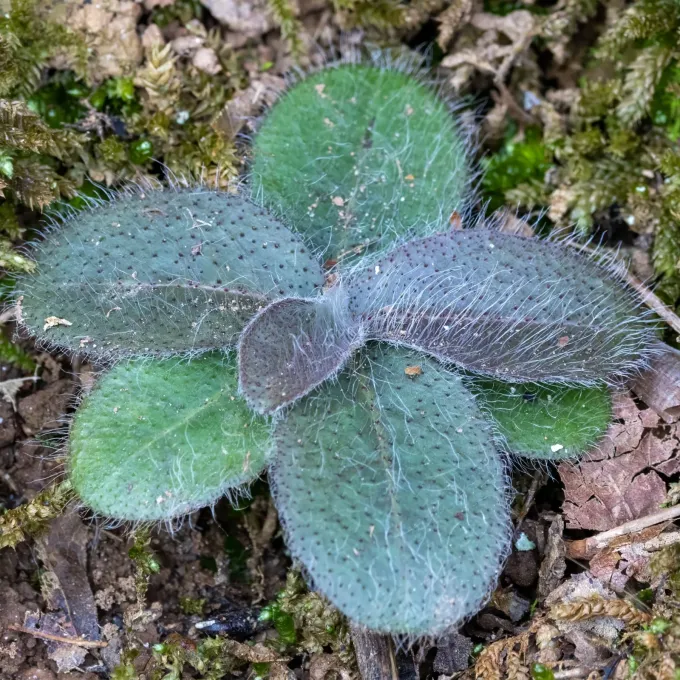
Gronovius' hawkweed (Hieracium gronovii) is a perennial herbaceous plant belonging to the Asteraceae family. It is distinguished by its distinctively hairy foliage and stem.
The plant typically produces a basal rosette of leaves that are covered in stiff, coarse hairs. As the stem rises, the leaves become smaller and more widely spaced along the stalk.
The inflorescence consists of several small flower heads arranged in an open, paniculate cluster. The flowers are bright yellow, typical of the genus Hieracium.
A key identifying feature is the presence of glandular hairs on the involucre and peduncles, which can feel slightly sticky to the touch.
The seeds are equipped with a pappus, allowing for wide dispersal via wind currents, which facilitates the plant's spread into disturbed habitats.
Where it grows
Gronovius' hawkweed thrives in nutrient-poor, sandy, or acidic soils, commonly found in open woodlands, sandy meadows, and disturbed sites.
In agricultural settings, it frequently colonizes pastures, hay fields, and neglected agricultural land that has not been properly maintained.
It is often found along roadsides, power line corridors, and field edges, serving as a reservoir for encroachment into active crop fields.
The plant demonstrates high adaptability to dry conditions, allowing it to outcompete native or desirable vegetation in areas with low moisture retention.
Soil disturbance, such as overgrazing or poor cultivation practices, often creates the open niches necessary for the germination and establishment of this weed.
Harm it causes
The main impact of this weed is its competition with desirable crops for limited soil nutrients, water, and sunlight, which can lead to reduced biomass yields.
In pasture systems, it can become an invasive element that reduces the forage quality, as it is generally avoided by livestock due to its coarse texture.
Its prolific seed production enables it to quickly infest large areas, potentially crowding out beneficial vegetation and altering the local ecosystem structure.
By forming dense patches, it disrupts uniform field management and can hinder the efficiency of harvesting operations in forage production.
Persistent infestations may necessitate more intensive and costly chemical interventions to restore the field to full productive capacity.
How to control
A primary agronomic control strategy is the improvement of soil fertility, as the weed is generally less competitive in high-nutrient, well-managed fields.
Mechanical control through deep plowing helps to disrupt the root system, while regular mowing before flower development is essential to halt seed production.
Effective management includes maintaining a vigorous, dense stand of desirable forage crops, which naturally suppresses weed establishment through shading.
Chemical control can be achieved through the application of selective broadleaf herbicides, particularly those labeled for use in pastures or specific crop rotations.
- Monitoring for early detection of new colonies.
- Proper cleaning of farm equipment to prevent seed dispersal.
- Use of competitive cover crops in fallow areas.
Taxonomy
- Latin name
- Hieracium gronovii
- Family
- Сложноцветные (астровые)
- EPPO code
- HIEGR