
Congested tarweed
Hemizonia congesta
Description
How to tell it apart
Congested tarweed (Hemizonia congesta) is an annual herbaceous plant belonging to the Asteraceae family. It is recognized as a troublesome weed in various field crop environments.
The plant grows upright and can reach heights of 50–60 cm. Its stems and leaves are covered with glandular hairs, which give the plant a sticky texture and a distinct odor when touched.
Leaves are arranged alternately along the stem. The basal leaves are typically lanceolate, while the upper leaves become progressively smaller and narrower toward the top.
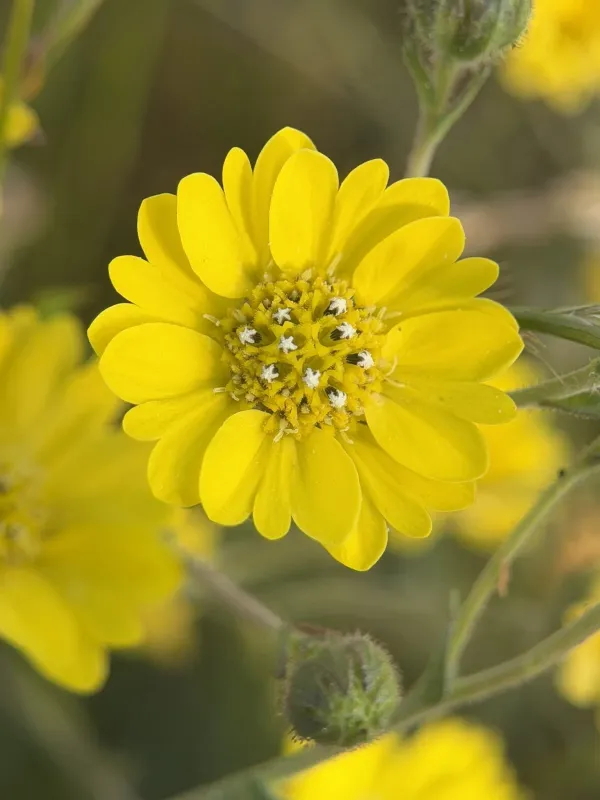
The flowers are arranged in small, dense yellow heads clustered at the ends of the branches. The plant blooms, producing seeds that are highly resistant to environmental stressors.
A key biological trait of Hemizonia congesta is its prolific seed production. A single plant can produce thousands of seeds that remain viable in the soil seed bank for several years.
Where it grows
Hemizonia congesta is native to regions with Mediterranean climates. It thrives in dry, open habitats, including roadsides, pastures, and neglected agricultural land.
In cultivated fields, it is a significant competitor in row crops and cereals. It prefers well-lit areas with loamy or gravelly soils where it can outcompete less hardy plant species.
The plant exhibits high tolerance to drought, allowing it to colonize dry fields where other weeds might struggle, making it particularly persistent in semi-arid farming regions.
It often spreads along field edges and areas where soil integrity has been compromised. Agricultural equipment is a primary vector for the dispersal of its seeds across different fields.
Once established, it spreads rapidly if left unchecked. Its ability to grow in poor soil conditions allows it to occupy gaps in crops where the density of the primary plant is lower.
Harm it causes
The primary damage caused by congested tarweed is resource competition. It competes heavily with crops for soil moisture and nutrients, particularly in deep soil layers during dry seasons.
In agricultural settings, its presence can reduce crop yields significantly. Under drought conditions, the competition for water can lead to a 15–30% loss in overall harvest productivity.
The sticky nature of the plant stems complicates mechanical harvesting. The plant material clogs harvesting equipment, which increases the moisture content of the grain and necessitates costly drying processes.
The dense foliage of this weed creates a favorable microclimate for various pests and fungal pathogens, which can then spread to the cultivated crops, causing additional health issues for the plants.
The inclusion of tarweed seeds in harvested grain reduces the quality of the raw material, forcing producers to invest in additional cleaning and sorting stages to meet quality standards.
How to control
Agronomic control strategies rely heavily on crop rotation. Rotating crops that require different management practices helps disrupt the growth cycle of Hemizonia congesta.
Deep tillage is an effective mechanical method. By burying the seeds at a greater depth, the likelihood of them germinating successfully in subsequent seasons is significantly reduced.
Chemical control involves the use of selective herbicides. These must be applied during the early growth stages of the weed to maximize effectiveness and minimize impact on the crop.
- Mowing or cultivating non-crop areas to prevent seed set before flowering occurs.
- Sourcing high-quality, certified seeds to prevent the introduction of weeds into fields.
- Timely application of systemic herbicides during the 2–4 leaf stage of the weed.
Post-harvest monitoring and control are essential. Promptly treating field sections where the weed is present prevents the formation of large seed banks that could affect future harvests.
Taxonomy
- Latin name
- Hemizonia congesta
- Family
- Сложноцветные (астровые)
- EPPO code
- HEZCO