
Helenium flexuosum
Helenium flexuosum
Description
How to tell it apart
Helenium flexuosum, commonly known as bent-leaf sneezeweed, belongs to the Asteraceae family. It is a perennial herb characterized by stems that feature distinct wing-like structures extending down from the leaf bases.
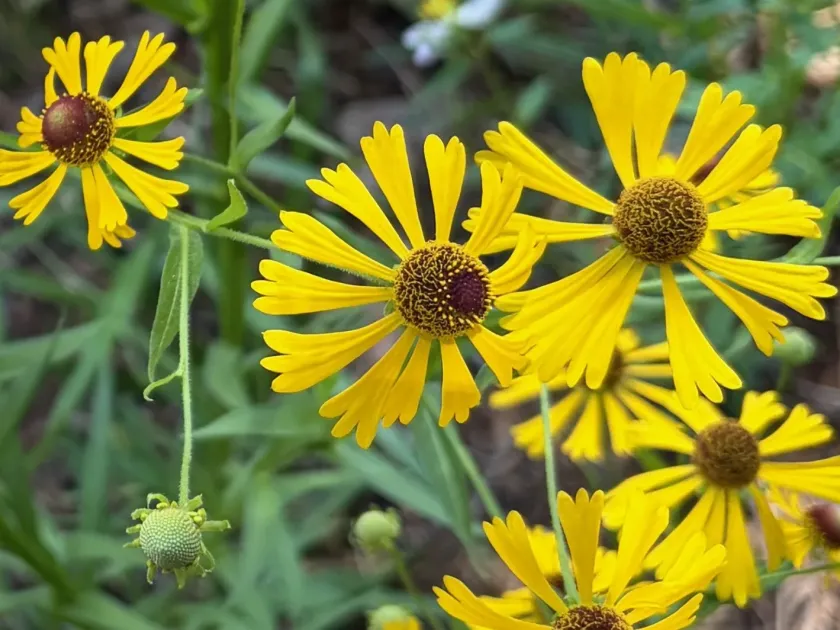
The inflorescences consist of flower heads with a prominent, rounded disc. The ray florets are typically yellow, often featuring brownish or purplish hues at the base, surrounding the central disc.
The root system is robust and spreading, which enables the plant to establish itself firmly and effectively compete with crops for water and nutrient resources in the soil.
The leaves are lanceolate and alternate, attached directly to the stem. These morphological traits make it distinguishable from other related Asteraceae species in field conditions.
Reproduction is primarily via wind-dispersed seeds, which are equipped with pappi, allowing them to travel considerable distances and colonize new field areas easily.
Where it grows
Helenium flexuosum thrives in moist environments, including low-lying meadows, riparian zones, roadside ditches, and water-logged agricultural fields where drainage is poor.
In agricultural systems, it is most frequently encountered in perennial grass crops, pastures, and fallow fields where regular soil disturbance and weed management are neglected.
The plant is highly adaptive to various soil types but tends to exhibit its most aggressive growth in heavy, clay-rich soils that retain excess moisture throughout the growing season.
It often spreads along irrigation channels, where seeds are easily transported by water, eventually depositing into cultivated fields during irrigation events.
As a resilient species, it quickly occupies abandoned or poorly managed land, creating dense populations that can persist for many years if not adequately addressed.
Harm it causes
The primary agricultural damage caused by Helenium flexuosum is its high competitive pressure on crops, especially during the seedling stage, leading to significant yield losses.
By consuming substantial amounts of soil moisture and nutrients, the weed suppresses the growth and development of intended crops, particularly in environments with limited resources.
Helenium flexuosum is toxic to livestock. Consumption of the plant in fresh forage or contaminated hay can cause poisoning, reducing herd health and productivity in livestock farming.
In grass-based cropping systems, this weed can dominate the stand, outcompeting beneficial fodder plants and lowering the overall quality and value of the harvested forage.
Due to its high seed production capacity, a single plant can significantly increase the seed bank in the soil, ensuring the persistence of the infestation for multiple seasons.
How to control
Agrotechnical management includes deep plowing, which helps bury seeds below the germination zone and stresses the root systems of existing perennials in the field.
Implementing effective crop rotation strategies using competitive cover crops can physically suppress the development of the weed by limiting the sunlight available to its seedlings.
Regular mowing or mechanical removal before the flowering stage is essential to prevent seed dispersal and to weaken the plant's root reserves over several successive seasons.
Chemical control can be achieved using systemic herbicides effective against perennial dicotyledonous weeds, applied ideally at the rosette stage for maximum absorption.
Integrated weed management programs, combining mechanical practices with targeted herbicide applications, provide the most sustainable and efficient control of this species.
Taxonomy
- Latin name
- Helenium flexuosum
- Family
- Сложноцветные (астровые)
- EPPO code
- HENFL