
Helenium
Helenium
Description
How to tell it apart
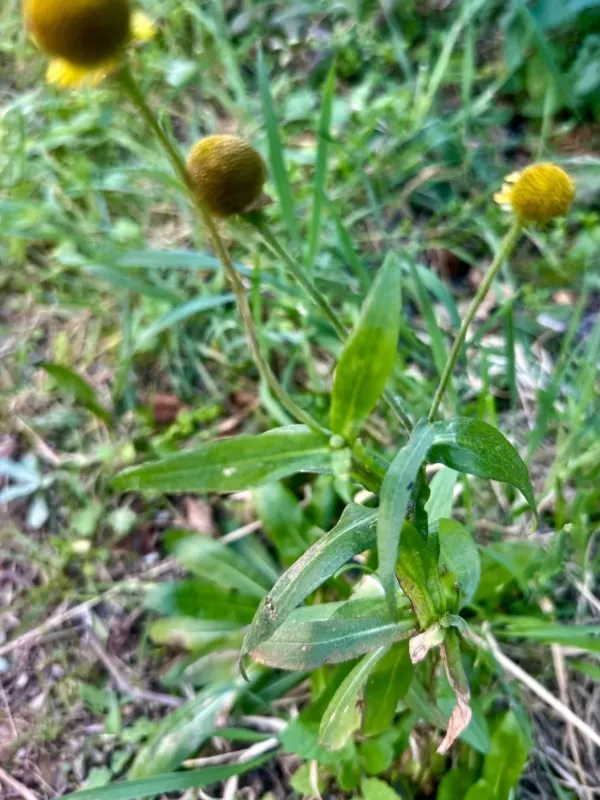
Helenium is a genus of perennial herbaceous plants belonging to the Asteraceae family. These plants are characterized by their upright stems that can reach significant heights.
The leaves are alternate, lanceolate, and often serrated along the margins, providing a distinct appearance during the vegetative growth phase.
The flowers are arranged in composite heads (capitula) with yellow or brownish ray florets and a prominent, often spherical, disc of tubular florets.
The root system is robust and deep-reaching, which helps the plant survive in various environmental conditions and regrow after mechanical damage.
Reproduction occurs primarily through seed dispersal, where the lightweight seeds are easily spread across fields by wind currents.
Where it grows
Helenium typically thrives in moist environments, frequently colonizing wetlands, riverbanks, and areas adjacent to irrigation or drainage ditches.
In agricultural settings, it is often found invading crop fields from the margins, fences, or uncultivated buffer strips surrounding the farming land.
The plant demonstrates a strong preference for fertile, damp soils, which allows it to outcompete crops in low-lying or poorly drained fields.
It can also be identified in perennial forage crops, where the lack of frequent soil cultivation provides a stable environment for its rapid expansion.
As a colonizing species, it quickly occupies gaps in plant stands, especially in years with high rainfall that favors its growth cycle.
Harm it causes
The primary damage caused by Helenium relates to its competitive nature, as it consumes vital water and soil nutrients required by primary crops.
Helenium species are known to contain toxic compounds, making them dangerous for livestock if present in hay or pasture land, leading to potential health risks.
The presence of this weed in agricultural fields necessitates expensive cleaning processes and reduces the overall market value of harvested commodities.
Large colonies of the plant can provide shade and prevent proper crop development, significantly lowering yield per hectare in infested sections of the field.
Additionally, its resilience makes it difficult to eradicate once it has established a foothold, potentially leading to long-term contamination of the soil seed bank.
How to control
Effective management of Helenium requires a combination of preventative agricultural practices and the targeted use of systemic chemical herbicides.
Preventing the plant from reaching its seed-bearing stage is crucial; thus, mowing margins and non-crop areas before flowering is highly recommended.
Deep plowing and regular soil cultivation are essential for disrupting the root system of established plants and preventing their spread in annual crops.
Chemical control usually involves applying selective broadleaf herbicides during the early growth stages to maximize effectiveness and crop safety.
- Regular monitoring of field margins for early infestation.
- Implementation of crop rotation to break the weed's life cycle.
- Use of certified, clean seed to prevent introduction.
- Application of post-emergence herbicides for established patches.
Taxonomy
- Latin name
- Helenium
- Family
- Сложноцветные (астровые)
- EPPO code
- HENSS