
Grindelia
Grindelia
Description
How to tell it apart
Grindelia (Grindelia), often known as gumweed, is a genus of plants in the sunflower family (Asteraceae) that commonly behaves as a troublesome weed.
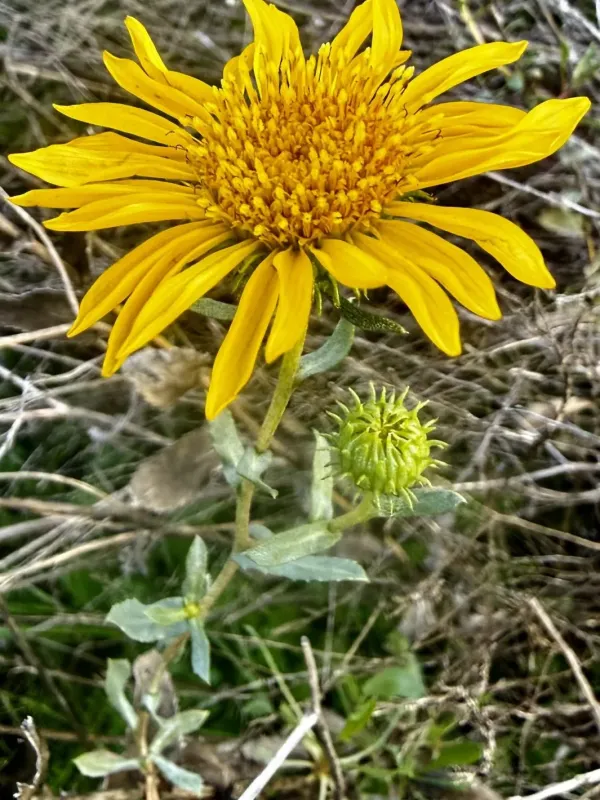
The most distinctive feature of this plant is the sticky, resinous substance that covers the flower buds, giving them a shiny and tactile appearance.
Grindelia plants typically grow with upright, branching stems and possess alternate, usually serrated leaves that can vary in shape depending on the specific species.
The root system is generally a sturdy taproot, allowing the plant to penetrate deep into the soil and access moisture even during severe droughts.
Its yellow, composite flower heads are quite prominent during the blooming season, making them easily distinguishable within a field of other crops.
Where it grows
Native to arid and semi-arid regions of North and South America, Grindelia has successfully spread as a colonizing weed into various disturbed environments.
It is commonly found in overgrazed pastures, along roadsides, fencerows, and within fallow fields where soil competition is relatively low.
In agricultural settings, it tends to infiltrate grain crops and row crops, especially where moisture management and cultivation practices are suboptimal.
The plant thrives in well-drained, sandy or rocky soils and prefers open, sunny locations where it can establish itself without significant competition.
Due to its high adaptability, it can quickly invade disturbed areas and becomes a persistent problem once it establishes a permanent presence in the seed bank.
Harm it causes
Grindelia causes significant yield losses by aggressively competing with crops for limited water and essential soil nutrients, especially in semi-arid zones.
The thick resinous coating on the plant can foul harvesting equipment, leading to mechanical downtime and increased maintenance costs during harvest time.
By crowding out desirable plant species in pastures, it reduces the total biomass available for livestock grazing and decreases the overall value of the forage.
The presence of Grindelia seeds in harvested grain can significantly lower the grade of the crop, necessitating extra processing to remove impurities.
Its presence in field margins and edges serves as a reservoir for further spread into the active cultivation zones of the farm.
How to control
Cultural control measures include implementing robust crop rotation cycles that prevent the weed from establishing a consistent growth pattern in the field.
Mechanical tillage is highly effective in disrupting the taproot system and preventing the plant from reaching the flowering stage required for seed set.
Regular mowing of field edges and non-crop areas is essential to keep the population density low and prevent the dispersion of seeds by wind or farm machinery.
Chemical control involving systemic herbicides applied during the early rosette stage provides the highest level of efficacy in killing existing plants.
- Utilizing surfactants in spray mixtures is critical to penetrate the resinous layer on the leaves for better systemic absorption.
- Integrated pest management (IPM) strategies combine early detection with strategic herbicide timing to achieve optimal control results.
Taxonomy
- Latin name
- Grindelia
- Family
- Сложноцветные (астровые)
- EPPO code
- GRNSS