
Norway everlasting
Gamochaeta norvegica
Description
How to tell it apart
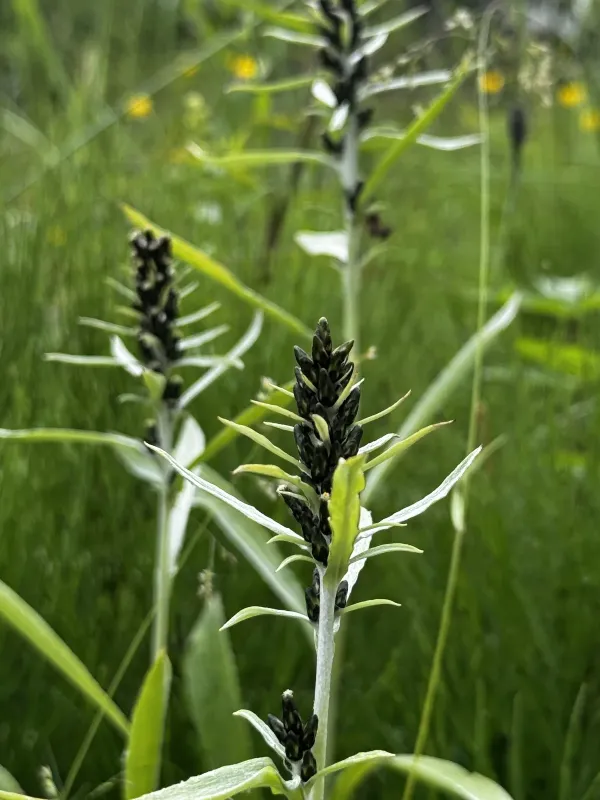
Gamochaeta norvegica, commonly known as Norway everlasting, belongs to the Asteraceae family. It is a perennial herbaceous plant typically growing to a height of 10–40 cm.
The plant is easily identified by the dense, white woolly hairs covering the stems and leaves, giving it a characteristic grayish or silvery appearance.
The leaves are alternate, linear-lanceolate, and entire. Often, a rosette of basal leaves forms, which may persist until the flowering stage begins.
The inflorescence consists of dense clusters of small, brownish or yellowish flower heads arranged in a spike-like or paniculate terminal structure.
It reproduces via seeds equipped with a pappus, which allows for efficient wind dispersal, enabling the species to colonize disturbed environments rapidly.
Where it grows
Norway everlasting thrives in cool, moist climates. It naturally occurs in mountain meadows, forest edges, clearings, and areas with acidic or moderately fertile soils.
As an agricultural weed, it is frequently found in perennial grasslands, pastures, and hayfields, particularly in regions with higher moisture levels.
It favors areas where the vegetative cover has been disturbed, allowing it to establish itself in margins, fallow lands, and unmanaged field boundaries.
While it does not usually dominate in intensive arable crops, it can invade pastures where competition from desirable forage species has been weakened by overgrazing.
The plant's resilience allows it to persist in non-cultivated zones, acting as a reservoir for potential re-infestation of adjacent managed agricultural plots.
Harm it causes
The primary damage caused by Gamochaeta norvegica is competition with desirable crop species for light, nutrients, and water, ultimately reducing overall forage yield.
In grazing lands, it is considered a low-quality forage plant, as its dense pubescence makes it unpalatable to livestock, thereby reducing the nutritional value of the pasture.
High densities of this weed create a dense canopy that can restrict airflow, increasing the humidity within the crop and fostering the development of fungal pathogens.
Its prolific seed production can lead to rapid colonisation of large areas, causing significant disruption to the established botanical composition of meadows and fields.
The presence of Norway everlasting in hay crops can lower the quality of the harvested biomass, potentially leading to increased sorting costs or reduced market value.
How to control
Effective management starts with proper soil preparation, including deep plowing or discing, to destroy the root system and prevent seedling establishment.
Cultural control methods involve maintaining a dense and vigorous sward through appropriate fertilization and overseeding to ensure crop competition suppresses weed growth.
Regular mowing of field margins and fallow areas before the flowering stage is crucial to prevent seed dispersal and significantly reduce the soil seed bank.
Chemical control can be implemented using systemic herbicides such as those containing 2,4-D or other selective compounds labeled for use in pastures and grasslands.
A comprehensive approach, combining mechanical removal and targeted herbicide application, is essential for long-term suppression of this species in agricultural settings.
Taxonomy
- Latin name
- Gamochaeta norvegica
- Family
- Сложноцветные (астровые)
- EPPO code
- GNANO