
Erechtites praealta
Erechtites praealta
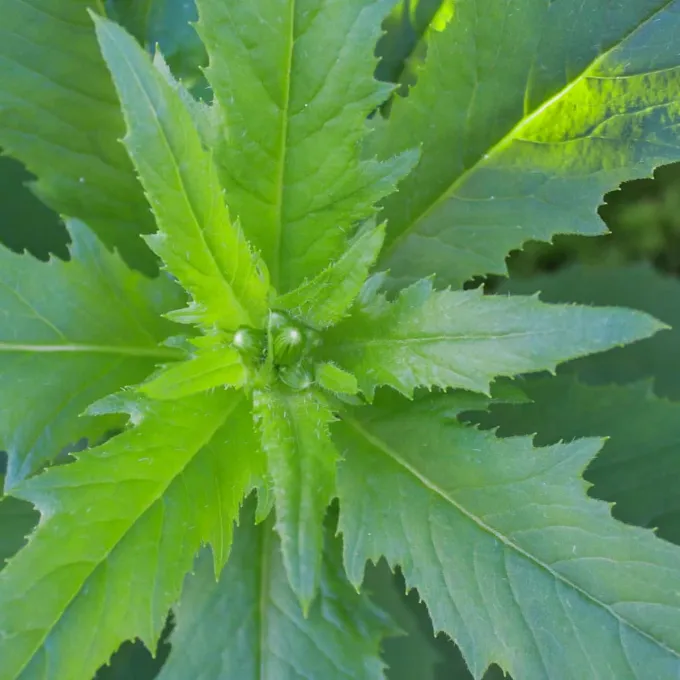
Description
How to tell it apart
Erechtites praealta is a member of the Asteraceae family. It is an herbaceous plant that is frequently misidentified due to its resemblance to other members of the Senecio or Erechtites genera, which are common in various agricultural landscapes.
The plant features an erect, branched stem that can grow quite tall under favorable conditions. Its leaves are alternate, usually lanceolate in shape, and possess serrated or lobed margins, which are useful characteristics for field identification.
The inflorescences consist of small, cylindrical heads organized in loose, corymb-like or paniculate arrangements. The flowers are typically tubular, displaying yellowish or greenish-yellow hues.
The fruits are achenes topped with a pappus—a tuft of hairs that aids in wind dispersal. This mechanism allows the seeds to travel long distances, facilitating the colonization of new agricultural areas rapidly.
It possesses a strong taproot system that enables the plant to access water and nutrients from deeper soil layers, allowing it to withstand periods of moderate moisture stress compared to shallow-rooted weeds.
Where it grows
Erechtites praealta typically thrives in disturbed environments, such as abandoned agricultural fields, roadsides, pastures, and areas with high levels of nitrogen accumulation.
In modern agricultural systems, it is a significant nuisance in row crops like soybeans, maize, and sunflowers. It takes advantage of gaps in the canopy, growing aggressively whenever soil is exposed following tillage or herbicide application.
The weed prefers fertile, moist soils, which makes it particularly competitive in high-input farming systems where irrigation or nutrient-rich soil supports both the crop and the weed simultaneously.
Seed dispersal is largely driven by wind and human activity, particularly the movement of farm equipment between fields that are not thoroughly cleaned, leading to the introduction of the weed into clean plots.
Its ecological adaptability allows it to persist in various climate zones, making it a challenging species to manage in diverse cropping systems across different geographic regions.
Harm it causes
The primary agricultural impact of Erechtites praealta is its competition for vital resources, including sunlight, water, and essential mineral nutrients, which directly suppresses the development of the primary crop.
By producing a dense canopy of foliage, the weed can cause significant shading of young crop seedlings, resulting in stunted growth and a reduction in the overall yield potential of the field.
The plant exhibits high seed fecundity, meaning a single individual can produce thousands of seeds. This quickly builds a robust seed bank in the soil, ensuring that the weed remains a persistent issue for many seasons.
Harvesting efficiency is often hampered by the presence of this weed, as its stems can interfere with the operation of combine headers and other mechanical equipment, causing blockages and harvest delays.
Additionally, this weed can serve as an alternate host for various insect pests and pathogens that affect staple crops, potentially increasing the pressure of plant diseases within the field.
How to control
Agrotechnical management starts with effective tillage practices, such as deep plowing, which buries seeds deep enough to prevent germination, alongside timely mechanical cultivation of inter-row spaces.
Implementing competitive crop rotations is essential; planting vigorous cover crops or high-density cash crops can shade the soil surface, effectively suppressing weed germination and early development.
Chemical control measures are generally effective when herbicides are applied during the early growth stages of the plant, such as the rosette phase, when the weed is most susceptible to active ingredients.
Sanitation practices, including the cleaning of farm machinery and the removal of weeds from field edges and uncultivated areas, are crucial for preventing the spread of seeds into managed production zones.
- Regular mechanical cultivation to disrupt weed root systems.
- Application of selective herbicides labeled for specific crop protection.
- Monitoring fields to prevent the weed from reaching the flowering and seed-setting stages.
Taxonomy
- Latin name
- Erechtites praealta
- Family
- Сложноцветные (астровые)
- EPPO code
- EREPL