
Common brassbuttons
Cotula australis
Description
How to tell it apart
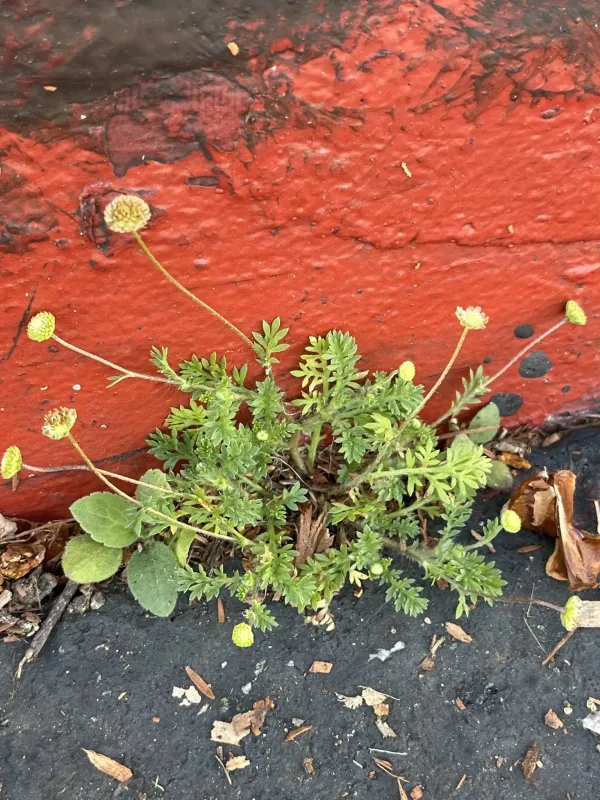
Common brassbuttons (scientific name Cotula australis) is an annual herb from the Asteraceae family, classified as a minor annual weed in agricultural settings.
The plant is characterized by its finely divided, feathery leaves and spreading stems that often form dense, mat-like patches on the soil surface.
Its flowers are small, yellow, button-like heads borne on slender stalks, lacking prominent ray florets, which distinguishes them from many other species.
The plant produces a significant number of tiny seeds, which are highly efficient at dispersal via wind, water movement, and agricultural machinery.
It exhibits phenotypic plasticity, allowing it to adapt its growth form based on soil nutrient availability, moisture, and competition levels.
Where it grows
Originally native to Australia, Common brassbuttons has become a cosmopolitan weed found in many temperate and subtropical regions worldwide.
It typically infests vegetable crops, plant nurseries, greenhouses, and well-watered garden beds or lawns.
The weed thrives in moist, fertile soils and often occupies disturbed sites, pathways, and edges of cultivated areas where space is available.
In agricultural environments, it acts as an early-season opportunist, rapidly emerging when soil moisture levels are adequate for growth.
It shows a high tolerance for human-disturbed habitats, frequently appearing in areas where the soil cover is incomplete or newly opened.
Harm it causes
Common brassbuttons causes harm by outcompeting desirable crops for essential resources, including water, nutrients, and sunlight during early growth stages.
Its fast-growing, mat-forming habit can smother young seedlings and prevent proper crop development, directly impacting yield potential.
The presence of this weed complicates farm management, requiring additional labor for manual removal or extra costs for chemical applications.
In aesthetic contexts like turfgrass, it disrupts the uniformity of lawns and landscapes, competing with and often displacing preferred vegetation.
It can also act as an alternate host for certain agricultural pests, potentially increasing the risk of infestations in adjacent crop fields.
How to control
Cultural control strategies include regular hoeing and shallow cultivation of the soil to disrupt the weed's life cycle before seed production.
Applying organic or inorganic mulch is highly effective at preventing the germination of its seeds, which require light and direct contact with soil to sprout.
Managing irrigation systems to prevent chronic soil saturation helps make the environment less favorable for the persistence of this weed.
Chemical control involving selective or non-selective herbicides may be used, provided the application aligns with safety and legal regulations.
- Mechanical removal before flowering begins.
- Mulching beds to inhibit seed germination.
- Using post-emergence herbicides on established infestations.
Taxonomy
- Latin name
- Cotula australis
- Family
- Сложноцветные (астровые)
- EPPO code
- CULAU