
Case's Corydalis
Corydalis caseana
Description
How to tell it apart
Case's Corydalis (Corydalis caseana) is a perennial herbaceous plant belonging to the Papaveraceae family. It is known for its ability to form dense, spreading clumps in favorable conditions.
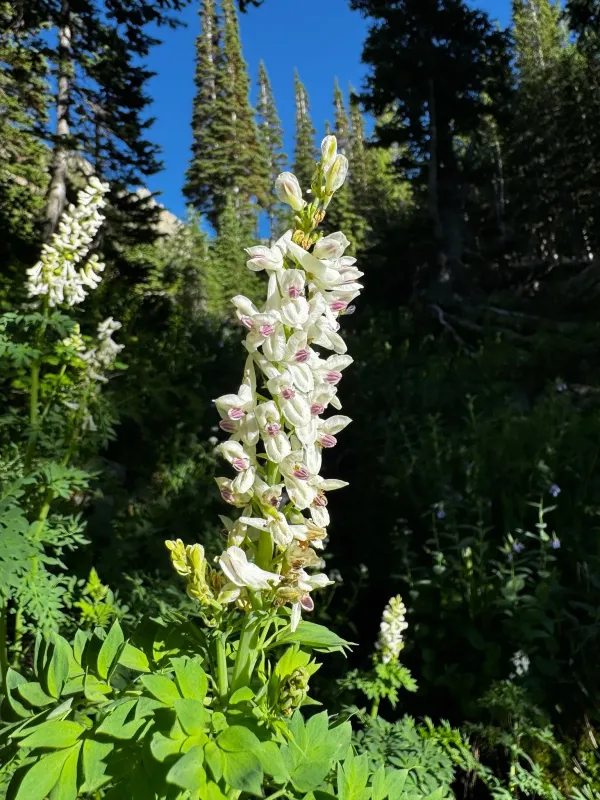
The plant features compound, fern-like leaves with a distinctive glaucous-green coloration. The stems are erect and branched, often growing up to 1 meter in height.
Its flowers are arranged in dense racemes, characterized by a tubular shape with a small spur, which is a signature trait of the Corydalis genus.
The color of the blooms ranges from pale yellow to creamy white, and the plant produces small, shiny black seeds enclosed in silique-like capsules.
A key identifying feature is its fleshy rootstock, which allows the plant to overwinter effectively and regenerate quickly at the start of the growing season.
Where it grows
Native to the mountainous regions of North America, Corydalis caseana thrives in cool, moist, and well-shaded forest environments.
In agricultural settings, it is typically found in fields near mountainous slopes, stream banks, and areas with high soil moisture levels.
The weed prefers nutrient-rich, well-aerated soils and is frequently spotted along irrigation ditches where water availability remains constant throughout the year.
It tends to colonize areas with minimal soil disturbance, such as permanent pastures, meadows, and orchards where tillage practices are infrequent.
While it is not an aggressive colonizer of dry plains, it can become a localized nuisance in wet, cool microclimates where it outcompetes native or cultivated vegetation.
Harm it causes
Case's Corydalis acts as a significant competitor for resources, rapidly depleting water and soil nutrients required by nearby crops.
The dense growth habit of the plant results in significant shading, which inhibits the growth and development of low-lying crop varieties.
Beyond crop competition, the presence of alkaloids in the plant tissue may pose toxic risks to livestock if ingested, especially if the weed is harvested in hay.
Invasive clusters of this weed complicate field maintenance and harvesting, often necessitating additional cleaning steps for the harvested crop.
The extensive root system can disrupt soil structure and compete with the root zones of perennials, leading to yield losses in infected patches of land.
How to control
Deep mechanical cultivation remains one of the most effective methods to disrupt the root systems and prevent the spread of the plant.
Timely tillage, performed before the weed reaches its flowering stage, is essential to prevent the production and dispersal of seeds.
In non-crop areas or fallow fields, the application of systemic herbicides, such as glyphosate, provides an effective means to eliminate existing clumps.
Improving field drainage is a critical cultural control strategy, as it makes the environment less suitable for this moisture-dependent species.
Crop rotation incorporating vigorous, fast-growing species can help shade out potential weed seedlings and minimize their establishment in agricultural plots.
Taxonomy
- Latin name
- Corydalis caseana
- Family
- Мак сомнительный
- EPPO code
- COYCS