
Bocconia frutescens
Bocconia frutescens
Description
How to tell it apart
Bocconia frutescens, commonly known as plume poppy, belongs to the Papaveraceae family. It is a large evergreen shrub capable of reaching 3–4 meters in height.
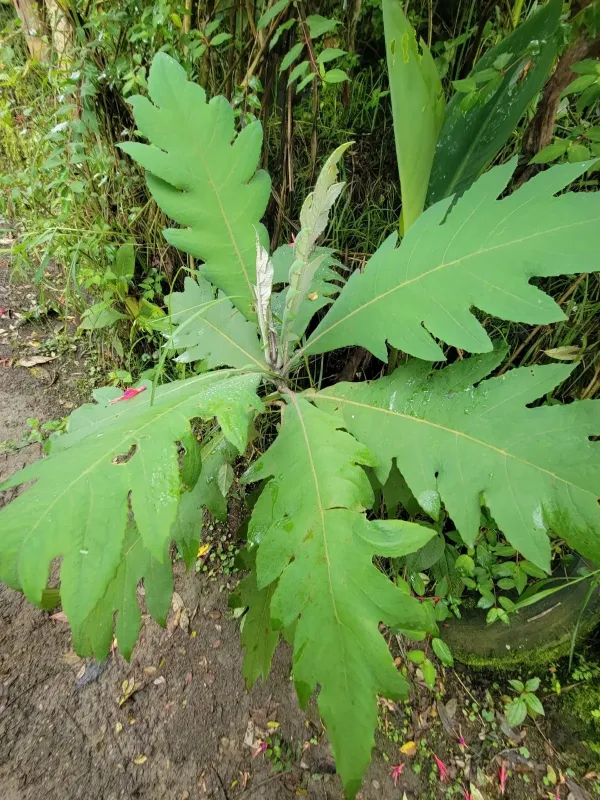
The plant features distinctively deeply lobed leaves with a glaucous coating, arranged in rosettes at the tips of woody stems.
When damaged, the stems release a thick orange or reddish latex, which is a key diagnostic feature for this specific species.
The flowers are small, lack petals, and are grouped in large terminal panicles, giving the plant a unique appearance during the flowering season.
Seeds are small and encased in a fleshy aril, which facilitates their active dispersal by birds into natural and agricultural ecosystems.
Where it grows
The primary range of Bocconia frutescens covers tropical and subtropical regions of the Americas, from Mexico to Argentina and the Antilles.
The plant prefers disturbed soil conditions, often colonizing forest edges, roadsides, abandoned plantations, and vacant lots.
Within agricultural landscapes, it actively claims field margins and waste areas, from which it can penetrate into cultivated crop fields.
It rapidly colonizes slopes, effectively anchoring itself in the soil, which makes mechanical clearing of agricultural land difficult.
Due to its high adaptability to various soil types, it has become a serious invasive threat in many regions with warm climates.
Harm it causes
The primary damage results from the suppression of cultivated crops due to its rapid growth and the formation of dense above-ground biomass.
The plant possesses allelopathic potential, inhibiting the germination and development of neighboring species through its chemical secretions.
The latex of Bocconia contains alkaloids that can be toxic to livestock if green parts are consumed accidentally.
Dense thickets of Bocconia provide a habitat for agricultural pests and serve as a reservoir for various plant pathogens.
Mechanical clearing of this weed is labor-intensive, as its robust root system is capable of rapid regeneration.
How to control
Agronomic control involves regular mowing of young plants before they reach the flowering stage to prevent seed production.
For the removal of mature specimens, complete grubbing with the mandatory extraction of the entire root system is the most effective approach.
Chemical control is based on the use of systemic broad-spectrum herbicides applied directly to the stump after cutting.
The use of glyphosate-based products applied to foliage is effective during early growth phases, provided that safety precautions are followed.
- Regular monitoring of field edges for early detection of infestations.
- Combination of manual removal followed by spot chemical treatment.
- Maintaining high crop competition to discourage weed establishment.
Taxonomy
- Latin name
- Bocconia frutescens
- Family
- Мак сомнительный
- EPPO code
- BOCFR