
Diffuse knapweed
Centaurea diffusa
Description
How to tell it apart
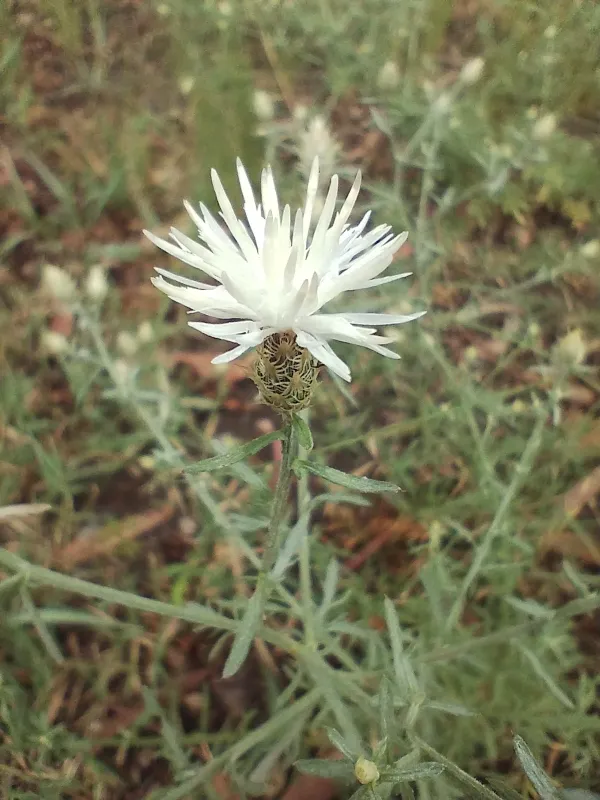
Diffuse knapweed (Centaurea diffusa) is a biennial herbaceous plant belonging to the Asteraceae family. It is a taprooted weed that develops a highly branched stem, forming a tumbleweed shape by the end of the season.
The leaves are finely divided into narrow lobes and covered with short, stiff hairs, giving the plant a greyish appearance. In its first year, it forms a basal rosette, and in the second, it produces a stout flowering stalk.
The inflorescences are small heads arranged in a broad, paniculate cluster. The flowers are typically pale pink, white, or lavender. The fruit is an achene with a short pappus, facilitating wind dispersal.
A distinctive feature of this species is the spiny bracts of the flower heads, which have a terminal spine. Mature plants reach heights of 20 to 60 centimeters.
It reproduces exclusively by seeds. A single well-developed plant can produce thousands of seeds, which remain viable in the soil for several years.
Where it grows
This species prefers dry, rocky, or sandy soils. It is frequently found in abandoned fields, pastures, along roadsides, and in steppe zones.
In crop production, diffuse knapweed is a significant issue, particularly in cereals, row crops, and perennial forage grasses.
The weed is heliophilic and drought-tolerant, allowing it to rapidly colonize open areas with sparse ground cover. It successfully competes with crops for moisture and nutrients.
Its distribution range covers southern and central regions where moisture deficit is common, providing the weed with an advantage over many cultivated species.
It often appears in fields with poor crop rotation or minimal tillage practices, which allow seeds to accumulate in the topsoil horizon.
Harm it causes
The damage caused by diffuse knapweed is primarily due to significant yield reduction in crops caused by competition for vital resources.
Its well-developed root system allows the weed to efficiently absorb water even during severe droughts, depleting the soil and inhibiting the growth of crop seedlings.
Contamination of harvested grain with knapweed seeds complicates post-harvest processing, as the size and density of the seeds are similar to certain grain crops.
In pastures, the weed reduces forage quality, as its spiny and tough structure makes it unpalatable to livestock and enables it to displace more nutritious grasses and legumes.
Widespread expansion of the species leads to shifts in community composition, requiring mandatory control measures during early growth stages.
How to control
Effective management of diffuse knapweed requires an integrated approach that combines cultural, mechanical, and chemical control methods.
The primary mechanical method involves thorough soil cultivation, including deep plowing or discing, which prevents seed germination and destroys first-year rosettes.
Adherence to sound crop rotation, including competitive crops that establish dense stands, is effective in suppressing weed development.
In cereal crops, herbicides such as sulfonylureas, synthetic auxins, or their tank mixes show high efficacy against broadleaf weeds.
It is crucial to control weeds along roadsides and non-cropped areas around fields to prevent the mass dispersal of seeds caused by the tumbleweed mechanism.
Taxonomy
- Latin name
- Centaurea diffusa
- Family
- Сложноцветные (астровые)
- EPPO code
- CENDI