
Bassia hyssopifolia
Bassia hyssopifolia
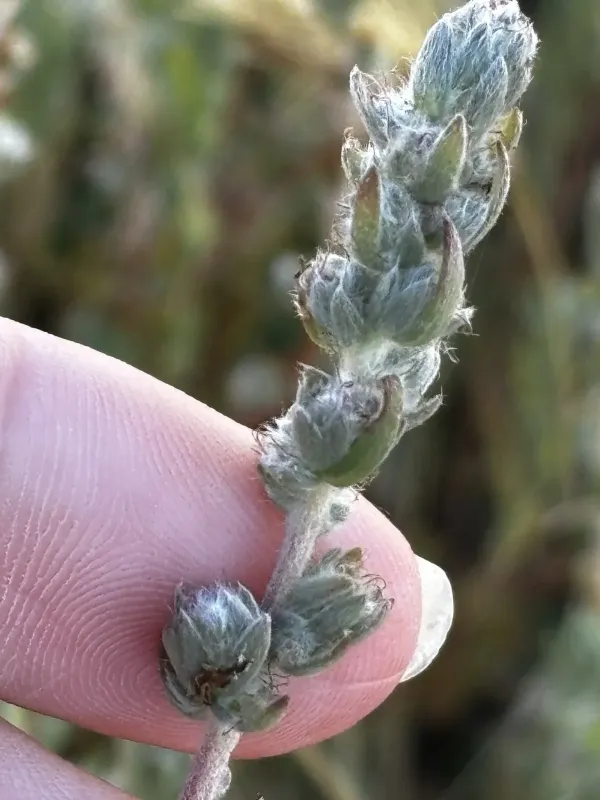
Description
How to tell it apart
Bassia hyssopifolia is an annual herbaceous plant belonging to the Amaranthaceae family. It typically features a highly branched stem that grows from 20 to 60 cm tall, sometimes reaching one meter.
The leaves are narrow, linear, or lanceolate, densely covered with fine hairs, giving the plant a grayish-green appearance. This pubescence is a key morphological feature for field identification.
The plant has a deep, well-developed taproot system, which contributes to its remarkable resistance to drought and poor soil conditions.
Small, clustered flowers are arranged in spike-like inflorescences. As they mature, these spikes often develop a distinct reddish hue, making the weed easily visible.
It propagates exclusively by seeds, which possess small hook-like appendages. These allow the seeds to attach to animal fur or human clothing, facilitating effective dispersal.
Where it grows
This weed is a typical halophyte, thriving primarily in saline environments, including salt flats and alkaline soils where most crops struggle to grow.
Bassia hyssopifolia commonly colonizes disturbed sites such as roadsides, wastelands, areas around livestock farms, and overgrazed pastures.
In agricultural settings, it is a significant competitor in grain, vegetable, and row crops, particularly in arid and semi-arid regions.
The plant prefers loose, open soils where it can easily establish itself. It is highly opportunistic and thrives in areas with high solar exposure.
Recent observations show that the plant has expanded its range into irrigated lands, utilizing extra moisture to grow vigorously and overwhelm surrounding vegetation.
Harm it causes
The primary damage caused by this weed is intense resource competition, specifically for water and soil nutrients, which directly impacts crop yields.
Because of its deep roots, it depletes soil moisture from depths inaccessible to many crops, causing severe stress to the main planting during dry spells.
Bassia hyssopifolia often acts as an alternative host for various crop pests and pathogens, significantly increasing the pressure on agricultural pest management programs.
The presence of Bassia seeds in harvested grain reduces quality and marketability, leading to increased costs for post-harvest cleaning and sorting.
In pasture systems, it can displace valuable forage grasses, reducing the nutritional value of the land and potentially interfering with sustainable grazing practices.
How to control
The foundation of effective control is a rigorous crop rotation strategy that disrupts the lifecycle of the weed and reduces the soil seed bank.
Deep fall plowing is a recommended cultural practice, as it buries the seeds deep enough to prevent emergence and promotes their degradation in the soil.
Mechanical cultivation, including timely inter-row hoeing, is essential to cut off the roots of young weeds before they reach the flowering stage.
Chemical control relies on systemic herbicides applied at early growth stages; as the plant matures, it develops tolerance to many conventional chemicals.
- Applying pre-plant glyphosate-based herbicides to clear infested areas.
- Using selective post-emergence herbicides compatible with the specific crop.
- Maintaining strict weed control on field margins to prevent seed spread.
Taxonomy
- Latin name
- Bassia hyssopifolia
- Family
- Амарантовые
- EPPO code
- BAFHY