
Showy milkweed
Asclepias speciosa
Description
How to tell it apart
Showy milkweed (Asclepias speciosa) is a perennial herbaceous plant belonging to the Apocynaceae family. It is characterized by a robust root system consisting of deep vertical taproots and creeping horizontal rhizomes.
The stems are erect, sturdy, and can reach heights of up to 1.5 meters. The leaves are opposite, large, and oval-shaped, covered with a fine grayish pubescence on the underside, which gives the plant a distinct appearance.
Flowers are arranged in dense, umbrella-like clusters emerging from the upper leaf axils. They have a characteristic rose-purple color and emit a sweet fragrance that attracts various pollinators.
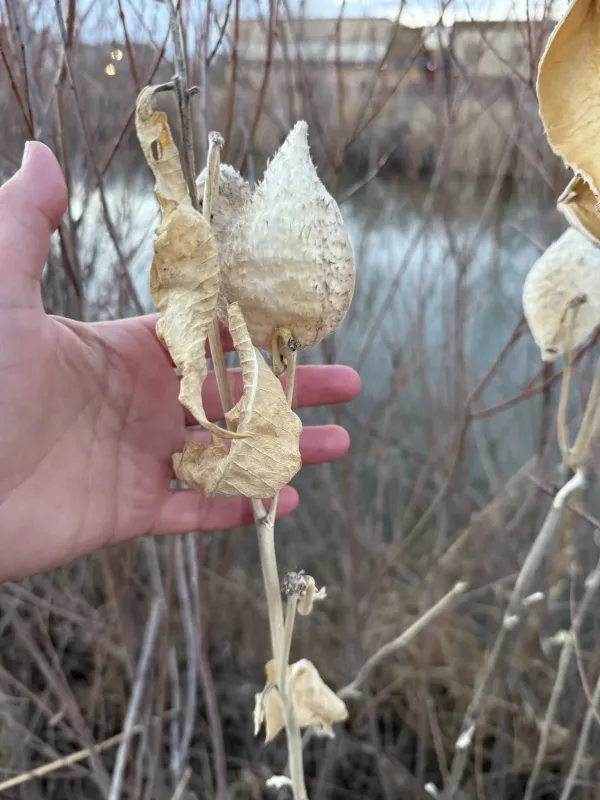
The fruits are large, broad lanceolate follicles covered with soft, hair-like projections. Upon maturity, the pods split open, releasing numerous seeds equipped with long, white, silky tufts for wind dispersal.
All parts of the plant contain a milky, bitter-tasting latex that is toxic to many animals, making it an undesirable component in agricultural fields.
Where it grows
Showy milkweed prefers open, sunlit areas with well-drained sandy or loamy soils. It thrives in habitats where competition from other vegetation is relatively low.
It is commonly found along roadsides, abandoned fields, riverbanks, and waste areas, from which it frequently invades adjacent agricultural land and crop fields.
In farming, it typically infests row crops like corn, sunflowers, and soybeans, where wide spacing between plants provides ample opportunity for the weed to establish deep roots.
The plant also poses a threat to pastures and hay meadows, where it outcompetes beneficial forage grasses and makes the hay unsuitable for livestock consumption due to its toxicity.
Its biological resilience and ability to spread via both wind-borne seeds and vigorous underground rhizomes allow it to rapidly expand its range into new, favorable habitats.
Harm it causes
The primary concern with showy milkweed is its aggressive spread through rhizomatous growth, making it a highly persistent and difficult weed to eradicate once established.
It competes aggressively for soil moisture and nutrients, depleting resources that are essential for the growth and yield of crops, leading to significant economic losses for farmers.
The dense colonies formed by this weed create heavy shading, which hinders the development of young crop plants and reduces their photosynthetic efficiency during critical growth stages.
The toxic latex contained in the plant can cause severe skin irritation and is poisonous if ingested by livestock, which complicates the use of infested lands for grazing purposes.
Mechanical harvesting operations are also hampered by this weed, as the thick, fibrous stems can clog harvesting machinery, leading to increased wear and maintenance costs.
How to control
Effective control requires an integrated approach, as mechanical cultivation alone often results in root fragmentation, which can stimulate further regrowth of the weed.
Cultural methods, such as deep plowing and regular discing, are recommended to deplete the energy reserves within the plant's root system over several growing seasons.
Chemical control is most effective when using systemic herbicides, specifically those containing glyphosate, which translocate down into the rhizomes to kill the entire plant.
- Utilizing tank mixes of systemic herbicides to increase efficacy against hardy perennial weed species.
- Mowing or cutting the plants before they reach the flowering stage to prevent seed dispersal and starve the roots.
- Implementing competitive crop rotations that create a dense canopy to shade out new weed growth.
Application of herbicides should be timed for the late vegetative stage when nutrient transport is directed towards the roots, ensuring the chemical reaches the deepest parts of the root system.
Taxonomy
- Latin name
- Asclepias speciosa
- Family
- Кутровые
- EPPO code
- ASCSP