
Purple milkweed
Asclepias purpurascens
Description
How to tell it apart
Purple milkweed (Asclepias purpurascens) is a perennial herbaceous plant belonging to the Apocynaceae family, characterized by its robust growth habit and distinct appearance.
The stems are typically erect, reaching heights of 60 to 100 cm, and feature opposite, oval-shaped leaves that are softly pubescent on the underside.
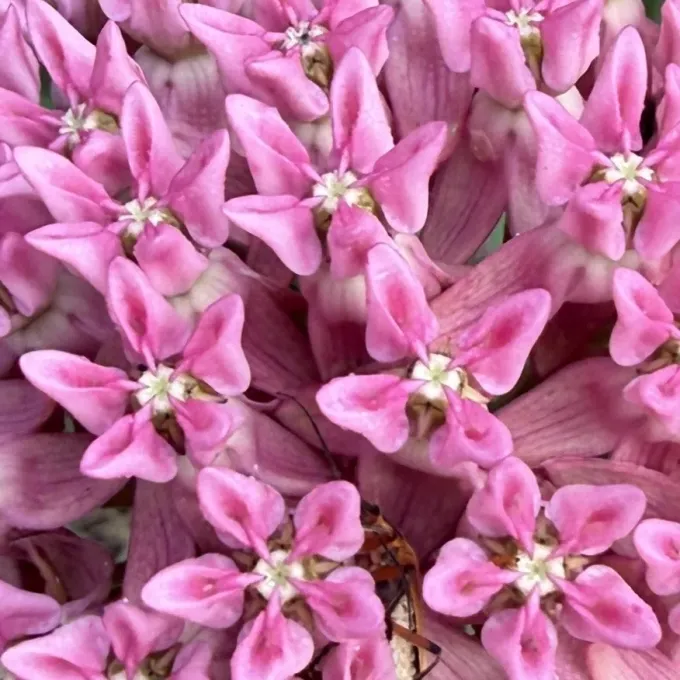
The inflorescences are terminal, umbel-shaped clusters composed of deep purple-pink flowers, which serve as a primary diagnostic feature of the species.
The plant possesses a vigorous, deep-reaching root system that allows it to persist through seasonal changes and mechanical disturbances.
Like many species in its family, it contains a thick, milky latex which is toxic to many livestock species if ingested in significant quantities.
Where it grows
This species thrives in open, sunny environments such as meadows, field edges, and disturbed areas where soil moisture is adequate but drainage is good.
As an agricultural weed, it is frequently found in row crop fields such as corn and soybeans, where it can rapidly establish itself due to its competitive nature.
It prefers fertile, loamy soils and is often seen spreading along the borders of agricultural fields into active production zones.
The plant is highly resilient and capable of colonizing abandoned lands or areas with reduced tillage, making it a persistent problem in specific farming systems.
Its ability to propagate vegetatively via rhizomes ensures that local populations expand aggressively within the field throughout the growing season.
Harm it causes
Purple milkweed causes significant crop losses by competing directly for essential nutrients and sunlight during the critical stages of plant development.
Its extensive root network allows it to access deep soil moisture, which poses a serious disadvantage to shallow-rooted crop plants during drought conditions.
The dense above-ground foliage shades out younger, smaller crops, thereby reducing their vigor and overall yield potential by inhibiting photosynthetic processes.
The presence of toxic latex in the plant tissues renders forage or hay contaminated with milkweed hazardous to livestock, potentially causing poisoning.
High levels of infestation complicate harvesting operations, as the thick, fibrous stems can clog machinery and increase the mechanical stress on equipment.
How to control
Agronomic control efforts should focus on consistent mechanical tillage, which helps to fragment and desiccate the extensive rhizome system.
Repeated inter-row cultivation during the early growth stages is highly effective at depleting the energy reserves stored within the roots.
Chemical control is best achieved through the application of systemic herbicides, which are translocated to the root system to ensure complete eradication.
Timing is crucial; applying treatments when the plant is actively growing before the onset of flowering maximizes the uptake of the herbicide.
- Mowing or cutting the stems prior to seed set prevents the dispersal of new seeds across the field.
- Crop rotation with competitive, dense-canopy species reduces the light availability for the weed.
- Spot-spraying with non-selective herbicides in areas of high density prevents further expansion.
Taxonomy
- Latin name
- Asclepias purpurascens
- Family
- Кутровые
- EPPO code
- ASCPU