
Alligator weed
Alternanthera philoxeroides
Description
How to tell it apart
Alligator weed (Alternanthera philoxeroides) is a perennial herbaceous plant belonging to the Amaranthaceae family. It is characterized by hollow stems that can creep along the ground or float on the water surface, often rising above it.
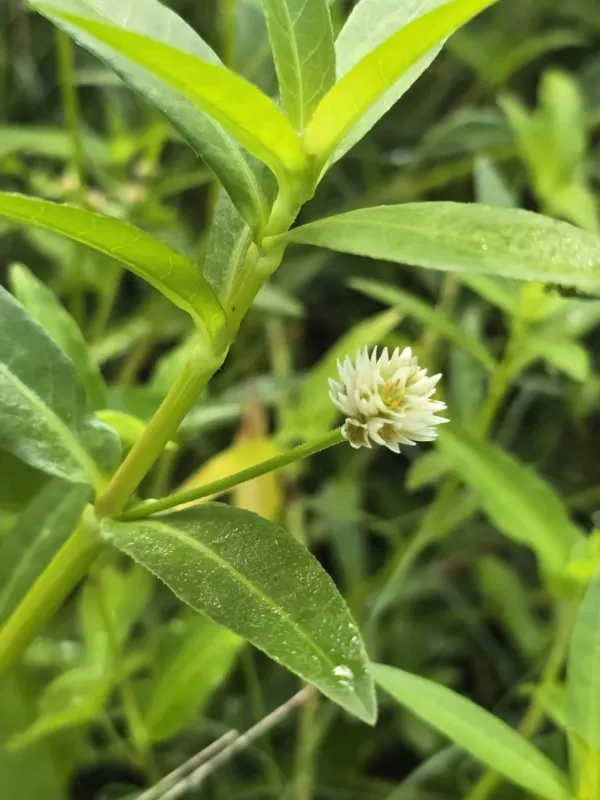
The leaves are opposite, oblong, and have smooth margins with a glossy surface and a prominent central vein. The white, dense, clover-like flower heads are borne on short stalks in the leaf axils.
The root system is highly aggressive, capable of penetrating deep into riverbeds or soil, forming dense clusters of nodes. The plant has a remarkable capacity for vegetative reproduction from even tiny stem fragments.
The appearance of the plant changes depending on the environment: stems become more rigid and upright on land, while they grow longer and more succulent in aquatic settings. This high plasticity makes it extremely difficult to eradicate.
While it may be confused with other Amaranthaceae species, its hollow stems and the ability to form dense floating mats are key diagnostic features for identifying this invasive species.
Where it grows
This species is a highly invasive weed that thrives in wet or waterlogged environments. It is most commonly found along riverbanks, lake shores, in drainage canals, and in flooded rice paddies.
Globally, Alligator weed is considered one of the most destructive aquatic weeds, capable of completely blocking water flow in irrigation networks. It also successfully adapts to wet agricultural lands.
In rice fields, this weed poses a critical threat as it rapidly colonizes open water, competing with crops for light, nutrients, and living space.
Spread is primarily driven by the movement of stem fragments through water currents or by agricultural machinery that transfers soil containing rhizomes to new field locations.
The plant exhibits high tolerance to a wide range of temperatures, allowing it to successfully naturalize in many regions ranging from temperate to tropical climates.
Harm it causes
The primary danger lies in the plant's ability to form dense floating mats that completely block sunlight from penetrating the water, suppressing phytoplankton development.
In rice production, the weed reduces yields by shading out young rice shoots, creating unfavorable conditions for crop growth and interfering with normal field management and cultivation practices.
Clogging of irrigation systems leads to disrupted hydrological regimes, siltation of canals, and significant water loss, resulting in high costs for regular mechanical canal clearing.
By displacing native flora, the plant radically alters aquatic ecosystems, which can have negative consequences for aquaculture farms and the overall ecological health of coastal areas.
The high intensity of its growth leads to rapid nutrient depletion in the soil, requiring significantly higher rates of fertilizer application to support crop development.
How to control
Mechanical control involves regular removal of plant biomass from fields and canals; however, it is largely ineffective without exhaustive cleanup, as even small stem segments can regenerate into new plants.
Agrotechnical measures include deep plowing and thorough drying of fields during the off-season, which helps weaken the weed's root system and reduce its overall vitality.
Chemical control requires the use of systemic herbicides capable of translocating through the leaves to the root system, with careful selection of aquatic-approved chemicals.
Biological control is considered the most promising long-term strategy, involving the introduction of specialized insects that feed exclusively on the tissues of this weed to keep populations suppressed.
- Monitor coastal areas for early detection of new infestations.
- Clean agricultural machinery before moving between infested and clean fields.
- Apply specialized systemic herbicides to actively growing plants.
- Follow strict quarantine protocols when transporting plant materials.
Taxonomy
- Latin name
- Alternanthera philoxeroides
- Family
- Амарантовые
- EPPO code
- ALRPH