
Coast Alternanthera
Alternanthera littoralis
Description
How to tell it apart
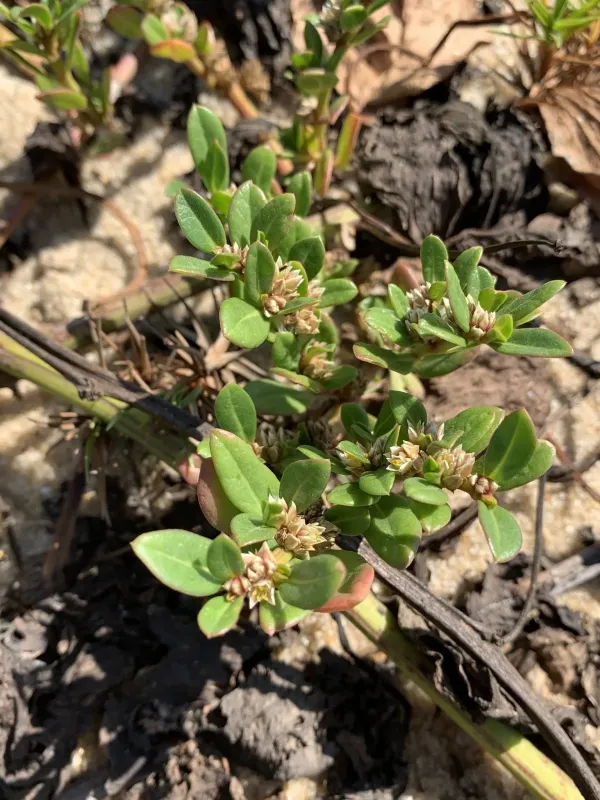
Coast Alternanthera (Alternanthera littoralis) belongs to the Amaranthaceae family. It is a perennial herbaceous plant characterized by prostrate or ascending stems.
The leaves are opposite, entire, and vary in shape from lanceolate to elliptical. Under high light intensity, the foliage may exhibit a distinct reddish coloration.
The flowers are arranged in dense, head-like or spike-like inflorescences located in the leaf axils or at the tips of the stems; they are typically small and inconspicuous.
The plant possesses a vigorous root system capable of rooting at the stem nodes upon contact with moist soil, allowing it to form dense mats across the ground.
The fruit is a small, one-seeded capsule easily transported by water currents, wind, or agricultural equipment, facilitating rapid colonization of new habitats.
Where it grows
This species thrives in high-moisture environments, including riverbanks, irrigation canals, floodplains, and irrigated agricultural fields.
In agroecosystems, Coast Alternanthera is frequently found in rice paddies and crops requiring frequent irrigation, as it prefers moist, disturbed soil conditions.
The plant demonstrates high ecological plasticity, surviving periods of temporary flooding and high temperatures, which makes it a persistent weed in southern latitudes.
Infestation of agricultural fields usually occurs through irrigation networks, which transport seeds and stem fragments from wild areas into the farming system.
It also aggressively colonizes drainage ditches and roadside areas, serving as a permanent reservoir for re-infestation of adjacent farming land.
Harm it causes
Coast Alternanthera causes significant economic damage by competing with crops for essential resources such as space, water, sunlight, and soil nutrients.
In rice cultivation, the weed can severely inhibit the development of seedlings, leading to substantial yield losses and lower product quality.
Dense mats of the weed create a humid microenvironment that fosters the development of various fungal pathogens and pests, which can subsequently attack the crops.
The presence of this weed in irrigation canals impedes water flow, contributes to siltation of channels, and increases maintenance costs for hydraulic infrastructure.
Mechanical harvesting becomes difficult in heavily infested fields, resulting in increased grain losses and accelerated wear on agricultural machinery components.
How to control
The primary control strategy involves strict adherence to crop rotation and thorough soil preparation to eradicate vegetative plant parts before planting.
Agrotechnical practices include deep plowing and regular inter-row cultivation, which are effective in cutting roots and preventing stem re-rooting.
Effective management also requires monitoring irrigation water and regular cleaning of supply channels to prevent the introduction of seeds onto the field.
Chemical control focuses on the application of systemic herbicides during the active growth stage, chosen for their efficacy against broad-leaved invasive weeds.
- Application of systemic post-emergence herbicides.
- Manual weeding during the early stages of crop growth.
- Use of high-quality, weed-free seed material.
Taxonomy
- Latin name
- Alternanthera littoralis
- Family
- Амарантовые
- EPPO code
- ALRLI