
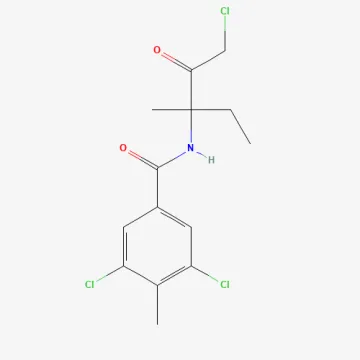
Zoxamide
Description
Mode of action
Zoxamide is a highly effective active ingredient belonging to the benzamide chemical class. Its main feature is the ability to suppress the development of pathogenic fungi at the cellular level.
The mechanism of action is based on the inhibition of fungal cell division (mitosis) by binding to beta-tubulin. This leads to the disruption of microtubules and rapid death of the pathogen's cells.
The substance primarily acts as a contact fungicide, forming a protective barrier on the plant's surface. It adheres strongly to the cuticle of leaves and stems, providing excellent resistance to rain wash-off.
Due to its high lipophilicity, zoxamide quickly penetrates the plant's waxy layer, securing its position. This property makes it an essential component for crop protection strategies in high-humidity conditions.
The product prevents zoospore germination and mycelium growth, making it suitable for both preventive measures and early stages of fungal infection.
What it targets
Zoxamide is primarily designed to control oomycetes, which are highly dangerous pathogens causing rot and blight. It demonstrates excellent performance against late blight in potatoes and tomatoes.
Zoxamide is also widely used in vineyards to protect plants from downy mildew. It effectively suppresses the causative agent of the disease even under high pressure of infection.
The spectrum of action includes the control of various downy mildews across a wide range of vegetable crops in both open and protected ground environments.
The anti-fungal activity persists for an extended period, which reduces the necessity for frequent repeated applications during the growing season.
When used in tank mixes, zoxamide helps broaden the spectrum of controlled diseases and effectively prevents the development of pathogen resistance.
Rates and timing
Application rates for zoxamide vary depending on the specific crop and the anticipated infection pressure. The working solution must be prepared strictly according to the manufacturer's label requirements.
Optimal application timing coincides with periods of active crop growth when the risk of primary infection by late blight or mildew is highest.
For vineyards, it is recommended to perform applications before and after flowering to ensure reliable protection for both berries and leaves.
On potato crops, the first application should be carried out preventively when weather conditions favor disease development or when initial symptoms appear.
Achieving uniform coverage of the leaf surface with the working solution is a critical factor for ensuring high efficacy of the treatment.
Restrictions
Zoxamide requires adherence to standard safety measures when working with agrochemicals. Operators must wear appropriate personal protective equipment for skin and respiratory protection.
The substance can be toxic to aquatic organisms, therefore, contamination of water bodies, drainage ditches, and drinking water sources during preparation is strictly prohibited.
Pre-harvest intervals depend on regional regulations and must be strictly followed to ensure the safety of agricultural products for consumers.
It is not recommended to exceed the maximum allowed number of applications per season to avoid the accumulation of residue in the final product.
- Avoid spray drift onto neighboring crops.
- Store the concentrate in a cool, dry place.
- Do not spray during periods of active bee foraging.
- Dispose of packaging according to local environmental regulations.
Status in the European Union
Approved in the EU
- CAS number
- 156052-68-5
- Approved from
- 01.07.2018
- Approval until
- 30.06.2033
- ADI
- 0.5 mg/kg bw/day
- ARfD
- Not appl.
- AOEL
- 0.3 mg/kg bw/day
EU status is for reference only and does not replace national registration in your country.