
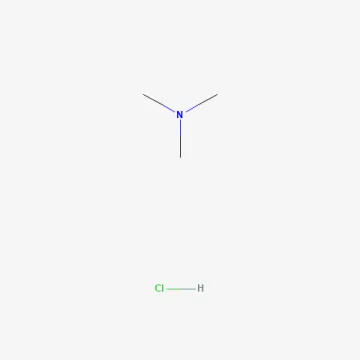
Trimethylamine hydrochloride
Description
Mode of action
Trimethylamine hydrochloride is a chemical compound increasingly recognized in agricultural science for its role in modulating plant metabolism and enhancing physiological resilience.
The primary mechanism of action involves supplying methyl groups necessary for the biosynthesis of betaines within plant cells. These compounds serve as crucial compatible solutes that help plants maintain homeostasis.
By stabilizing cellular membranes, the substance prevents electrolyte leakage under environmental stress. This ensures that plant cells remain functional even when subjected to adverse external conditions.
The compound also plays a supportive role in nitrogen assimilation pathways. It helps plants to more efficiently process nitrogen inputs, which directly correlates with improved biomass production.
Research suggests it aids in the stabilization of photosynthetic apparatus under high-temperature conditions. This allows for sustained carbon fixation when plants might otherwise experience heat-induced growth retardation.
What it targets
This substance is widely used to improve the tolerance of various crops to abiotic stressors, including drought, salinity, and extreme thermal fluctuations.
It is frequently utilized in rescue programs for crops that have suffered from phytotoxic effects following herbicide application. It helps facilitate rapid recovery of metabolic processes.
The agent is applied across a diverse range of crops, including cereals, legumes, and high-value greenhouse vegetables. Its application is tailored to increase productivity in intensive farming systems.
It is often included in tank mixes for plant protection to boost overall plant vigor during developmental stages. This proactive approach helps in achieving better yield outcomes.
In ornamental horticulture, it is used to ensure stable plant growth and enhance the shelf-life of harvested products. It contributes to maintaining the structural integrity of tissues post-harvest.
Rates and timing
Application rates are determined by the specific formulation and the crop stage. It is essential to follow the label instructions provided by the manufacturer to ensure optimal efficacy.
Foliar application is the preferred method for rapid systemic uptake. The application should be timed to coincide with high metabolic activity to maximize the benefit of the compound.
For greenhouse operations, the product can be delivered via drip irrigation systems. This approach allows for a controlled and steady supply to the root zone, supporting sustained growth.
The timing of treatment should be planned before the onset of predicted stress events. Early intervention is key to preventing cellular damage rather than just treating the symptoms later.
Monitoring the plant response is recommended after application. Adjustments in dosage may be necessary depending on the crop species and the severity of the growing conditions.
Restrictions
Standard safety protocols for agricultural chemicals must be strictly observed. Personal protective equipment (PPE) is mandatory during handling, mixing, and application of the concentrate.
The storage area must be kept dry and well-ventilated. Proper environmental control is essential to prevent moisture absorption, as the compound is highly hygroscopic.
Careful attention should be given to chemical compatibility when creating tank mixes. Avoid combining with strong oxidizers or incompatible substances to prevent chemical degradation.
Dispose of all unused chemicals and empty packaging in strict accordance with local waste management and environmental protection regulations.
Prevent runoff from reaching natural water bodies. While the substance may have low toxicity, large-scale releases should be avoided to protect local aquatic ecosystems.
Status in the European Union
Not approved in the EU
- CAS number
- 593-81-7
- Approved from
- 01.09.2009
- Approval until
- 31.08.2019
- ADI
- Not appl.
- ARfD
- Not appl.
- AOEL
- Not appl.
EU status is for reference only and does not replace national registration in your country.