
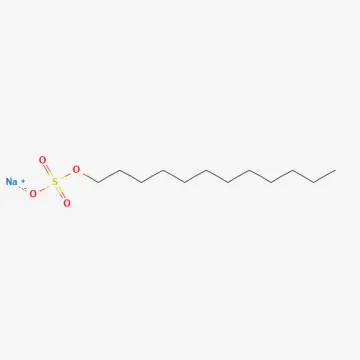
Sodium lauryl sulphate
Description
Mode of action
Sodium lauryl sulfate (SLS) is an anionic surfactant widely used as an adjuvant in agricultural formulations to enhance the performance of plant protection products.
Its primary mechanism of action is the reduction of surface tension in aqueous solutions, allowing the spray droplets to spread more effectively over plant surfaces.
By lowering surface tension, the compound enables the solution to overcome the hydrophobic barriers of leaves, such as waxy cuticles or dense hair.
The substance improves the retention of droplets on the foliage, which reduces the rate of run-off and ensures a more uniform coverage of the active ingredients.
Furthermore, it enhances the penetration of systemic pesticides through the plant tissues and the cuticle layer of various agricultural pests.
What it targets
SLS is used as a technical additive within broad-spectrum pesticides, including herbicides, fungicides, and insecticides, rather than as an active pest control agent itself.
It is particularly effective when targeting weeds with waxy leaves or tough exterior structures that typically repel standard liquid sprays.
It supports the function of systemic fungicides by ensuring that the active agent reaches the internal tissues of the plant to prevent the spread of infections.
The surfactant facilitates the contact of insecticides with insects that possess hardened exoskeletons, ensuring faster uptake of the chemical compound.
Application covers a wide variety of crops, including cereals, fruits, vegetables, and ornamental plants where precise and effective chemical delivery is required.
Rates and timing
The application rate is dictated by the specific pesticide formulation or the mixing instructions provided by the manufacturer of the crop protection product.
Optimal concentration levels must be strictly maintained to ensure sufficient wetting while avoiding any potential damage to the crops being treated.
Timing of the application corresponds to the specific phenological stages of the pests or diseases as defined for the primary pesticide being used.
Care should be taken during the preparation of the tank mix to avoid excessive foaming, which can affect the distribution accuracy of the sprayer equipment.
It is recommended to check the compatibility of the adjuvant with the water hardness levels to maintain its efficacy and prevent precipitation in the tank.
Restrictions
Phytotoxicity represents a potential limitation if the concentration of the surfactant is too high, leading to possible leaf burns or stress in sensitive crops.
Avoid spraying under extreme heat or direct sunlight, as high temperatures can lead to rapid evaporation, limiting the contact time required for penetration.
Water quality plays a significant role, as high concentrations of mineral salts may interfere with the stability of the anionic surfactant in the mixture.
- Use appropriate personal protective equipment (PPE) when handling the concentrate.
- Store in a cool, dry place away from direct sunlight and moisture.
- Ensure proper disposal of pesticide containers according to local environmental regulations.
- Keep out of reach of children and unauthorized personnel in storage areas.
Always perform a small-scale compatibility test before applying any mixture on highly sensitive or high-value crop varieties.
Status in the European Union
Not approved in the EU
EU status is for reference only and does not replace national registration in your country.