
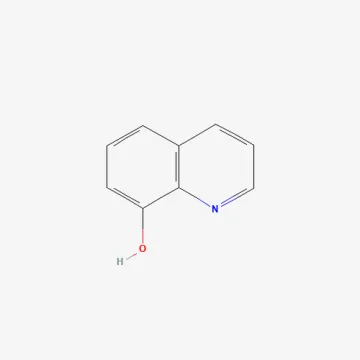
Quinolin-8-ol
Description
Mode of action
Quinolin-8-ol (8-hydroxyquinoline) belongs to the class of quinoline derivatives. This active substance possesses strong bactericidal and fungicidal properties, acting as a systemic antiseptic in plant protection.
Its mechanism of action is based on the ability to form chelate complexes with metal ions essential for the life processes of pathogenic microorganisms. By blocking enzymatic activities, the substance effectively stops the metabolism of fungi and bacteria.
The product's effect is directed at suppressing spore germination and cell division of pathogens on the surface or within plant tissues. It is capable of inhibiting the respiratory processes of fungal cells.
The substance exhibits high activity against a wide spectrum of phytopathogens, including representatives of oomycetes, ascomycetes, and imperfect fungi.
Due to its high reactivity, quinolin-8-ol is often used as a component of combination fungicides, which helps to broaden the spectrum of protection and prevent the development of resistance.
What it targets
Quinolin-8-ol is primarily used for protecting seeds and planting material against soil-borne and seed-borne infections. It effectively combats seed molding, various types of rot, smut diseases, and anthracnose.
In horticulture and vegetable growing, this group of substances is used to control bacterial cancer, powdery mildew, gray mold, and scab. It prevents the development of root rots during the early phases of plant development.
An important area of use is the disinfection of wounds on trees after pruning or mechanical damage, where it prevents the colonization of wood by pathogenic fungi.
The substance demonstrates high efficiency against late blight and downy mildew during the early stages of vegetation, preventing the spread of pathogen zoospores.
- Fusarium wilt
- Alternaria blight
- Bacterial burns
- Seed decay
Rates and timing
The application rates of quinolin-8-ol depend on the formulation and the specific target. For seed treatment, the dosage of the active ingredient is calculated per ton of planting material based on the manufacturer's recommendations for each specific product.
When treating vegetation, solutions are prepared according to regulations for specific crops. It is important to adhere to the frequency of application, which typically does not exceed 2–3 times per season to prevent the accumulation of residues.
Pre-harvest intervals vary depending on the crop type and the method of application, so it is necessary to strictly follow the instructions provided with the fungicide.
The optimal time for application is during morning or evening hours in the absence of strong wind, which ensures uniform coverage of the treated surface and minimizes losses.
When used as part of complex seed treatments, compatibility with other active ingredients, such as tebuconazole or fludioxonil, should be considered to enhance the fungicidal effect.
Restrictions
Quinolin-8-ol requires caution during handling, as it is toxic to humans and animals upon direct contact or inhalation of dust/aerosol. The use of personal protective equipment is mandatory.
The product may exhibit phytotoxicity if maximum permissible concentrations are exceeded, especially on young seedlings or under high humidity and temperature conditions.
It is not recommended to perform treatments near water bodies, as some quinoline derivatives are hazardous to aquatic life. Sanitation zones must be maintained to avoid drift of the working solution to neighboring areas.
The active substance is sensitive to the pH level of the working solution. Efficiency may decrease in overly acidic or alkaline environments; therefore, it is recommended to check the water quality for mixture preparation.
Storage should be carried out in a closed container in a cool, dry place, inaccessible to children and animals, and away from food products and animal feed.
Status in the European Union
Approved in the EU
- CAS number
- 148-24-3
- Approved from
- 01.07.2025
- Approval until
- 30.06.2032
- ADI
- 0.017 mg/kg bw/day
- ARfD
- 0.017 mg/kg bw
- AOEL
- 0.01 mg/kg bw/day
EU status is for reference only and does not replace national registration in your country.