
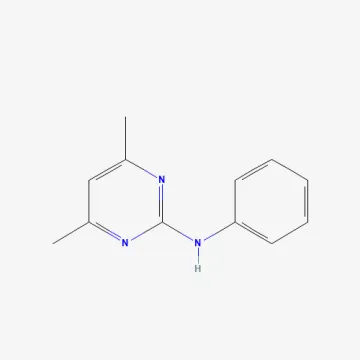
Pyrimethanil
Description
Mode of action
Pyrimethanil belongs to the anilinopyrimidine chemical class. Its main feature is high biological activity aimed at suppressing the metabolic processes of fungal pathogens.
The mechanism of action involves inhibiting the biosynthesis of methionine, a crucial amino acid for fungal survival. This leads to the cessation of mycelial growth and blocks the pathogen's ability to penetrate plant tissues.
An important aspect is that pyrimethanil possesses strong translaminar and fumigant properties. Thanks to its volatility, it distributes effectively in the canopy and on fruit surfaces, creating a protective shield even in hard-to-reach areas.
The compound provides both prophylactic and curative effects. When applied early, it prevents primary infection, and if an infection process has already begun, it significantly limits sporulation.
Pyrimethanil does not trigger cross-resistance in pathogens, making it an excellent tool for anti-resistance strategies in integrated plant protection systems.
What it targets
Pyrimethanil is a specialized fungicide designed to control fungal diseases caused by Ascomycetes and Deuteromycetes. It shows high efficiency on a wide range of fruit, berry, and vegetable crops.
The primary target is the gray mold pathogen (Botrytis cinerea). The substance is extremely effective under high humidity conditions, where this pathogen is most dangerous to the harvest.
The product is also successfully used against scab on apples and pears (Venturia spp.). It blocks conidial germination and spore production during the spring period, ensuring clean fruit development.
The list of target diseases also includes various types of storage rots, which significantly reduces post-harvest losses and improves product shelf life.
- Gray mold (Botrytis cinerea)
- Apple scab (Venturia inaequalis)
- Pear scab (Venturia pirina)
- Monilia disease
- Storage fruit rots
Rates and timing
Application rates for pyrimethanil depend on the crop type, disease pressure levels, and the growth stage. The spray solution must ensure thorough coverage of the entire leaf surface.
In vineyards, treatments are performed before flowering, during the flowering period, and after cluster closure. This minimizes Botrytis development during the ripening phase.
For fruit crops (apples, pears), the number of applications typically does not exceed 3 times per season. Adhering to intervals between sprays ensures stable protection throughout the growing season.
Application on vegetables in greenhouses and open fields (tomatoes, cucumbers) requires strict adherence to pre-harvest intervals, which typically range from 7 to 21 days.
It is recommended to use the product in tank mixtures with contact fungicides to prevent the development of resistance in fungal populations.
Restrictions
Pyrimethanil is considered low-toxicity to bees and beneficial entomofauna, allowing its use in modern orchard and vegetable field protection programs.
Despite its relative safety, standard personal protective equipment (PPE) for respiratory, skin, and eye protection must be used when handling the product.
A key agronomic limitation is the avoidance of uncontrolled use. To prevent resistance development, it is recommended to rotate pyrimethanil with fungicides from other chemical classes.
The spray solution should be prepared in dedicated containers just before use. Avoid mixing with highly alkaline substances, as this may lead to chemical degradation of the active ingredient.
Store products containing this substance in dry, cool locations, out of reach of children and pets, away from food and sources of fire.
Status in the European Union
Approved in the EU
- CAS number
- 53112-28-0
- Approved from
- 01.05.2026
- Approval until
- 30.04.2041
- ADI
- 0.013 mg/kg bw/day
- ARfD
- 1.0 mg/kg bw
- AOEL
- 0.3 mg/kg bw/day
EU status is for reference only and does not replace national registration in your country.