
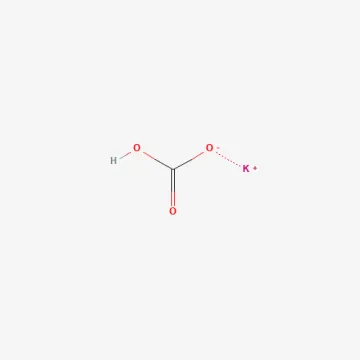
Potassium hydrogen carbonate
Description
Mode of action
Potassium bicarbonate is an inorganic compound classified in agriculture as a contact fungicide. Its mode of action is based on a rapid shift in the acid-base balance (pH) on the surface of the leaf tissue.
Upon contact with fungal mycelium and spores, the substance causes osmotic shock. An increase in salt concentration and a change in pH levels lead to the dehydration of pathogen cells and the destruction of their cell walls.
An important feature of this compound is the lack of risk regarding pathogen resistance. Due to the multi-factorial physical and chemical impact on cellular structures, fungi are unable to develop immunity to the preparation.
In addition to its protective function, the substance acts as a source of available potassium for plants. Micro-doses of potassium absorbed through the leaf surface may contribute to strengthening cell walls and enhancing the crop's overall immune response.
Potassium bicarbonate is widely used in organic farming because it quickly decomposes in the soil into natural components and does not exhibit high toxicity to beneficial insects or warm-blooded animals.
What it targets
The primary purpose of this group is to control a broad spectrum of surface fungal infections, with powdery mildew on various plant species being the most common target.
The products effectively suppress the development of scab pathogens on fruit crops, reducing the intensity of the infection background in orchards and vineyards.
The agent shows activity against gray mold and certain types of leaf spot diseases that occur during periods of high humidity and moderate temperatures.
Application is relevant for protecting berry bushes (gooseberries, currants) and vegetable crops (cucumbers, tomatoes) in both open field and greenhouse conditions.
- Powdery mildews (Erysiphales)
- Scab (Venturia spp.)
- Gray mold (Botrytis cinerea)
Rates and timing
Application rates depend on the severity of the disease and the type of crop. Typically, working solutions are prepared at concentrations ranging from 0.5% to 1% by water volume, corresponding to 5–10 kg per 1000 liters of spray solution.
Spraying is conducted preventatively or upon the appearance of the first signs of disease. Treatments should be repeated at 7–14 day intervals, depending on weather conditions and the growth rate of the foliage.
It is crucial to ensure maximum coverage of the leaf surface with the working solution, as the fungicide has a strictly contact-based action and does not translocate through the plant's vascular system.
Treatment is not recommended during the flowering period with high salt concentrations to avoid the risk of burning delicate flower tissues. Optimal timing for application is during early morning or evening hours.
Usage should be discontinued a few days before harvesting, although many potassium bicarbonate-based preparations have minimal pre-harvest intervals or are exempt from them entirely.
Restrictions
The main limitation is the dependence of effectiveness on coverage quality: missed areas of the leaf remain unprotected, requiring thorough calibration of the spraying equipment.
The substance is washed off by rain, so weather forecasts must be taken into account when planning operations. If precipitation occurs shortly after application, a re-treatment is required.
Potassium bicarbonate is incompatible with many systemic fungicides that have specific pH requirements. Compatibility tests must be performed before mixing in tank mixtures to prevent precipitate formation.
When working, standard personal protective equipment (gloves, goggles) should be used, as the concentrated solution can cause irritation to mucous membranes or skin.
Products should be stored in dry, cool places as the substance is hygroscopic and tends to clump when in contact with humid air, which complicates the preparation of stock solutions.
Status in the European Union
Approved in the EU
- CAS number
- 298-14-6
- Approved from
- 01.11.2021
- Approval until
- 31.10.2036
- ADI
- Not appl.
- ARfD
- Not appl.
- AOEL
- 128.0 mg/kg bw/day
EU status is for reference only and does not replace national registration in your country.