
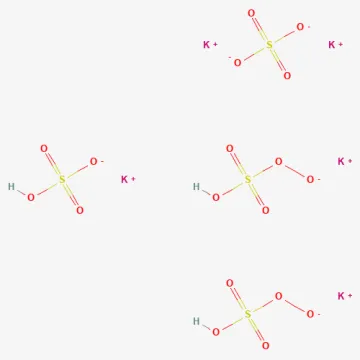
Pentapotassium bis(peroxymonosulphate) bis(sulphate)
Description
Mode of action
Pentapotassium bis(peroxymonosulphate) bis(sulphate) is a potent chemical compound classified as a peroxygen disinfectant. Its primary mode of action relies on the rapid release of active oxygen upon contact with pathogens.
The oxidizing mechanism involves the destruction of pathogen cell membranes, proteins, and genetic material. This process is highly effective against a broad spectrum of viruses, bacteria, and fungal spores.
Unlike traditional systemic fungicides, this substance works through non-specific chemical oxidation, which makes the development of resistance by pests practically impossible.
The compound remains active under various environmental conditions, including low-temperature settings, ensuring reliability in greenhouses and storage facilities throughout the season.
Environmentally, the substance is considered favorable because its degradation products are simple sulfates, which are generally safe for soil and do not pose a long-term risk of accumulation.
What it targets
This group of substances is extensively used to control various pathogens that affect agricultural, horticultural, and ornamental crops in both greenhouse and open-field environments.
Primary applications include the suppression of phytopathogenic fungi responsible for root rots, wilting, and foliar spots that decrease plant productivity.
The compound is highly effective against bacterial infections, which are often difficult to control with conventional pesticide treatments due to rapid bacterial mutation.
It plays a critical role in biosecurity, specifically for sanitizing irrigation systems, greenhouse surfaces, and farm tools to prevent the cross-contamination of healthy crops.
- Fungal spores of powdery mildew and blight.
- Vascular bacterial diseases.
- Surface-borne viruses on tools and trays.
- Mold and algae growth in irrigation lines.
Rates and timing
Application rates and treatment frequency are strictly defined by the specific task and the manufacturer's label. Dosage for surface disinfection is typically significantly higher than for foliar application.
When applying to vegetation, precise calibration is required to avoid phototoxicity or chemical burns on young leaves, as the substance is a powerful oxidant.
The frequency of application depends on the disease pressure. In intensive greenhouse systems, it is often used as a periodic preventive measure to keep the infection levels low.
Using high-quality water for solution preparation is essential to prevent premature degradation of the active ingredient caused by organic impurities in the water.
Application should be performed during cool periods of the day, such as early morning or evening, to reduce evaporation and extend the contact time of the active solution on the plant surface.
Restrictions
Due to its oxidizing nature, the substance exhibits significant corrosive properties against metal components. Equipment should be rinsed thoroughly or made of corrosion-resistant materials.
Mixing with alkaline fertilizers or other pesticides is generally discouraged, as it can trigger an immediate chemical reaction, leading to the loss of efficacy and potential plant damage.
Workers must wear proper personal protective equipment, including gloves, goggles, and respiratory masks, to prevent skin and mucous membrane irritation during handling.
Storage requirements include maintaining a cool, dry, and dark environment. Exposure to humidity and high temperatures will quickly reduce the stability and shelf life of the compound.
Avoid contact with sensitive organic materials or fire hazards, as the substance, being a strong oxidizer, can accelerate combustion if brought into contact with flammable substances.
Status in the European Union
Not approved in the EU
- CAS number
- 70693-62-8
EU status is for reference only and does not replace national registration in your country.