
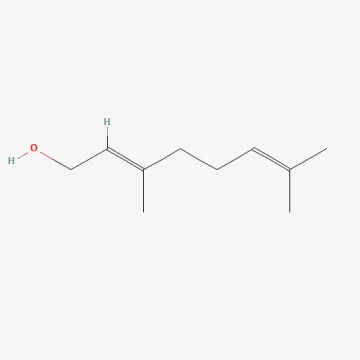
Geraniol
Description
Mode of action
Geraniol is a terpenoid alcohol naturally found in various essential oils. As an active ingredient in plant protection products, it provides effective insecticidal and acaricidal control through contact activity.
The mode of action involves disrupting the nervous system and cell membranes of pests. Geraniol acts as a contact poison that causes rapid dehydration and interferes with neurotransmission, leading to knockdown and mortality.
Furthermore, it serves as a powerful repellent, masking the plant chemical signals that insects use to locate their hosts. This barrier effect helps prevent initial colonization of crops by target pests.
Environmental compatibility is a key benefit of this substance. Geraniol is biodegradable and breaks down quickly under sunlight and microbial action, ensuring no toxic residues remain in the soil or produce.
It is widely utilized in organic farming and integrated pest management (IPM) programs as a safer alternative to synthetic chemical pesticides that have high toxicity profiles.
What it targets
The primary targets for geraniol-based products are soft-bodied insects and mites, including aphids, thrips, whiteflies, and spider mites. It also affects the larvae of various lepidopteran pests.
Geraniol is successfully applied across diverse crops, including greenhouse vegetables, ornamental plants, and berry crops, where rapid breakdown is essential for food safety.
In addition to its pest-control properties, geraniol possesses mild fungistatic activity, which can help suppress the development of certain surface-level fungal diseases such as powdery mildew.
Rates and timing
Application rates depend on the formulation concentration. Standard practice involves preparing working solutions with concentrations typically ranging from 0.5% to 2% depending on the severity of the infestation.
Thorough coverage is critical for efficacy, as geraniol acts primarily through contact. Growers must ensure the solution is applied to both sides of the leaves where pests typically reside.
Treatment intervals are flexible. Because the product is non-systemic and evaporates relatively quickly, frequent applications may be necessary during peak pest migration periods.
Restrictions
The major constraint of geraniol is its volatility. Its short residual activity means that protection does not persist for long, often requiring repeated treatments to maintain control.
Environmental factors significantly impact performance. High temperatures and intense sunlight accelerate evaporation, which reduces the contact time between the active ingredient and the pests.
Status in the European Union
Approved in the EU
- CAS number
- 106-24-1
- Approved from
- 01.12.2013
- Approval until
- 15.04.2028
- ADI
- 0.5 mg/kg bw/day
- ARfD
- Not appl.
- AOEL
- 0.5 mg/kg bw/day
EU status is for reference only and does not replace national registration in your country.