

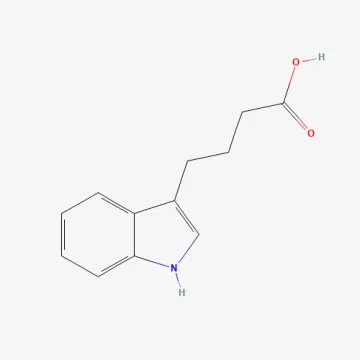
Description
Mode of action
Indole-4-butyric acid (IBA) belongs to the auxin class, which consists of natural or synthetic phytohormones with significant regulatory activity. Unlike some other auxins, IBA is characterized by high stability and specific effects on plant meristematic tissues.
The mechanism of action involves the induction of cambium cell division and their subsequent differentiation into adventitious root primordia. IBA is actively transported through plant tissues, stimulating the mobilization of nutrients to the treatment zone, which is crucial for forming a robust root system during the initial development stages.
In addition to directly stimulating rhizogenesis, the compound influences plant metabolism by activating enzymatic systems responsible for protein and nucleic acid synthesis. This helps cuttings and seedlings overcome stress associated with tissue damage during propagation.
The effectiveness of the preparation depends directly on the concentration, as an excess of auxins can have an inhibitory effect on the development of the plant's aerial parts. Proper dosage allows for synchronized and high-quality rooting, even in hard-to-root species.
It is important to note that IBA is often used in combination with other growth regulators, which allows for a synergistic effect when cultivating various species of ornamental and fruit crops.
What it targets
The primary use of this compound is to stimulate root formation during vegetative propagation via cuttings. It is applied to treat herbaceous, semi-hardwood, and hardwood cuttings of fruit, berry, ornamental, and forestry crops.
The preparation effectively increases the survival rate of seedlings during transplantation by ensuring the rapid formation of a secondary root system. This is particularly relevant for crops sensitive to damage to small absorptive roots.
IBA is used to improve the quality of planting material in nurseries, contributing to the production of more uniform and viable plant batches. Its use helps shorten the time required for standard seedlings to reach maturity.
The compound is also used in hydroponic technologies and in the cultivation of vegetable seedlings to optimize root ball development, which subsequently promotes better nutrient uptake from the soil solution.
In specific cases, IBA can be used to accelerate tissue fusion during grafting, ensuring high-quality connection between the scion and rootstock by stimulating callus formation.
Rates and timing
IBA application rates vary depending on the plant species, the type of cutting (green or hardwood), and the formulation used. Typically, aqueous solutions are prepared with concentrations ranging from a few milligrams to a gram per liter of water.
Application methods include brief dipping of the cutting base into a concentrated solution (for a few seconds) or prolonged immersion in a low-concentration solution for 6–24 hours before planting in a substrate.
To accelerate root development upon transplantation, watering plants with an IBA solution immediately after planting is a common practice. Strict adherence to the dosage specified by the manufacturer is recommended, as overdose can lead to growth retardation.
Optimal application periods occur during active vegetation or the spring-autumn planting seasons, when physiological processes in plant tissues are most intense.
When using powder formulations, the base of the cutting should be slightly moistened and dipped into the product, after which excess powder is shaken off to prevent tissue burns.
Restrictions
Handling indole-4-butyric acid requires compliance with general safety protocols for chemical substances. Protective gloves and safety goggles must be used to prevent contact with mucous membranes and skin.
The product must be kept out of the reach of children and animals, away from food, and protected from direct sunlight. Hermetic packaging is recommended to maintain the stability of the active ingredient.
The release of working solutions into water bodies, storm drains, or soil outside treated areas should be strictly avoided. Disposal of residues must comply with local regulations for pesticides and agrochemicals.
Exceeding the recommended frequency of application is not advised. When working with sensitive crops, it is prudent to conduct a test on a small number of specimens before large-scale treatment.
In case of skin or eye contact, rinse the affected area immediately with plenty of running water. If symptoms of malaise occur, seek medical advice, providing information about the product's composition.
Regulatory
Status in the European Union
Approved in the EU
- CAS number
- 133-32-4
- Category (EU)
- PG - Plant growth regulator
- Approved from
- 01.06.2011
- Approval until
- 31.01.2028
EU legislation
EU status is for reference only and does not replace national registration in your country.
Content graph
Connections · Indolylbutyric acid
Most often together:
Marketplace
Products · 5


CORNEROST
ЗАТ «Торгово-промислова компанія ТЕХНОЕКСПОРТ»
Plant Growth Regulators
0
0
·
44
1 offer
243.44 €per pack
Buy

Anti-stress agent «FitoNis»
Enzym Company, JSC
Plant Growth Regulators
0
0
·
44
4 offers
7.13 €per 1 l
Buy
