
EDTA and its salts
Description
Mode of action
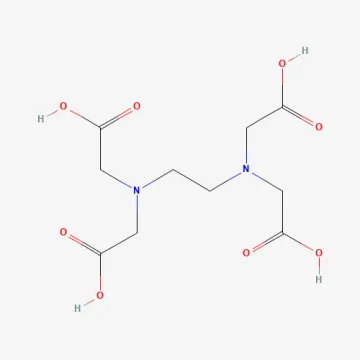
EDTA (ethylenediaminetetraacetic acid) and its salts belong to a class of powerful complexing agents used in agronomy as chelating agents. The primary chemical purpose of these compounds is to maintain metal ions in a stable, soluble state.
Due to their molecular structure, EDTA forms stable coordination bonds with metal cations such as iron, zinc, manganese, and copper. This prevents them from transitioning into insoluble forms that are inaccessible to plant roots in the soil solution.
EDTA chelates provide high mobility of nutrients within the soil-plant system. Even under unfavorable soil pH conditions, where free metal ions would otherwise precipitate, the EDTA complex remains chemically active and available for uptake.
Upon application to the leaf surface or the root zone, the EDTA complex easily penetrates through the leaf cuticle or root epidermis. Once inside the plant tissue, the metal is released to participate in essential metabolic processes.
The use of this group of substances significantly increases the nutrient use efficiency of micronutrient fertilizers. This makes plant nutrition more precise and effective, reducing the total application rates per hectare without sacrificing crop productivity.
What it targets
The main goal of using EDTA in agriculture is to correct micronutrient deficiencies in a wide range of crops. This includes cereals, vegetables, fruit trees, and berries that are highly sensitive to specific metal shortages.
EDTA-based products are effective against physiological chlorosis caused by deficiencies in iron, manganese, or magnesium. They help restore normal photosynthesis in leaves that have turned yellow due to blocked nutrient absorption.
Products in this category are also successfully applied to combat plant stress. They promote the normalization of enzyme activity, which is critical during periods of rapid growth or under adverse environmental conditions like drought or temperature fluctuations.
Most often, EDTA-based chelates contain essential elements such as Fe, Zn, Mn, and Cu. Together, they ensure the full functioning of all vital development cycles within the plant organism.
- Prevention and correction of micronutrient deficiencies;
- Stimulation of photosynthesis processes;
- Increased resistance to environmental stress;
- Improvement of quantitative yield indicators.
Rates and timing
Application rates depend on the specific chelate formulation and the crop type. On average, for foliar applications, concentrations of 0.05–0.2% are used, ensuring uniform coverage of the leaf surface.
In fertigation, where fertilizers are delivered through drip irrigation systems, rates are calculated based on the analysis of irrigation water and soil type. EDTA use is particularly justified here to prevent nozzle clogging from inorganic precipitation.
Application timing is tied to critical plant growth stages when the demand for micronutrients is at its peak. This typically corresponds to tillering, budding, and the onset of fruit formation.
It is important to consider the compatibility of EDTA with other pesticides. While chelates are relatively stable, mixing with certain chemicals may require a preliminary jar test to check for precipitation.
It is recommended to apply treatments during morning or evening hours. This reduces the risk of rapid solution evaporation from the leaf surface and ensures better uptake of active components by the plant.
Restrictions
A primary limitation of EDTA is that its stability depends on the pH of the environment. For most EDTA salts, the most effective pH range for soil solutions is between 4.0 and 6.5, which must be considered in alkaline soils.
Contact between EDTA-based products and strong oxidizing agents must be avoided. Products should be stored in their original containers in a shaded area to prevent degradation of the chelate complex under ultraviolet exposure.
Strict adherence to the manufacturer's dosage instructions is required. Overdosing with chelated micronutrients can cause toxic effects, manifested as growth inhibition or burns on young leaves.
When working with chelates, it is important to use high-quality water for solution preparation. Very hard water containing excess calcium may displace the target metal from the EDTA complex, reducing treatment effectiveness.
Safety precautions during handling include the use of standard personal protective equipment: gloves, goggles, and protective clothing. Despite the relatively low toxicity to humans, prolonged contact with EDTA can cause irritation.
Status in the European Union
Not approved in the EU
- CAS number
- 60-00-4
- Category (EU)
- HB - Herbicide
EU status is for reference only and does not replace national registration in your country.