
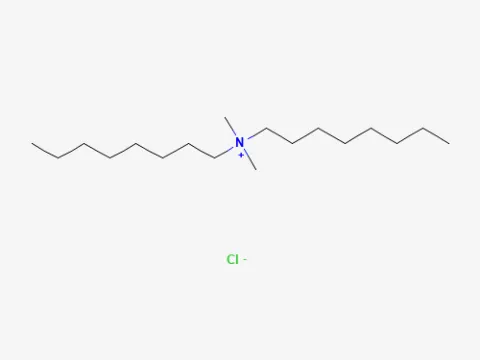
Dioctyldimethyl ammonium chloride
Dioctyldimethylammonium chloride belongs to the class of quaternary ammonium compounds (QACs). It acts as a cationic surfactant with potent antimicrobial properties.
What the section contains
Dioctyldimethyl ammonium chloride
The mechanism of action involves the disruption of the cytoplasmic membranes of microorganisms. The active substance interacts with the lipid layer, causing a loss of structural integrity.
This leads to the leakage of essential cellular components, resulting in the rapid death of bacteria, fungi, and other pathogens.
The compound remains stable across a wide range of pH levels, ensuring efficiency even in various environmental conditions common in agricultural facilities.
It forms a protective residual film on treated surfaces, which provides ongoing protection against re-contamination by harmful microorganisms.
This substance is primarily used in the agricultural sector as a powerful disinfectant and sanitizer for various applications.
It is widely used to treat greenhouse structures, post-harvest storage facilities, and agricultural tools to prevent the spread of diseases.
The compound is highly effective against a broad spectrum of phytopathogens, including various bacteria and molds that affect crop quality.
By sanitizing equipment and storage bins, it helps to significantly reduce crop loss due to fungal spoilage during the storage phase.
- Pathogenic bacteria.
- Various mold species (Aspergillus, Penicillium).
- Yeast organisms.
- Biofilm-forming microorganisms.
Application rates depend on the specific target area and the required level of sanitation, as specified in the product's technical guidelines.
Working solutions must be prepared by diluting the concentrate with clean water, strictly following the dosage recommended by the manufacturer.
Application methods include spraying, mopping, or soaking equipment in the solution for a specified contact time to ensure total pathogen elimination.
Following the required exposure period, surfaces may need to be rinsed with clean water depending on the specific application protocol.
Regular disinfection schedules are recommended to maintain a high level of hygiene in greenhouse environments and storage areas.
The compound is toxic to aquatic life, requiring strict measures to prevent drainage into water bodies, streams, or the local soil ecosystem.
Operators must wear personal protective equipment, such as gloves and eye protection, to avoid contact with the concentrated substance.
Mixing with anionic surfactants must be avoided, as this will chemically neutralize the active ingredient and render it ineffective.
Store the product in its original container, in a cool, well-ventilated area, away from direct sunlight and out of the reach of unauthorized personnel.
Ensure that all treated surfaces are properly dried and ventilated before re-introducing plants or food products into the sanitized area.