
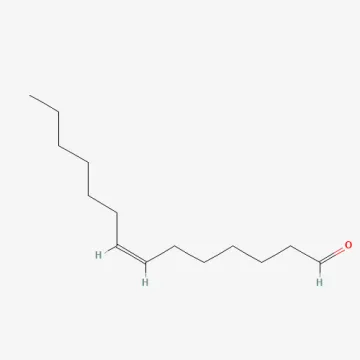
(Z)-7-Tetradecenal
Description
Mode of action
(Z)-7-Tetradecenal is an aliphatic unsaturated aldehyde that acts as a vital component of the sex pheromone system in various lepidopteran species.
In modern agriculture, this substance is used as a biological tool rather than a conventional insecticide, as it does not directly kill the pests.
The mechanism relies on chemical communication, where synthetic molecules mimic the natural scent profile released by females to attract males.
When deployed for mating disruption, the synthetic pheromone creates an over-saturated environment that prevents males from locating females, effectively halting the mating cycle.
When used in monitoring traps, it allows agronomists to track population dynamics, time their pesticide applications, and assess the need for further intervention.
What it targets
The primary targets for (Z)-7-Tetradecenal are specific lepidopteran pests, including various species of cutworms, leafrollers, and codling moths.
Its use is highly prevalent in orchards, vineyards, and vegetable production areas where precise pest management is required to ensure high crop quality.
This substance is a cornerstone of Integrated Pest Management (IPM), helping to reduce the reliance on chemical insecticides that can harm beneficial insects.
By targeting specific species through chemical signals, the product provides a highly selective management solution for sustainable agriculture.
Implementing such solutions helps producers meet strict residue requirements and ecological standards while maintaining efficient crop protection.
Rates and timing
Application rates depend on the chosen management strategy, such as deploying traps for monitoring or installing dispensers for wide-area mating disruption.
For monitoring purposes, a low density of traps is usually sufficient, with placement density varying by crop type and expected pest population levels.
Mating disruption requires uniform distribution of dispensers across the field to ensure a consistent atmospheric concentration of the pheromone compound.
Timing is critical, as dispensers must be installed just before the onset of the pest's adult flight phase to ensure maximum interruption success.
Regular maintenance of the equipment is necessary to ensure that the release rate remains constant throughout the entire period of adult activity.
Restrictions
The main limitation is the instability of the aldehyde group when exposed to heat and ultraviolet light, which can degrade the effectiveness of the pheromone.
High winds can rapidly disperse the active compound, leading to a loss of the necessary pheromone concentration and a decrease in control efficacy.
Handlers must use proper protective gear when installing the devices to avoid contamination, as pheromones are highly potent and can be persistent on clothing.
Products must be stored in airtight containers at low temperatures to prevent premature evaporation and degradation of the active ingredient before field use.
Proper disposal of used dispensers is required to ensure that residual chemicals are not released into the environment in an uncontrolled manner.
Status in the European Union
Approved in the EU
- CAS number
- 65128-96-3
- Approved from
- 01.09.2022
- Approval until
- 30.08.2037
EU status is for reference only and does not replace national registration in your country.