

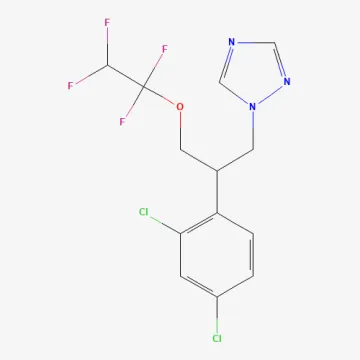
Description
Mode of action
Tetraconazole is a highly effective systemic fungicide belonging to the triazole chemical class, widely used in modern agriculture to protect various crops.
The primary mechanism of action involves the inhibition of ergosterol biosynthesis, an essential component of the fungal cell membrane, which leads to the collapse of the fungal structure.
Due to its high systemic properties, tetraconazole is rapidly absorbed by the plant tissues and translocated upward (acropetally) through the xylem to protected plant parts.
The active ingredient provides long-lasting preventive and curative action, effectively stopping the development of fungal infections even after they have penetrated the host tissue.
Tetraconazole exhibits excellent rainfastness, ensuring that the fungicide remains effective on the crop surface even under unfavorable weather conditions or after light rainfall.
What it targets
It is specifically effective against a wide range of pathogenic fungi, including those that cause powdery mildew on fruits, vegetables, and cereals.
Tetraconazole is widely used to control rust diseases, such as leaf rust and stripe rust, which are significant threats to grain yield and quality.
The compound provides reliable control against various leaf spot pathogens, including Septoria and Cercospora, which can cause significant damage to foliage if left untreated.
It is also employed for managing scab and other fungal diseases in orchards, ensuring the production of high-quality, disease-free fruits.
By protecting the plant's photosynthetic apparatus, tetraconazole helps ensure optimal growth and development, preventing premature senescence of the foliage.
Rates and timing
Application rates for tetraconazole vary significantly based on the target crop, the severity of the disease pressure, and the specific formulation of the product used.
In cereal production, it is typically applied during the stem elongation or heading phases to maintain the health of the flag leaf and increase grain fill.
For sugar beet and vegetable crops, the timing of application is crucial and should coincide with the initial appearance of symptoms to prevent rapid spread.
Growers are advised to consult the specific label instructions for the chosen product to ensure correct dosage and compatibility with other tank-mix partners.
Consistent monitoring of field conditions allows for the precise timing of fungicide applications, maximizing the efficacy of the active ingredient.
Restrictions
Users must wear appropriate personal protective equipment (PPE), including gloves, long-sleeved clothing, and protective eyewear when handling and applying the product.
To avoid the selection of resistant fungal strains, it is recommended to rotate the use of tetraconazole with fungicides that possess different modes of action.
Environmental precautions must be taken to prevent drift, especially when applying near water bodies, as the substance can be toxic to aquatic life.
The product should be stored in its original, properly labeled container, away from heat sources, direct sunlight, and areas accessible to children or livestock.
Always adhere to the pre-harvest intervals (PHI) specified on the product label to ensure that residues in the harvested produce are within legal safety limits.
Regulatory
Status in the European Union
Approved in the EU
- CAS number
- 112281-77-3
- Approved from
- 01.01.2010
- Approval until
- 31.03.2027
- ADI
- 0.004 mg/kg bw/day
- ARfD
- 0.05 mg/kg bw
- AOEL
- 0.03 mg/kg bw/day
Hazard classification (CLP)
Acute Tox. 4 - H302Acute Tox. 4 - H332Aquatic Chronic 2 - H411
EU legislation
EU status is for reference only and does not replace national registration in your country.
Content graph
Connections · Tetraconazole
Most often together:
Marketplace
Products · 8

YAMATO, SE
«Ізагро С.п.А.», Італія, ф. «Алхімекс С.А.», Румунія
Fungicides
0
0
·
63
13 offers
2.06 €per 1 l
Buy


Yamato
«Ізагро С.п.А.», Італія, ф. «Алхімекс С.А.», Румунія
Fungicides
0
0
·
52
5 offers
10.62 €per 1 l
Buy


